
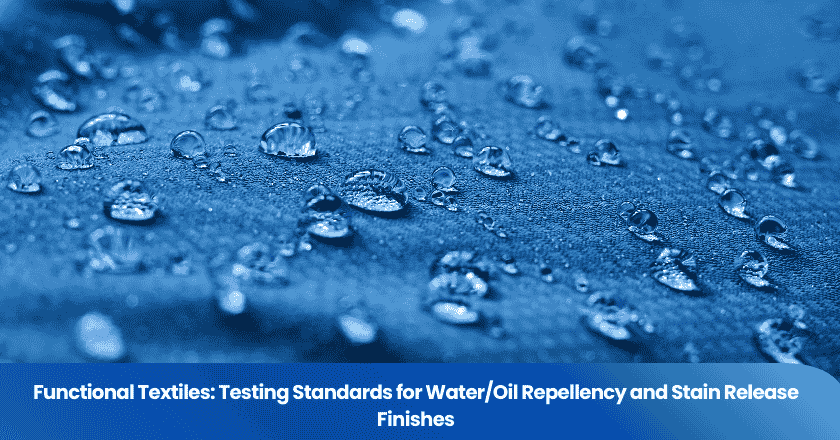
The global textile industry has shifted from basic aesthetics toward high-performance functionality, driven by consumer demand for durability and protective features. In the domain of softline products, the efficacy of functional finishes—specifically water repellency, oil resistance, and stain release—is governed by precise metrological standards. These protocols, established by international bodies such as AATCC, ISO, and ASTM, provide the technical framework for validating material performance under varied environmental stresses. For manufacturers and importers, maintaining rigorous quality control is not only a matter of brand integrity but also a regulatory necessity to ensure compliance with chemical safety mandates like EU REACH and US CPSC. This guide explores the laboratory protocols and physical mechanisms required to stabilize functional coatings on hydrophobic textile substrates.
Key Takeaways
- Water and oil repellency are quantified through surface tension analysis and contact angle measurements (e.g., AATCC 22 and AATCC 118).
- PFAS-free compliance (DWR) is the new industrial baseline, requiring technical adjustments to maintain oleophobic performance.
- Stain release testing (AATCC 130) measures the kinetics of soil removal during laundering cycles.
- Chemical safety checks are critical for detecting restricted substances like PFOA, PFOS, and various bisphenols in finishing agents.
- Regular quality assurance and real-time monitoring prevent 'Quality Fade' during mass production batches.
- Specialized certifications like OEKO-TEX Standard 100 provide independent validation of finish safety for end-consumers.
The Metrology of Surface Tension and Repellency
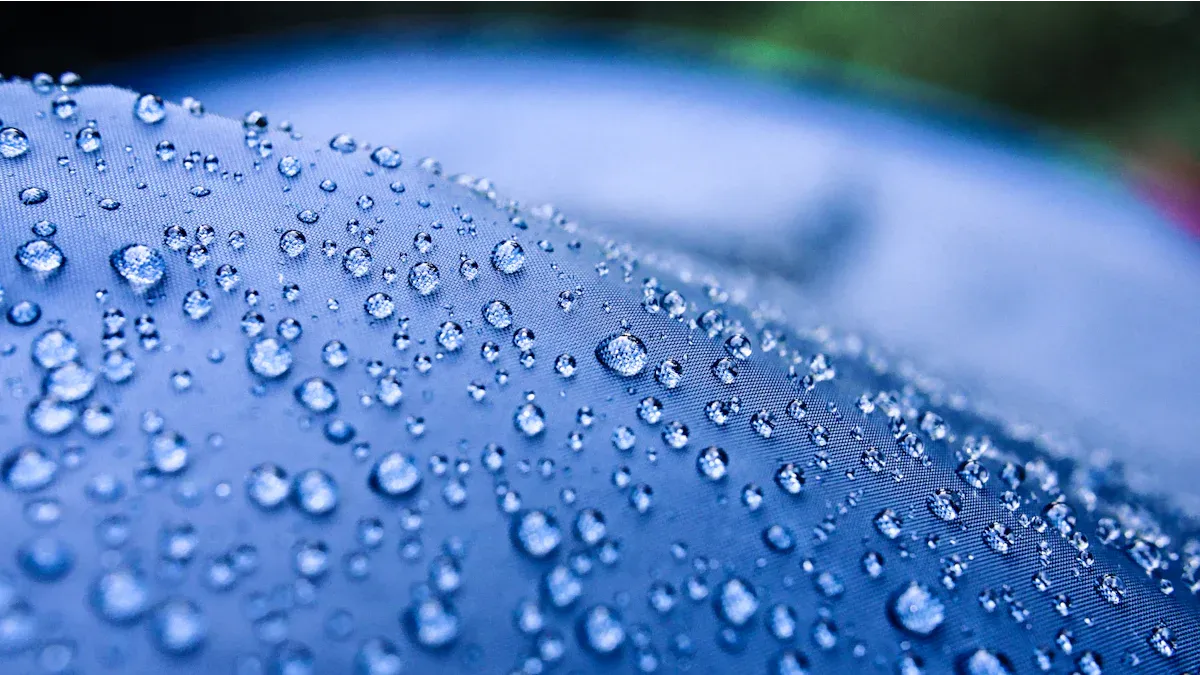
Technical repellency is achieved by modifying the surface energy of the textile fibers. According to Young's Equation, for a liquid to bead up rather than soak in, the surface energy of the fabric must be significantly lower than the surface tension of the liquid. Functional finishes, such as Durable Water Repellents (DWR), utilize fluorocarbon or silicone-based polymers to create a low-energy barrier. This is measured by the "Contact Angle"—where a high angle (above 90 degrees) indicates superior hydrophobic performance.
Standard Bodies and Technical Frameworks
Navigating the apparel quality control standards requires an understanding of regional test protocols. While AATCC is the technical authority in North America, ISO standards dominate the European and Asian export markets. Ensuring cross-comparability between these methods is a critical task for technical managers during pre-production verification.
| Organization | Technical Core | Industrial Focus |
|---|---|---|
| AATCC | Chemical and wet testing protocols | Consumer apparel and high-performance wear |
| ISO | International harmonized benchmarks | Global supply chain and industrial textiles |
| ASTM | Mechanical and material properties | Technical textiles and protective gear |
Quantitative Water Repellency Assessment: AATCC 22 and ISO 4920
The "Spray Test" is the primary method for evaluating surface water resistance. Unlike hydrostatic head testing (which measures pressure resistance), spray testing assesses the fabric's ability to shed water dynamically. This is essential for outdoor gear where the objective is to prevent "Wetting Out," which increases garment weight and reduces breathability.
Technical Testing Procedures
Under the AATCC 22 protocol, a fabric specimen is stretched over a 152.4mm ring and held at a 45-degree angle. 250mL of distilled water is discharged through a standardized spray nozzle from a height of 150mm. The duration of the spray must be controlled between 25 and 30 seconds to ensure repeatable kinetic impact. After the cycle, the fabric is tapped once and compared against a visual "Spray Rating Chart."
| Rating/Grade | Observation Profile | Technical Quality Level |
|---|---|---|
| ISO 5 / AATCC 100 | No sticking or wetting of the upper surface | Premium (Standard for high-end DWR) |
| ISO 4 / AATCC 90 | Slight random sticking or wetting of the surface | Very Good (Professional outerwear) |
| ISO 3 / AATCC 80 | Wetting of surface at spray points | Functional (Standard consumer rainwear) |
| ISO 1 / AATCC 50 | Complete wetting of the entire face | Failed (Non-compliant finish) |
Technical Alert: For fabrics containing hygroscopic fibers (like cotton blends), specimens must be conditioned at 21'C and 65% relative humidity for 24 hours. Failure to condition can result in an artificially high repellency score that will fail in high-humidity field environments.
Evaluating Oleophobic Performance: AATCC 118 and ISO 14419
Oil repellency is technically more challenging than water repellency because hydrocarbon liquids have significantly lower surface tensions than water. Traditional "C8" fluorocarbons were efficient but were phased out due to environmental persistence. Modern "C6" and "PFAS-free" finishes must undergo rigorous consistency audits to verify they can still resist common kitchen and industrial oils.
Hydrocarbon Test Series
Oil resistance is determined by placing drops of eight different hydrocarbon liquids (with progressively lower surface tensions) on the fabric. The fabric is graded by the highest-numbered liquid that does not wet the surface after 30 seconds of contact. Liquid No. 1 is mineral oil (Surface Tension: 31.2 mN/m), while Liquid No. 8 is n-Heptane (Surface Tension: 19.8 mN/m).
| Standard | Liquid Series | Objective |
|---|---|---|
| AATCC 118 | Oils No. 1 to No. 8 | US technical standard for oil resistance |
| ISO 14419 | Similar to AATCC 118 | Global harmonized oil repellency grade |
| AATCC 193 | Water/Alcohol solutions | Measuring low surface tension water-repellency |
Stain Release Dynamics: AATCC 130 Mechanics
While repellency prevents a stain from entering, "Stain Release" finishes focus on the removal of a stain once it has been forced into the fiber matrix (e.g., through pressure). This is achieved by making the fiber surface hydrophilic during the wash cycle, allowing water to penetrate between the fabric and the soil to "lift" the stain. This "Dual-Action" chemistry is critical for school uniforms and workwear.
Laboratory soil-release Protocols
Under AATCC 130, a standardized volume of corn oil (or other specified soil) is applied to the fabric and pressed under a 2.27kg weight for 60 seconds. The fabric is then laundered according to a specific cycle (temperature, detergent, and load). The residual stain is visually evaluated under a North Sky light source against a Stain Release Replica. High-performance textiles must achieve a Grade 4 or 5 after five wash cycles to be considered commercially durable.
Industrial Quality Control and Inline Monitoring
Consistency in functional finishes is highly dependent on the "Wet Pick-up" rate and the "Stenter Temperature" during the curing phase. If the curing temperature is too low, the hydrophobic molecules will not align correctly; if too high, the fabric tensile strength may be compromised. Effective production management integrates the following checkpoints:
- PPI (Pre-Production): Chemical certificate verification (RSL check) and beaker-level recipe matching.
- DPI (During Production): Moisture Management Testers (MMT) utilized to check the uniformity of the finish across the width of the roll.
- AOI (Automated Optical Inspection): Utilizing machine vision to detect "coating streaks" or "pinholes" in waterproof membranes.
- PSI (Pre-Shipment): Final random sampling for spray rating and oil grade as per AQL 1.5 or 2.5 levels.
Chemical Regulatory Compliance and Sustainability
The phase-out of Per- and Polyfluoroalkyl Substances (PFAS) represents the most significant technical shift in functional textiles. Manufacturers must navigate the complex quality compliance requirements of different jurisdictions. For example, California's AB 1817 and New York's S6291 regulate the "Total Fluorine" content in textiles rather than just specific molecules. Verified testing for total organic fluorine (TOF) using combustion ion chromatography is becoming the mandatory technical baseline for US-bound functional apparel.
Expert Tip: When sourcing PFAS-free water repellents, always check the 'Wash Durability' data. Early-generation PFC-free finishes often show a significant performance drop (from Grade 5 to Grade 1) after only three domestic washes. Professional apparel quality control must include 'After-Wash Repellency' verification.
Ready to secure your product quality before shipment?
As your third-party inspection, testing & certification partner in China, TradeAider supports brands and sourcing teams across the entire production process, helping you identify quality risks early, ensure compliance, and strengthen your team’s capabilities before shipment.
Book an Inspection or Testing Service with TradeAider today, or for tailored solutions and expert guidance, contact us at services@tradeaider.com or submit the request form on the right. →

Frequently Asked Questions (FAQ)
What is the difference between Water Repellent and Waterproof?
Water Repellent (DWR) refers to a surface finish that causes water to bead up and roll off. Waterproof refers to the fabric's ability to resist water penetration under pressure (Hydrostatic Head). A fabric can be water-repellent but not waterproof if the weave is open. Professional waterproofing checks measure both parameters.
Why does my oil-repellent fabric feel stiff?
High-concentration oleophobic finishes can create a "polymer film" over the fibers, increasing the fabric's bending modulus. This is a common trade-off in industrial workwear. Technical refinement involves optimizing the curing temperature to ensure the finish remains at the molecular level without forming a thick surface shell.
Can I test water repellency without laboratory equipment?
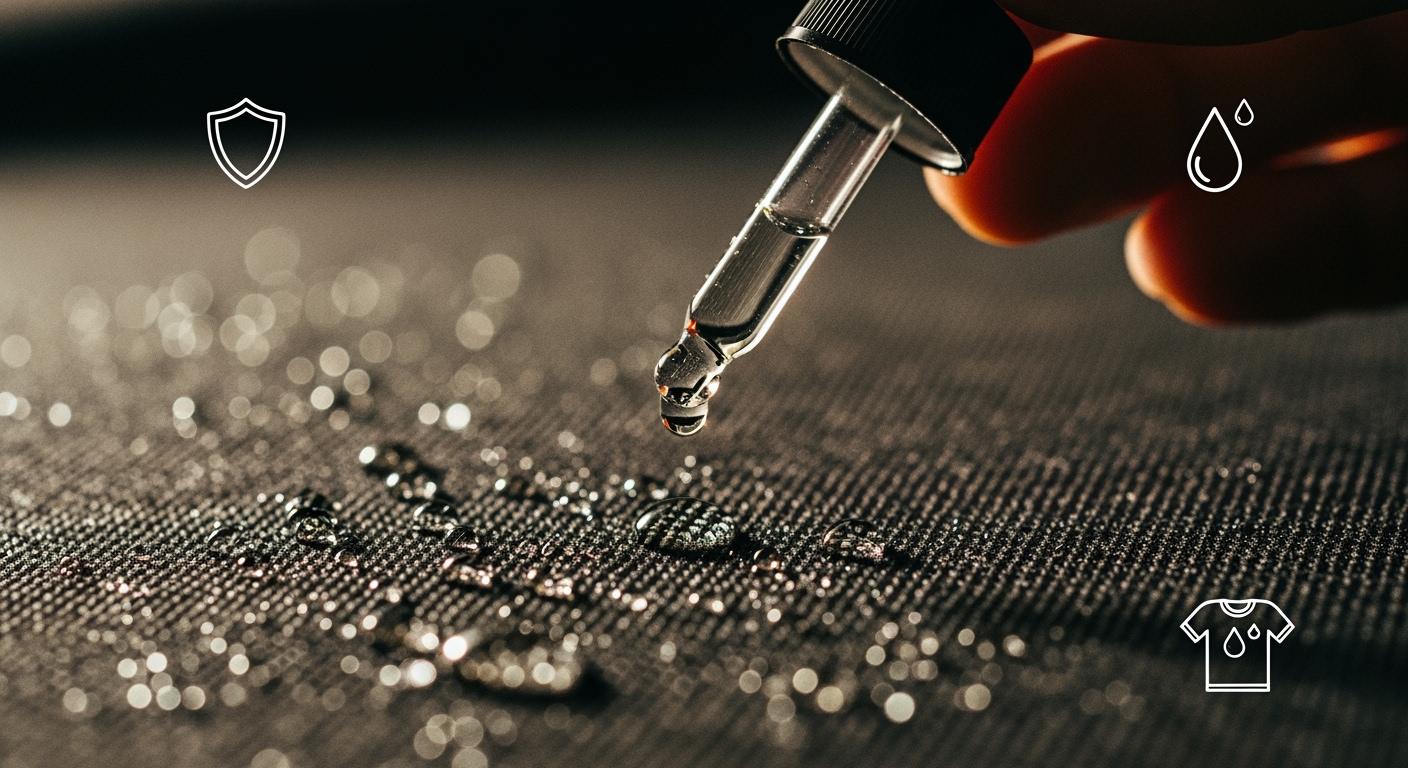
For a field check, you can perform a "Bead Test" using a dropper. However, this lacks the kinetic energy and standardized volume of the AATCC 22 spray test. A professional lab report is the only legal defense for performance claims.
Does a 100/100 spray rating mean the garment won't leak?
No. A 100 spray rating only means the *surface fabric* will not wet. If the seams are not taped or the fabric has low hydrostatic resistance, water will eventually penetrate the interstices of the weave under pressure.
How does "Soil Release" affect fabric breathability?
In most cases, soil-release finishes are extremely thin and do not significantly alter the moisture vapor transmission rate (MVTR). However, if the finish is applied too heavily (e.g., through an exhaustive coating process), it can block the pores of the fabric, leading to reduced comfort in high-activity apparel.

Related Articles
Grow your business with TradeAider Service
Click the button below to directly enter the TradeAider Service System. The simple steps from booking and payment to receiving reports are easy to operate.

