
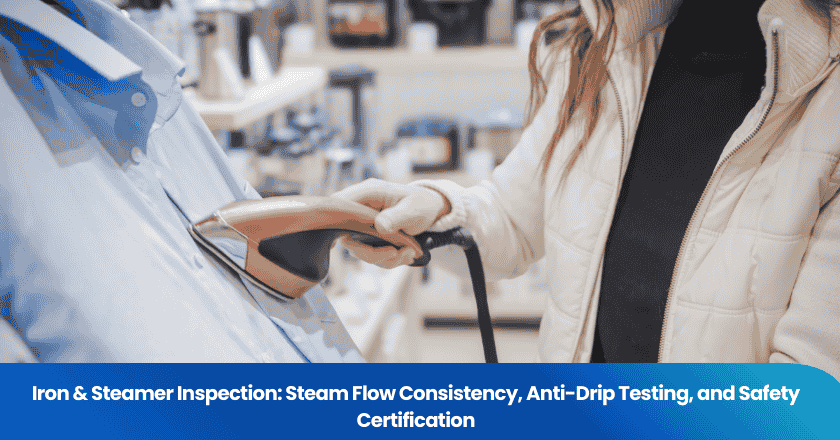
For irons and steamers, two performance characteristics determine whether a product meets quality standards and customer expectations: steam flow consistency and anti-drip reliability. These are not just user experience features — they are compliance parameters with defined testing methods, defect classifications, and certification requirements. This guide covers the full inspection process: from initial visual checks and functional testing through to electrical safety verification and certification documentation.
Key Takeaways
- Steam flow consistency and anti-drip performance are core compliance parameters, not optional quality metrics — failures in these areas are classified as major defects.
- Inspectors use both visual checks and functional "actual use" tests to detect issues that visual inspection alone cannot reveal.
- Consumer irons typically produce 40-80 g/min of steam during regular use; burst-of-steam features deliver 100-200 g/min. Deviations from these benchmarks indicate performance failures.
- Anti-drip failures cause fabric staining and water damage, directly impacting customer satisfaction and driving returns.
- CE, UL, and FCC certifications are required for major markets; inspectors verify all certification marks and documentation before approving shipment.
Iron & Steamer Inspection Essentials
Visual and Functional Checks
Inspection begins with a thorough visual examination. Inspectors look for leaks, bulging, corrosion, cracks, and gaps that indicate structural issues or poor assembly. Tap tests are used to listen for unusual sounds that may reveal hidden internal defects not visible externally. Ultrasonic testing is also used to measure wall thickness and detect internal cracks in pressure vessels.
Functional checks follow, with inspectors operating the device as a typical consumer would. They observe steam output, heating performance, and control function under actual use conditions. These tests reveal problems that would not appear during static visual inspection — a device may look fine but fail to produce consistent steam output, or a thermostat may behave erratically under load.
| Inspection Activity | Method | What It Detects |
|---|---|---|
| Visual inspection | API 510 protocol | Leaks, bulging, corrosion, cracks |
| Tap test | Auditory assessment | Hidden internal defects |
| Ultrasonic testing | UT probe measurement | Wall thickness; internal cracks |
| Functional "actual use" test | Consumer-condition operation | Steam output; heating behavior; control function |
Tip: Combining visual inspection with functional testing prevents unexpected failures and catches problems that static checks miss.
Workmanship and Assembly Review
Inspectors verify that all components are correctly assembled: gaskets and seals are in place, screws are properly torqued, and no components show signs of misalignment. Loose seals or improperly installed gaskets are the most common source of leaks identified during this stage. All defects are recorded with recommended corrective actions for the factory to act on immediately.
Steam Flow Consistency Testing
Performance Benchmarks
Steam flow consistency is assessed against established performance benchmarks. Most consumer irons produce 40 to 80 grams of steam per minute during regular use; burst-of-steam features deliver 100 to 200 grams per minute. Inspectors compare measured output against these benchmarks and against the product's own specifications. Significant deviations indicate a problem with the heating element, water delivery path, or steam hole design.
High-quality irons distribute steam evenly across the soleplate through a pattern of steam holes designed to cover the full ironing surface. The anti-calc system in steam stations collects mineral particles from water, preventing limescale buildup that would block steam holes and reduce output over time. Inspectors verify that this system is present and functioning.
Functional and Running Tests
Running tests operate the device for a defined period to assess steam flow stability over time. Inspectors watch for drops in output, sudden steam surges, inconsistent heating, and any signs of leakage. Temperature verification uses infrared (IR) guns to measure steam temperature and confirm that the steam trap system is operating correctly. Ultrasonic detection units are used to locate leaks or failures in the steam delivery path — these devices amplify the sound of steam escaping, making leak location straightforward even in noisy factory environments.
Consistent steam output throughout a running test demonstrates that the heating element, water reservoir, and steam delivery pathway are all performing as specified.
Steam Output Reference Benchmarks
The following data illustrates the range of steam output across consumer iron models, useful as an inspection reference for assessing whether a production unit's output is within normal range:
| Model | Steam Output (grams) | Performance Notes |
|---|---|---|
| Hamilton Beach Durathon 19803 | 196 | Best for consistent steam quality and volume; no leaks observed |
| CHI Lava | 127 | Good multi-hole steam distribution |
| CHI Professional Corded | 116 | Solid performance; second to Durathon |
| Black+Decker Vitessa | 111 | Notable output; effective in practical use |
| Rowenta Pro Master | 108 | Strong burst capability; less consistent on de-wrinkling |
Anti-Drip Performance Compliance
How Anti-Drip Systems Work
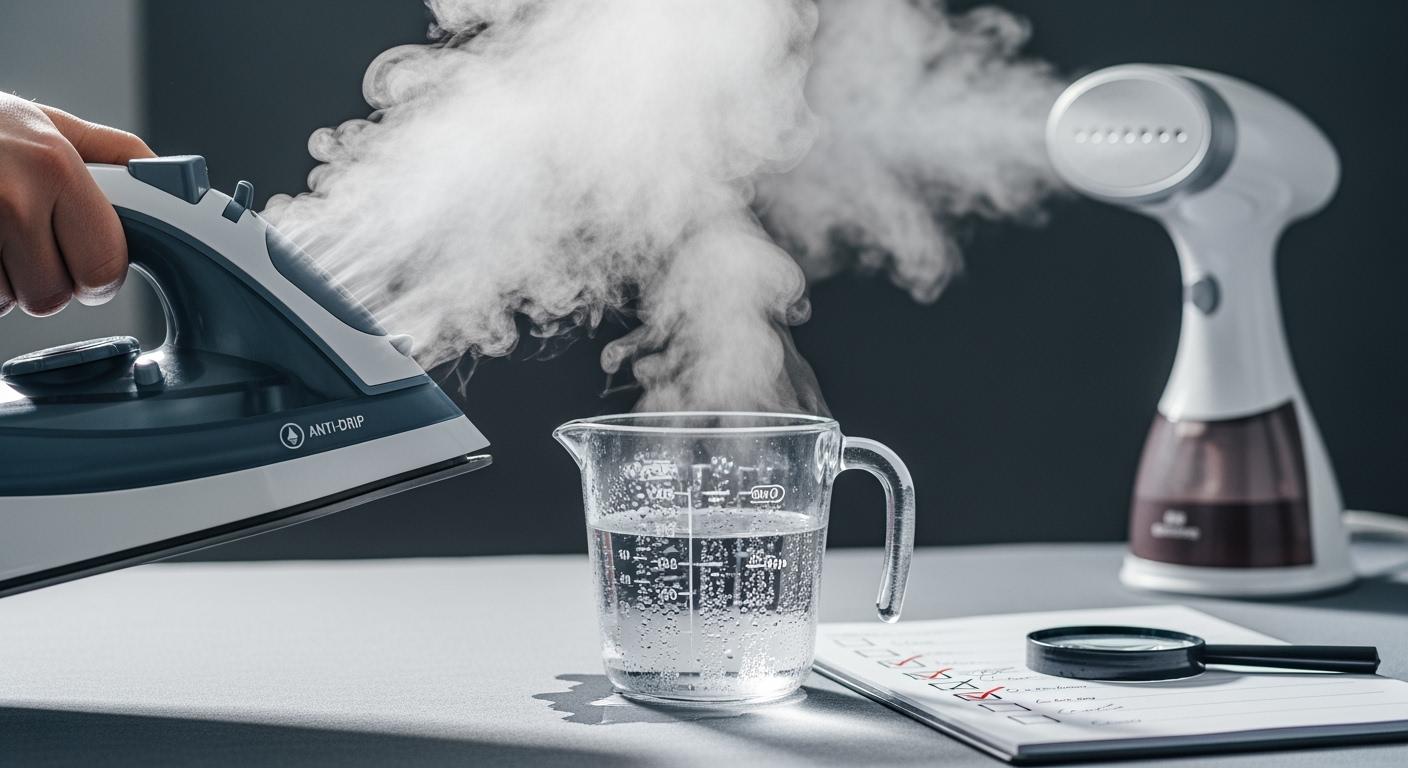
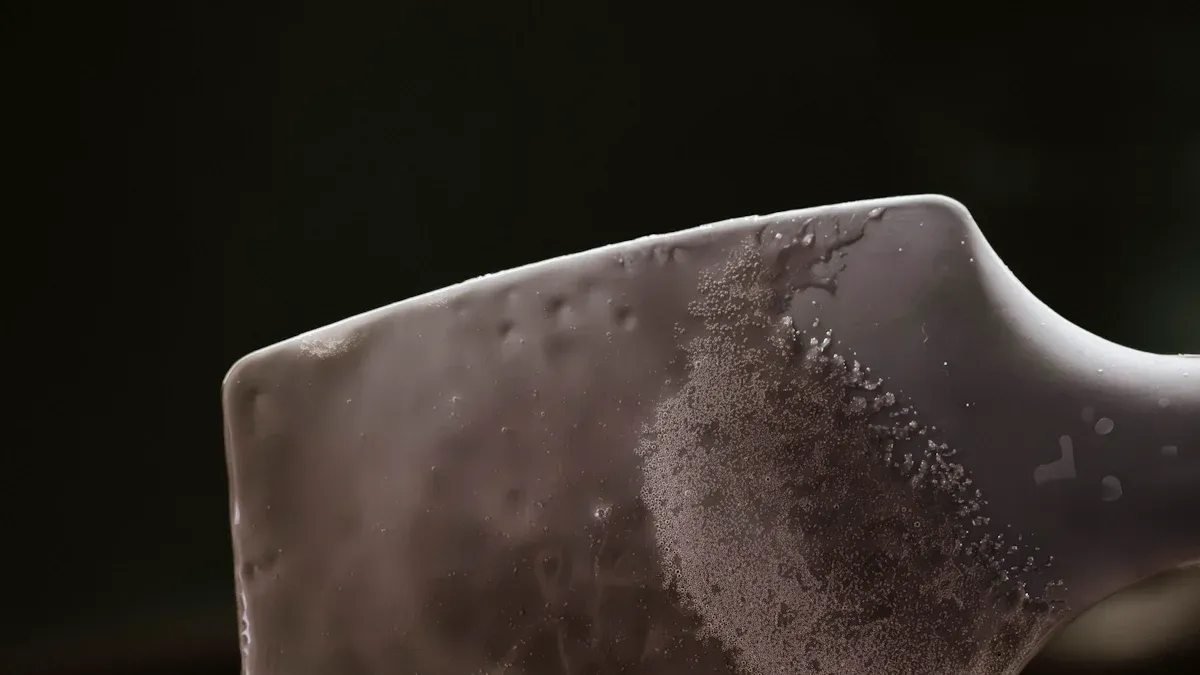
Anti-drip technology prevents water from leaking through the soleplate when the iron operates at temperatures too low to vaporize it. The mechanism uses valves, gaskets, and seals to hold water in the reservoir until the device reaches the correct temperature for steam production. When these components fail — due to a faulty valve, cracked gasket, or loose seal — water drips onto fabric, causing stains and reducing the iron's effective temperature. Inspectors examine all valve and seal components for condition, fit, and alignment.
Anti-drip failures are classified as major defects because water leakage directly impairs the product's core function and damages customers' clothing.
Actual Use and Leak Tests
Anti-drip compliance testing replicates real consumer use: the water reservoir is filled, the device is set to various temperature levels including low-temperature settings where anti-drip is most critical, and the soleplate is observed for water droplets or damp spots on test fabric. The test is repeated multiple times to confirm reliability, not just initial function. If leaks are detected, inspectors record the location (soleplate, rear vent, water tank joint) and likely cause for targeted rework.
| Test Type | Purpose | Result if Failed |
|---|---|---|
| Actual use test at low temperature | Detect soleplate leakage during normal ironing conditions | Major defect recorded; rework required |
| Gasket and seal assembly check | Verify anti-drip components are correctly installed | Repair or component replacement required |
| Multi-repeat leak test | Confirm anti-drip reliability across multiple use cycles | Intermittent failures require root cause investigation |
Defect Classification and Documentation
Anti-drip failures are documented as major defects with the defect type, location, and recommended corrective action clearly recorded. Photos and written notes accompany each report to ensure rework teams address the specific failure point. Accurate defect classification supports quality control analysis: tracking the frequency and location of anti-drip failures over production runs reveals systemic assembly issues that require process correction rather than unit-by-unit rework.
Electrical Safety Tests
Electrical safety testing is a mandatory component of iron and steamer inspection. Inspectors perform the following tests using calibrated equipment:
- Hi-pot (hipot) testing: Verifies the appliance can withstand high voltage without dielectric breakdown.
- Insulation resistance testing: Confirms that electrical insulation adequately prevents shock risk to users.
- Grounding resistance testing: Ensures the device has a low-resistance path for fault current to flow safely to ground.
- Leakage current testing: Detects any unwanted current flow that could pose a shock hazard.
- Thermal performance testing: Measures surface temperatures on the enclosure to confirm they stay within safe limits during normal operation.
All test results are documented in real-time reporting systems. If any device fails an electrical safety test, the factory is notified immediately for corrective action before that unit can be approved for shipment.
Certification and Compliance Documentation
Required Market Certifications
| Certification | Market | Scope |
|---|---|---|
| CE | European Union | Compliance with European safety, health, and environmental standards |
| UL | North America | Electrical and fire safety certification |
| FCC | United States | Electromagnetic emissions compliance for electronic devices |
Inspectors verify the physical presence of these certification marks on each unit and review supporting documentation including test reports and certificates of conformity. Formal inspection reports are issued within 24 hours and include all test results along with specific recommendations for any corrective actions required.
Proper certification and thorough reporting build customer trust and provide the legal compliance documentation required for market entry in each target region.
Iron and steamer inspection covers a linked chain of performance and safety checks: steam flow consistency, anti-drip reliability, electrical safety, and certification verification. Non-compliance at any stage creates compounding risks. The following table summarizes the consequences of skipping regular inspections:
| Risk Category | Potential Consequence |
|---|---|
| Regulatory non-compliance | Significant fines; market access revocation |
| License and certification lapses | Loss of CE, UL, or FCC certification; product recalls |
| Liability exposure | Increased risk of injury claims and product liability suits |
| Operational disruption | Immediate shutdown orders when non-compliance is discovered |
A structured inspection program — combining visual checks, functional testing, electrical safety verification, and anti-drip compliance — is the most effective way to maintain product quality, protect market access, and ensure that every iron and steamer shipped meets the standards customers expect. TradeAider's pre-shipment inspection service provides real-time reporting and 24-hour official reports, helping sellers catch defects before they reach customers.
FAQ
What is the main purpose of iron and steamer inspection?
Iron and steamer inspection verifies that each unit delivers consistent steam output, meets anti-drip performance standards, passes electrical safety tests, and carries the required certifications. Regular inspection prevents defective units from reaching customers and reduces the risk of product liability claims.
How often should irons and steamers be inspected?
Annual inspections are the standard recommendation for in-service units. Production batches should be inspected before shipment. Any device that shows unusual performance — inconsistent steam, leakage, or overheating — should be inspected immediately rather than waiting for the next scheduled check.
What tools do inspectors use during steam flow testing?
Steam flow meters measure output in grams per minute. Temperature sensors and infrared guns verify steam and surface temperatures. Ultrasonic testers detect leaks and internal cracks in the steam delivery path. These tools together provide comprehensive performance data for each unit tested.
What happens if an iron fails the anti-drip test?
The failure is recorded as a major defect with the specific location and likely cause documented. The manufacturer is notified immediately, and the affected units are held for rework. Only after passing re-inspection are units approved for shipment.
Related Articles
Grow your business with TradeAider Service
Click the button below to directly enter the TradeAider Service System. The simple steps from booking and payment to receiving reports are easy to operate.

