
- About Us

- Our Services
- Your Industry
- Resources
- News & Blog
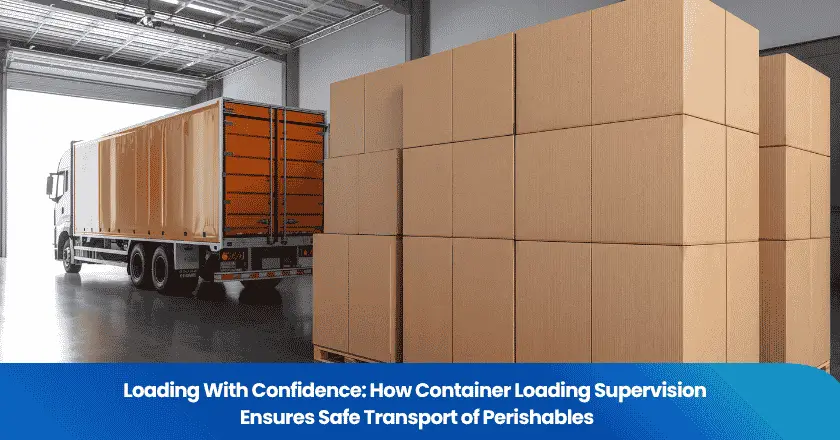
Perishable goods can lose their commercial value quickly when temperature, packaging, handling, or loading conditions are not properly controlled.
For importers sourcing fruits, vegetables, dairy products, frozen foods, pharmaceuticals, cosmetics with temperature-sensitive components, and other temperature-sensitive goods, quality control should not stop when production is completed.
The loading stage is another critical control point.
Container Loading Supervision (CLS) provides on-site verification that the correct goods and quantities are loaded, the container is suitable for the shipment, and the loading process follows the buyer's requirements before the cargo leaves the supplier's facility.
For perishable shipments, however, a standard loading check may not be enough. Buyers should pay particular attention to container condition, temperature requirements, packaging integrity, loading sequence, cargo protection, documentation, and container sealing.
This guide explains what buyers should verify during container loading supervision for perishable goods and how CLS fits into a broader quality control process.
What Is Container Loading Supervision for Perishable Goods?
Container Loading Supervision is an on-site inspection performed while finished goods are being loaded into a shipping container.
For perishable products, the purpose goes beyond simply counting cartons.
A properly planned loading supervision should help verify that:
- The correct products and quantities are prepared for shipment.
- The container or reefer container is clean and suitable for the cargo.
- Packaging is intact and appropriate for transportation.
- Products are handled according to the agreed requirements.
- Loading and stacking do not create unnecessary risks of crushing or damage.
- Temperature-sensitive products are handled according to the buyer's specified requirements.
- Shipping marks, labels, and documentation are consistent with the order.
- The container is properly closed and sealed after loading.
The exact inspection scope should be based on the product, transportation method, purchase requirements, and buyer's shipping instructions.
Important: CLS is not a substitute for product quality inspection or laboratory testing. It is a final control point focused on the cargo loading and dispatch process.
Why Is Loading Supervision Important for Perishable Shipments?
Perishable products are particularly vulnerable because their condition can deteriorate during transportation even when they were manufactured or packed correctly.
A problem at the loading stage can therefore create losses that are difficult to recover after the container has left the factory.
1. Improper Loading Can Damage the Cargo
Excessive stacking pressure, poor weight distribution, rough handling, or inadequate protection can damage cartons and products before the shipment even begins its international journey.
For example, fragile food packaging may be crushed by heavier cartons, while insufficient cargo securing may allow products to shift during transportation.
A loading supervisor can identify these problems while corrective action is still possible.
2. Container Condition Can Affect Product Quality
The physical condition of the container matters, particularly for products that are sensitive to moisture, contamination, or temperature.
Before loading, buyers should consider checking for:
- Water leakage or visible holes
- Excessive rust or structural damage
- Dirt, residue, or contamination
- Unusual or strong odors
- Moisture or condensation
- Damaged doors or seals
- Conditions inconsistent with the cargo requirements
For temperature-controlled shipments, the condition and operating status of the reefer container should also be verified according to the agreed shipping requirements.
3. Incorrect Temperature Handling Can Increase Spoilage Risk
Temperature is one of the most important variables in cold-chain logistics.
However, buyers should not assume that a loading inspection alone can guarantee temperature stability throughout the entire journey.
Instead, the inspection should verify the agreed loading requirements and available evidence at the loading point, such as:
- Required temperature range
- Container set point
- Product temperature requirements, where applicable
- Reefer operating condition
- Temperature records or readings when specified
- Loading procedures required by the buyer or shipping instructions
The appropriate temperature requirements depend on the specific product. Fruits, vegetables, chilled foods, frozen products, pharmaceuticals, and other temperature-sensitive products may have very different handling requirements.
What Should Be Checked During Perishable Goods Container Loading?
A practical loading supervision for perishable goods can be organized into six key checkpoints.
1. Product and Quantity Verification
Before loading starts, the inspector verifies that the shipment corresponds with the buyer's order and shipping documents.
Typical checks may include:
- Product type
- Model or SKU
- Quantity
- Carton count
- Shipping marks
- Labels
- Packaging configuration
- Purchase order requirements
This helps reduce the risk of short shipment, incorrect products, or unauthorized substitutions.
2. Packaging and Carton Condition
Perishable goods often depend heavily on appropriate packaging for protection during handling and transportation.
The inspector can check whether cartons or other shipping packages show obvious problems such as:
- Crushing
- Tears
- Water damage
- Open or poorly sealed packaging
- Broken straps
- Damaged pallets
- Missing shipping marks
Where the buyer has defined packaging specifications, the inspection should be performed against those requirements rather than relying on a generic visual standard.
3. Container or Reefer Condition
The container should be inspected before loading.
For general cargo, this may include checking cleanliness, dryness, physical damage, odors, doors, and signs of leakage.
For temperature-controlled cargo, additional checks may be required according to the shipment's cold-chain instructions.
The key principle is simple:
Do not wait until the cargo reaches its destination to discover that the container itself was unsuitable for the shipment.
4. Loading and Stacking
The inspector supervises the actual loading process and verifies that cargo is handled according to the agreed loading method.
Depending on the product, checks may include:
- Correct stacking sequence
- Weight distribution
- Protection of fragile cartons
- Prevention of excessive compression
- Prevention of cargo movement
- Appropriate use of pallets or other loading aids
- Compliance with buyer-specific loading instructions
For perishable products, loading speed and handling procedures may also be important because unnecessary exposure outside the required storage or transport conditions can create additional risk.
5. Shipping Documentation and Identification
The physical shipment should be consistent with the documentation used for transportation and receiving.
Relevant information may include:
- Product and carton quantities
- Shipping marks
- Purchase order information
- Packing list
- Container number
- Seal number
- Buyer-specific shipping instructions
Documentation discrepancies should be identified before departure whenever possible.
6. Container Sealing and Final Evidence
After loading is completed, the container should be properly closed and sealed according to the applicable shipping procedure.
The seal number should be recorded as part of the inspection evidence.
Photo documentation can also provide useful evidence of:
- Container condition before loading
- Product/carton condition
- Loading progress
- Final loaded condition
- Container number
- Seal application
This creates a clearer record of what happened at the loading point.
Perishable Goods Loading Checklist
For buyers, the following checklist provides a practical starting point.
| Checkpoint | What to Verify |
|---|---|
| Product | Correct product, SKU and specification |
| Quantity | Carton and product quantities match the order |
| Packaging | Cartons, pallets and protective packaging are intact |
| Container | Clean, dry, odor-free and free from visible damage |
| Reefer | Operating condition and agreed temperature requirements |
| Loading | Proper handling, stacking and weight distribution |
| Cargo protection | Products protected against crushing, shifting and moisture |
| Labels | Shipping marks and required labels are correct |
| Documents | Packing list and shipment information are consistent |
| Seal | Container is securely sealed and seal number recorded |
| Evidence | Photos and inspection findings are documented |
The checklist should always be adapted to the specific product and shipping requirements.
Container Loading Supervision vs. Pre-Shipment Inspection
These two inspections are complementary rather than interchangeable.
| Pre-Shipment Inspection | Container Loading Supervision | |
|---|---|---|
| Main purpose | Verify finished product quality | Verify loading and dispatch |
| Timing | After production is complete | When cargo is loaded |
| Main focus | Product quality, quantity, packaging and specifications | Container, cargo handling, loading, quantity and sealing |
| Sampling | Usually based on an inspection sampling plan | Loading process and agreed checks |
| Key question | “Does the finished product meet requirements?” | “Is the correct cargo being loaded safely and correctly?” |
A shipment can pass a pre-shipment inspection and still encounter problems during loading.
For example, products may pass the final product inspection but later be loaded into a damaged container, handled improperly, or shipped with incorrect quantities.
That is why CLS can serve as the final physical control point before the cargo leaves the supplier's facility.
Can Container Loading Supervision Guarantee Safe Transport?
No inspection can guarantee that a shipment will arrive without any damage.
Container Loading Supervision controls what can reasonably be verified at the loading point. It cannot eliminate every risk associated with ocean freight, customs clearance, port handling, weather, transportation delays, equipment failure, or destination-side handling.
For perishable goods, this distinction is particularly important.
A well-designed CLS should therefore be viewed as part of a broader risk-control process, not as a guarantee of end-to-end cold-chain performance.
For higher-risk shipments, buyers may combine:
Supplier assessment → Production monitoring → Pre-Shipment Inspection → Container Loading Supervision → Transport monitoring → Destination receiving checks
The appropriate combination depends on product risk, shipment value, destination requirements, and the buyer's quality-control plan.
When Should Buyers Use Container Loading Supervision for Perishables?
CLS is particularly worth considering when:
- The shipment has a high commercial value.
- Products are temperature-sensitive or easily damaged.
- The buyer cannot send its own staff to the supplier.
- The supplier is new or has limited shipment history with the buyer.
- The shipment is large enough that a quantity error would be costly.
- The buyer has strict packaging or loading requirements.
- Previous shipments experienced loading or transportation problems.
- The buyer needs independent evidence of the loading process.
It can be especially useful for international buyers purchasing from overseas suppliers where direct on-site visibility is limited.
How TradeAider Supports Container Loading Supervision
TradeAider provides Container Loading Supervision (CLI/CLS) as part of its inspection and quality assurance services.
The service can be tailored to the buyer's requirements and may include:
- Quantity verification
- Product packaging inspection
- Trailer and container condition inspection
- Loading process supervision
- Container sealing inspection
- Buyer-specific inspection requirements
- Photo documentation
- Formal inspection reporting
TradeAider also provides online real-time reporting, allowing buyers to monitor inspection information while the supervision is taking place rather than waiting only for the final report.
For buyers managing shipments remotely, this can provide greater visibility into what is happening at the factory loading site.
Final Takeaway: Protect the Shipment Before It Leaves the Factory
For perishable goods, product quality is only one part of shipment risk.
The loading stage determines how that product begins its journey.
A professional Container Loading Supervision can help buyers verify the right cargo, the right quantity, the right loading conditions, and the right documentation before the container leaves the supplier.
For temperature-sensitive shipments, buyers should go one step further by defining product-specific cold-chain and loading requirements in advance.
The goal is not simply to watch a container being loaded. It is to identify preventable risks while there is still time to correct them.
If you source perishable or temperature-sensitive products from China and need independent oversight during container loading, TradeAider can arrange on-site Container Loading Supervision according to your shipment requirements.
Request a Container Loading Supervision Quote
Frequently Asked Questions
What is Container Loading Supervision for perishable goods?
Container Loading Supervision is an on-site inspection performed during cargo loading to verify the shipment, packaging, container condition, loading process, and sealing. For perishable goods, additional checks may address temperature-related and cold-chain requirements defined by the buyer.
Is Container Loading Supervision the same as Pre-Shipment Inspection?
No. Pre-Shipment Inspection primarily evaluates finished product quality before shipment, while Container Loading Supervision focuses on the cargo and loading process when the goods are physically loaded into the container.
Does CLS check reefer container temperature?
It can include temperature-related checks when they are part of the buyer's inspection requirements. The exact scope should be defined according to the product, transportation method, and applicable cold-chain requirements.
Can CLS prevent perishable goods from spoiling during shipping?
No. CLS cannot guarantee the condition of cargo throughout the entire transportation journey. It helps identify preventable risks at the loading point, while ongoing temperature control and transport management are needed for end-to-end cold-chain protection.
What does a container loading inspection check?
Typical checks include product and quantity verification, packaging condition, container condition, loading and stacking, documentation, container sealing, and buyer-specific requirements.
When should I schedule Container Loading Supervision?
CLS should be scheduled when the goods are ready for shipment and the container is available for loading. The exact timing should be coordinated with the supplier and shipping schedule so that the inspection can cover the actual loading process.
Why should an importer use an independent loading inspection company?
An independent inspector provides on-site verification when the buyer cannot be physically present. This can reduce visibility gaps between the supplier's warehouse and the buyer's logistics process and provide documented evidence of the loading condition.
Related Articles


Grow your business with TradeAider Service
Click the button below to directly enter the TradeAider Service System. The simple steps from booking and payment to receiving reports are easy to operate.

