
- About Us

- Our Services
- Your Industry
- Resources
- News & Blog
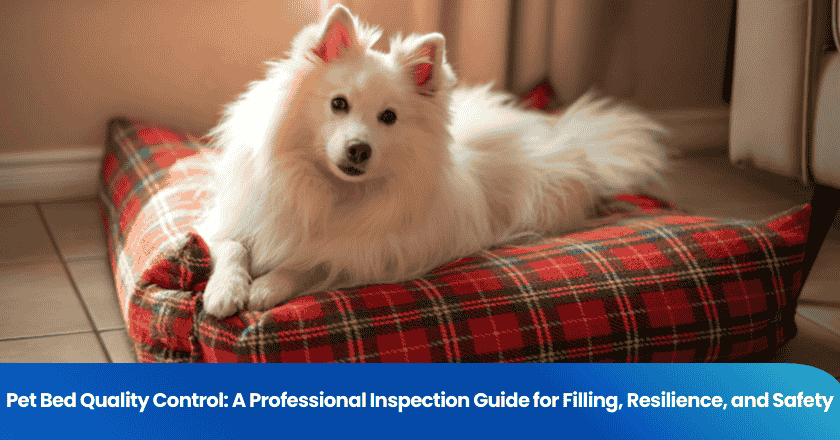
In the pet supply industry, quality control serves as a crucial bridge between manufacturing efficiency and animal welfare. A professional pet bed inspection is not merely about comfort; it is a rigorous assessment of structural integrity and safety standards. Technical teams focus on three primary indicators: filling weight density, mechanical resilience (rebound rate), and functional zipper concealment. By implementing systematic quality check protocols, brands can ensure that their products provide orthopedic support for aging pets while eliminating choking hazards and chemical risks.
Key Takeaways
- Orthopedic Support: Resilience testing using IFD (Indentation Force Deflection) ensures long-term joint support for pets.
- Chew-Proof Safety: Hidden zipper pulls and concealed hardware are mandatory to prevent ingestion hazards.
- Material Density: Consistency in filling weight (measured in grams per cubic meter) prevents sagging and cold spots.
- AQL Standards: Utilizing AQL 2.5/4.0 sampling ensures a statistically sound method for batch approval.
- Compliance Monitoring: Certification of filling materials for VOCs and heavy metals is essential for modern market access.
Technical Evaluation of Filling Weight and Density
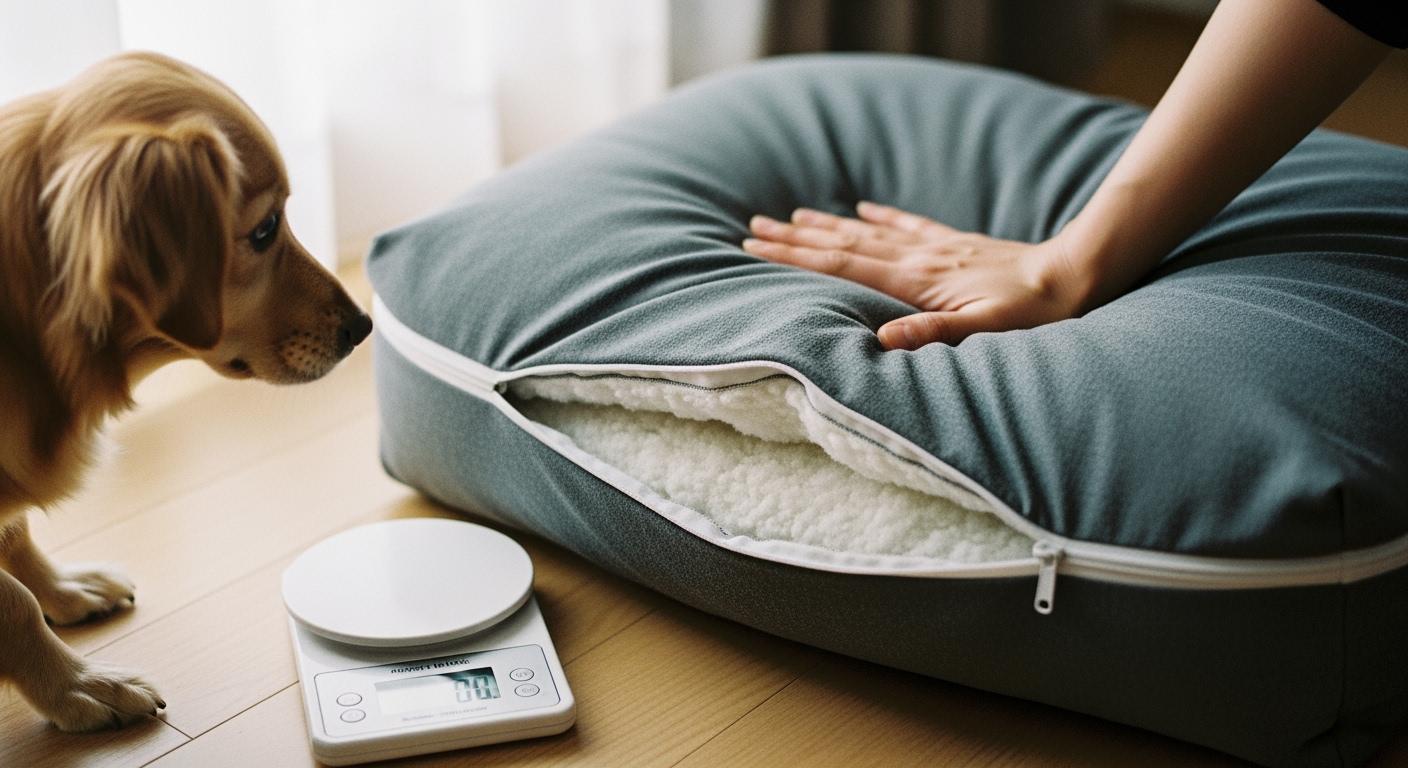
The "loft" and supportive nature of a pet bed depend entirely on its internal substrate. Whether using shredded memory foam, virgin polyester fiberfill, or recycled ComfortFill, the density must be uniform. In a professional inspection process, technicians measure the weight of each unit to ensure it falls within the specified tolerance—typically +/- 5% of the approved Golden Sample.
Material Consistency and Baffle Design
A major defect often found during audits is "Filling Migration." This occurs when the internal fiber moves toward the edges, leaving the center of the bed flat. High-quality beds utilize a chambered or baffled liner to lock the filling in place. Inspectors perform a tactile "Lump Test," manually scanning the surface for hollow spots or fiber clumps that indicate poor blowing machine calibration.
| Filling Type | Technical Metric | Inspection Standard |
|---|---|---|
| Polyester Fiberfill | Denier / Grams per unit | Soft feel; requires baffle-box construction. |
| Orthopedic Memory Foam | Density (kg/m3) | Resists permanent compression; high rebound. |
| Shredded Foam Mix | Blend Ratio | Consistent mix of support and comfort layers. |
| Eco-Fill (Recycled) | Purity / GSM | Must be free from post-consumer odors or debris. |
Resilience Testing and Indentation Force Deflection (IFD)
Resilience is the material's ability to return to its original silhouette after a load is removed. For memory foam beds, this is quantified using the IFD test. A pet bed that loses resilience becomes a "sinking trap," which is detrimental to pets with hip dysplasia or arthritis.
The Professional Rebound Test
During an on-site mattress and pet bed audit, inspectors apply a 20kg weight for 15 minutes. Upon removal, the material should rebound to 95% of its original height within 30 seconds. If the "Memory" effect lasts too long or if a permanent indentation remains, the material density is considered insufficient for the rated weight of the animal.
"Comfort is subjective, but support is mechanical. A pet bed's resilience is the only barrier between the animal's joints and the hard floor."
Zipper Concealment: Engineering for Animal Safety
Zippers are the primary failure point for pet products due to "destructive chewing." Dogs, in particular, are drawn to the metallic taste and hard texture of zipper pulls. A professional inspection checklist prioritizes "Concealment Workmanship."
Standards for Safety Closures
- Hidden "Garages": The zipper pull should retract into a fabric pocket when fully closed.
- Internal Locking: Zippers should be located on the underside of the bed, away from the pet's direct line of sight.
- Nylon vs. Metal: High-impact nylon zippers are preferred for their flexibility, provided the pull-head is "Auto-Locking."
- Seam Reinforcement: The fabric surrounding the zipper must be double-stitched to prevent the teeth from "bursting" under the internal pressure of the filling.
| Workmanship Aspect | Common Defect | Impact on Safety |
|---|---|---|
| Zipper Pull Garage | Exposed metal pull | Choking hazard; dental injury risk. |
| Stitch Path | Skipped or loose stitches | Stuffing leakage; potential ingestion. |
| Zipper Function | Jamming / Teeth splitting | Prevents removal of cover for hygiene. |
| Fabric Flap Overlap | Insufficient overlap | Allows the pet to access the zipper teeth. |
Fabric Durability: Martindale and Snagging Tests
Pet beds must survive scratching and nesting behaviors. Quality control involves testing the outer cover's abrasion resistance. The Martindale Rub Test is used to determine how many "rubs" the fabric can withstand before a thread breaks. For heavy-duty pet beds, a score of 30,000+ rubs is considered professional grade.
Chemical Safety and VOC Compliance
Since pets spend up to 14 hours a day on their beds, the materials must be free from harmful chemicals. Auditors check for certifications such as CertiPUR-US or OEKO-TEX Standard 100. These ensure that the foam is made without ozone depleters, mercury, lead, or prohibited phthalates, protecting pets from chronic skin irritations and respiratory issues.
The Digital Edge: Real-Time Quality Oversight
The traditional method of receiving inspection reports days after production is no longer sufficient. Through TradeAider's inspection services, clients not only receive an official inspection report within 24 hours, but can also view inspection progress and identified issues during the inspection via TradeAider's online service system.
By reviewing the Online Real-time Report, brands can make timely decisions on how to handle defective products—whether to accept them commercially, require on-site rectification by suppliers with the support of TradeAider inspectors, or reject them before shipment. This approach helps ensure that only quality-approved products are packed, shipped, and paid for, reducing unnecessary losses and improving supply chain control.
| Audit Stage | Key Verification Point | Deliverable |
|---|---|---|
| Inline Inspection | Filling weight consistency across 10% of batch. | Early Defect Warning. |
| Functional Audit | Zipper pull strength and concealment check. | Safety Compliance Log. |
| Final PSI | Carton drop test and finished weight audit. | Official Certification Report. |
Manufacturing Best Practices for Longevity
To ensure a pet bed survives years of machine washing, the inner liner should be made of a non-woven, water-resistant material. Furthermore, "Box Stitching" at all four corners prevents the bed from losing its rectangular or circular shape after the first wash cycle. A quality-focused factory will always perform a "100% Metal Detection" scan to ensure no broken needles remain inside the fiberfill.
FAQ
How do I know if the filling is high quality without opening the bed?
Perform the "Compression Test." Press the center of the bed with one hand. If you can feel the floor through the filling, the density is too low. A high-quality bed should maintain a 2-3 inch buffer even under direct pressure.
What is the difference between "Virgin" and "Recycled" Polyester fill?
Virgin polyester consists of new fibers that have longer strands and better "crimp," leading to superior loft and resilience. Recycled fill is eco-friendly but can have shorter fibers that clump more easily over time.
Why are hidden zippers important for safety?
Beyond chewing, exposed zippers can scratch wooden floors or snag on the pet's fur. More importantly, if a pet swallows a zipper pull, it can cause an intestinal blockage, which is a life-threatening emergency.
How often should I inspect my pet's bed at home?
Inspect the bed monthly, particularly after washing. Check for "Seam Grinning" and ensure the zipper garage is still intact. If the bed has a "Permanent Dip" greater than 1 inch, it has lost its resilience and should be replaced.
Does the color of the bed affect its quality?
Not directly, but color-fastness (crocking) is a quality metric. Darker fabrics must be tested to ensure they don't bleed dye onto your carpets or the pet's fur when damp.
Related Articles
Grow your business with TradeAider Service
Click the button below to directly enter the TradeAider Service System. The simple steps from booking and payment to receiving reports are easy to operate.

