
- About Us

- Our Services
- Your Industry
- Resources
- News & Blog

For promotional gifts, durability and color accuracy are non-negotiable. Companies invest in branded merchandise to reflect their identity with precision. Logo rub tests and Pantone color matching are critical quality control steps that protect brand integrity. By ensuring logos don't fade and colors remain true to the brand guidelines, businesses can confidently distribute products that leave a lasting, positive impression. Inspectors utilize industry-standard methods to verify these elements before mass production.

Key Takeaways
- Logo durability matters. Conduct rub tests to ensure logos remain vibrant and intact after handling.
- Use the Pantone matching system for color accuracy. This ensures promotional gifts reflect your brand's true colors.
- Perform regular inspections. Check for defects and color consistency to maintain high-quality standards.
- Choose certified suppliers. Work with ISO 9001-certified partners for reliable quality and color assurance.
- Provide clear specifications. Share detailed artwork and Pantone codes to achieve accurate color reproduction.
Logo Print Rub Tests for Promotional Gifts
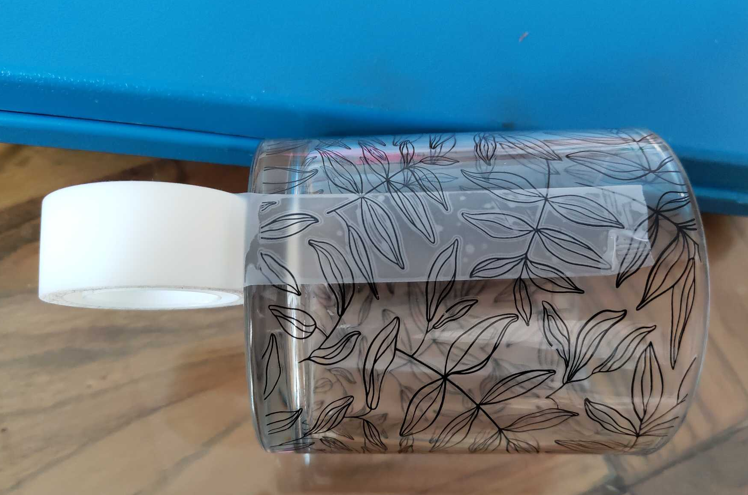
Surface Performance and Durability
Surface performance is a key indicator of quality for promotional items. Brands need their logos to remain visible despite daily wear and tear. Rub tests simulate this friction, allowing manufacturers to evaluate how well the ink adheres to the product's surface. Abrasion resistance, guided by standards like ASTM D5264, ensures that printed materials on gifts like pens, mugs, and notebooks can withstand handling without fading or peeling.
3M Tape Test and Rubbing Test Methods
The 3M Tape Test is the industry standard for checking print adhesion. Here is the typical procedure:
- Prepare the surface and ensure the coating is fully cured.
- Apply a specific pressure-sensitive tape (like 3M No. 250) over the printed area.
- Press the tape down firmly to ensure good contact.
- Pull the tape off rapidly at a 45-degree angle.
- Inspect the tape and the product surface to see if any ink or coating was removed.
Inspectors also perform rubbing tests, sometimes using machines like the SUTHERLAND® Rub Tester, to check if safety labels and logos remain legible after repeated friction.
Tip: Consistent rub testing helps companies avoid faded logos and maintain brand integrity on promotional gifts.
Workmanship and Appearance Checks
Beyond adhesion, general workmanship is critical. Inspectors look for defects such as misaligned logos, ink smudges, or uneven application. Visual inspections ensure that the physical appearance matches the client's artwork proofs.
| Test Method | Purpose | Common Application |
|---|---|---|
| 3M Tape Test | Checks adhesion durability | Logos, painted surfaces |
| Rubbing Test | Assesses abrasion resistance | Safety labels, warnings |
| Visual Inspection | Identifies cosmetic defects | Overall product appearance |
Pantone Matching System for Color Accuracy
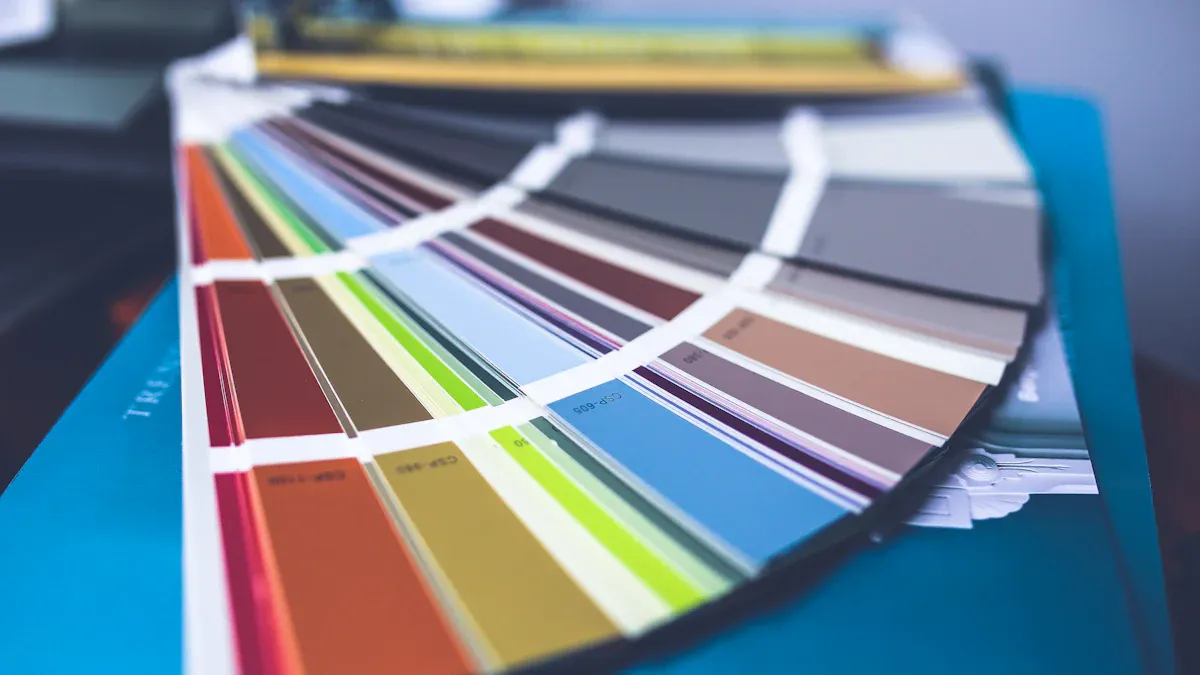
Pantone Card Comparison
The Pantone Matching System (PMS) is essential for brand consistency. Inspectors verify colors by comparing the physical product against standard Pantone swatch books. This process involves:
- Reviewing "drawdowns" (ink samples on the actual material) before production.
- Comparing production samples to the specific Pantone code (e.g., PMS 186 C) under standard lighting.
- Adjusting ink formulas if the color deviates from the standard.
Note: Color comparisons should always be done under controlled lighting or natural daylight to avoid metamerism (colors looking different under different lights).
Color Difference and Shading Checks
Even with Pantone codes, variations can occur. Inspectors use a metric called Delta E (dE) to quantify color difference. A lower Delta E means a closer match.
| Application | Acceptable Delta E |
|---|---|
| High-End Printing | < 2.0 |
| Textiles | < 1.0 (strict) |
| Standard Promotional | 2.0 - 3.0 |
Artwork and Specification Verification
To achieve accurate results, buyers must provide precise specifications. This includes vector artwork files and explicit Pantone codes. Verification involves checking that the logo size, position, and color on the final product align exactly with the digital proof.
| Checklist Item | Description |
|---|---|
| Color Accuracy | Verifying against PMS codes. |
| Design Alignment | Confirming size and placement match proofs. |
| Sample Comparison | Checking against the "golden sample" (approved prototype). |
Pantone Validated Quality Assurance
Batch Consistency and Inspection
Ensuring color consistency across a large production run is challenging. Quality assurance protocols involve checking samples from the beginning, middle, and end of the batch to ensure no color drift occurs. Using printers who are familiar with Pantone standards helps guarantee that the brand identity remains intact across thousands of units.
Supplier Selection and Ongoing Checks
Working with capable suppliers is crucial. Professionals recommend selecting manufacturers who have experience with color management systems and can provide test reports. Keeping a record of approved samples helps in resolving disputes if a future batch does not match the agreed-upon standards.
In summary, implementing rub tests and Pantone color verification is essential for maintaining the quality of promotional gifts. By adhering to these standards, companies ensure their branded merchandise is durable, visually accurate, and professional.
| Benefit | Description |
|---|---|
| Color Assurance | Faithful reproduction of brand colors protects identity. |
| Trust | High-quality printing builds buyer confidence. |
| Durability | Passed rub tests mean long-lasting logos. |
FAQ
What is a 3M Tape Test?
A 3M Tape Test is a standard method to check adhesion. Inspectors apply pressure-sensitive tape to a printed area and pull it off to see if the ink detaches.
Why is Pantone color matching important?
It ensures that the brand color looks the same across different materials and products (e.g., a pen matches a notebook), maintaining brand consistency.
How do inspectors check for color consistency?
They compare production samples against a standard Pantone book and the approved "golden sample" under controlled lighting to detect any deviation.
What should companies provide to suppliers?
Provide vector artwork files (AI, EPS) and specific Pantone (PMS) color codes, not just RGB or CMYK values, to ensure accurate reproduction.
Related Articles

Grow your business with TradeAider Service
Click the button below to directly enter the TradeAider Service System. The simple steps from booking and payment to receiving reports are easy to operate.

