
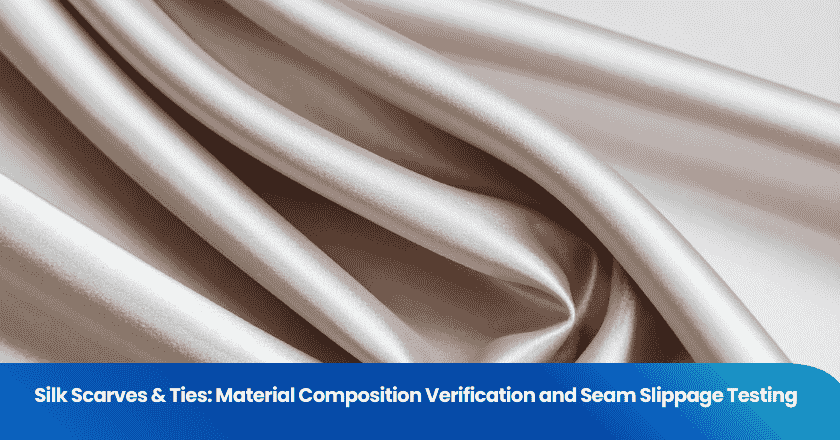
Silk remains the pinnacle of luxury textiles, prized for its unique luster, protein-based biocompatibility, and high tensile strength. However, the high market value of silk makes it a frequent target for adulteration with synthetic fibers like polyester or regenerated cellulose like rayon. For manufacturers and retailers, ensuring the authenticity and mechanical durability of silk scarves and ties is critical to brand equity. This involves a rigorous combination of material composition verification—confirming the 100% protein origin—and seam slippage testing, which addresses the inherent structural weaknesses of lightweight silk weaves. By adhering to international standards such as ISO 13936 and AATCC protocols, quality control teams can guarantee that premium accessories meet both regulatory requirements and consumer expectations for longevity.
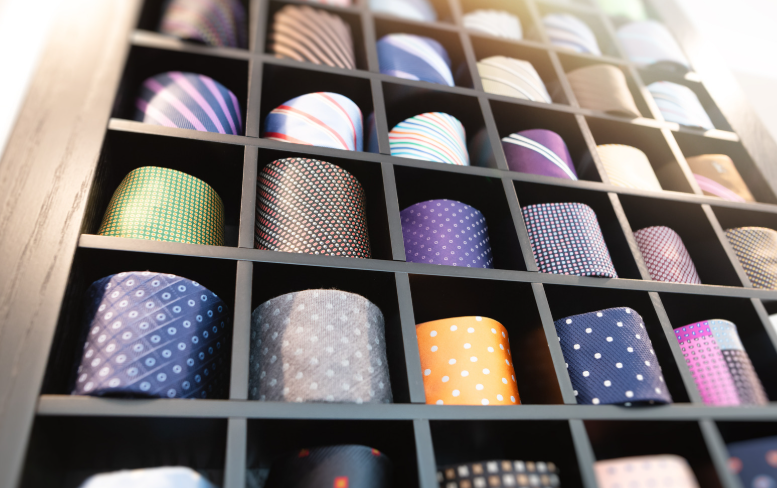
Key Takeaways
- Authenticity verification through chemical solubility and amino acid profiling is the only definitive way to detect advanced silk counterfeits.
- Understanding the 6A grading system and Momme weight is essential for pricing and performance benchmarking.
- Seam slippage testing (ISO 13936) is mandatory for lightweight silks like chiffon and habotai to prevent 'smiling seams.'
- Accurate fiber content labeling is a strict legal requirement under FTC and EU regulations; non-compliance leads to heavy financial penalties.
- Strategic quality control methods during production help mitigate the risk of 'quality fade' in high-volume batches.
The Technical Framework of Silk Verification
Silk is a continuous protein filament produced by the silkworm (*Bombyx mori*). Its chemical structure, primarily fibroin and sericin, allows it to be distinguished from petrochemical-based synthetics. Real silk verification is not merely a tactile exercise; it requires a tiered laboratory approach ranging from simple solubility tests to advanced microscopy.
Defining Silk Grades: The 6A System
In the global supply chain, silk is graded from A to C, with numerical sub-grades. Grade 6A represents the highest quality, characterized by long, unbroken filaments, exceptional uniformity, and a pure white color. Grade 6A silk is significantly more resistant to pilling and mechanical stress than Grade 3A or lower, making it the technical standard for luxury ties and heavy-duty scarves.
| Silk Grade | Technical Characteristics | Industry Standard Use |
|---|---|---|
| 6A | Long filament (>1000m), highest uniformity, low impurity | High-end luxury scarves and neckties |
| 5A/4A | Good strength, minor filament breaks, standard sheen | Premium sleepwear and standard fashion apparel |
| Grade B | Shorter filaments, higher slub count, yellowish tint | Mid-market linings and blended textiles |
| Grade C | Short staple fibers, high fuzziness, broken cocoons | Raw silk, industrial paddings, low-cost blends |
Momme Weight Analysis
Momme (mm) is a non-metric unit used to measure the density of silk fabric. Technically, one Momme equals the weight in pounds of a piece of silk 100 yards long and 45 inches wide (approx. 4.34 grams per square meter). Selecting the correct Momme weight is a functional decision: for example, an 8mm chiffon scarf is designed for transparency, while a 22mm silk tie requires the structural density to hold a four-in-hand knot without deforming.
| Momme (mm) | GSM Range (approx.) | Fabric Application |
|---|---|---|
| 8 - 12 mm | 35 - 52 gsm | Chiffon, Georgette, Lightweight linings |
| 16 - 19 mm | 70 - 82 gsm | Standard Charmeuse, Blouses, Ties |
| 22 - 30 mm | 95 - 130 gsm | Luxury Satin, Heavyweight Crepe, Suiting |
Material Composition Testing Methods
To confirm 100% Mulberry silk content, laboratories employ several standardized inspection procedures. The chemical solubility test is the most common industrial check: genuine silk dissolves completely in a 5% Sodium Hypochlorite (bleach) solution within minutes, while polyester remains completely intact.
Quantitative Chemical Analysis
For blended fabrics (e.g., Silk-Wool or Silk-Cotton), laboratories must determine the exact percentage of each fiber. This is achieved through selective dissolution, where specific chemicals remove one fiber type while leaving the other to be weighed. ISO 1833 provides the technical protocols for these binary and ternary fiber mixtures.
- Microscopic Analysis: Silk filaments appear as smooth, triangular prisms under magnification, which accounts for their unique light refraction. Synthetic fibers often show striations or uniform cylindrical shapes.
- Amino Acid Profiling: Advanced chromatographic methods analyze the presence of glycine, alanine, and serine, which are the dominant amino acids in natural silk fibroin.
- Solubility Tests: Real silk is soluble in Kupfer-ethylenediamine but resistant to most organic solvents that dissolve synthetics.
Seam Slippage: The Achilles' Heel of Silk
Lightweight silk fabrics are often 'loose' in their weave construction. This creates a risk of seam slippage—a technical defect where the warp or weft yarns pull away from the stitch line under tension. This is not a thread failure but a fabric structural failure. In high-quality ties and scarves, seam slippage leads to 'smiling seams'—gaps that permanently distort the accessory.
ISO 13936 and Seam Strength Protocols
The standard test for seam slippage (ISO 13936-1) involves sewing a standardized seam and applying a fixed load (typically 60N to 100N). Technicians then measure the resulting gap. For luxury silks, a gap exceeding 6mm is usually considered a failure. This test is critical during regular manufacturing quality inspections to ensure that the chosen stitch density (SPI) is sufficient to anchor the slippery silk yarns.
| Test Type | Standard Method | Failure Threshold |
|---|---|---|
| Seam Slippage | ISO 13936-1 | Gap > 6mm at 60N load |
| Seam Strength | ASTM D1683 | Rupture below 150N (for ties) |
| Bursting Strength | ISO 13938 | Distortion of circular knits |
Regulatory Compliance and Labeling Integrity
Government agencies like the Federal Trade Commission (FTC) in the USA and the European Commission strictly enforce the Textile Fiber Products Identification Act. Silk products must be labeled accurately; labeling a polyester blend as '100% Silk' is a legal violation that can lead to massive recalls and litigation.
History has shown that even established brands are not immune to these errors. In various cases, major apparel groups have faced fines exceeding $300,000 for mislabeling fiber content or providing incorrect care instructions that led to consumer product damage. Achieving quality assurance and regulatory compliance is not just about safety—it is a financial safeguard.
Best Practices for Silk Quality Management
To maintain consistent quality, manufacturers should integrate testing at multiple stages of the production cycle. Relying solely on final inspections often results in entire batches being rejected, which is unsustainable for high-cost materials like silk.
- Pre-Production Fabric Audit: Verify the Momme weight and grade of the raw silk bolts before cutting. Conduct chemical solubility tests on a 10cm sample from each roll.
- In-Line Seam Calibration: Test the SPI (Stitches Per Inch) on a sample seam every morning to ensure machine tension is not damaging the delicate silk filaments.
- Finished Product Random Sampling: Use AQL (Acceptable Quality Level) standards to pull samples for visual luster checks and seam integrity tests.
- Packaging and Environmental Control: Silk is sensitive to UV and moisture. Ensure that warehouse storage uses acid-free tissue paper and maintains a stable 45-50% relative humidity.
- Expert Tip: Always perform a 'Burn Test' on-site during a factory audit. While not a replacement for lab analysis, the smell of burning hair and the presence of brittle, crushable ash provide an immediate field confirmation that the protein structure is natural.
Ready to secure your product quality before shipment?
As your third-party inspection, testing & certification partner in China, TradeAider supports brands and sourcing teams across the entire production process, helping you identify quality risks early, ensure compliance, and strengthen your team’s capabilities before shipment.
Book an Inspection or Testing Service with TradeAider today, or for tailored solutions and expert guidance, contact us at services@tradeaider.com or submit the request form on the right. →
Frequently Asked Questions (FAQ)
What is the difference between Mulberry silk and Tussah silk?
Mulberry silk comes from silkworms raised in a controlled environment and fed exclusively on mulberry leaves, resulting in white, uniform filaments. Tussah silk is 'wild' silk; it has a rougher texture, a natural beige color, and is technically harder to bleach, making it less common for high-definition printed scarves.
Why do some silk ties feel stiff?
The stiffness in silk ties is usually due to the 'interlining' (typically wool or polyester) inside the tie, or the use of 'weighting' chemicals. Historically, silk was weighted with metallic salts to increase its heft, but this technically reduces the durability of the fiber.
Can I rely on a 'Hand Wash' label for all silk?
No. While silk is a washable fiber, the *dye* may not be water-fast. Furthermore, many lightweight weaves will suffer from severe shrinkage or seam slippage if submerged in water. Professional dry cleaning is often the technical requirement for structured silk ties.
How does seam slippage differ from a seam rip?
A seam rip is the failure of the sewing thread. Seam slippage is the failure of the fabric itself; the yarns literally slide away from each other because the silk surface is too smooth and the weave is not tight enough to hold them in place under load.
Is OEKO-TEX certification necessary for silk?
While not a measure of silk authenticity, OEKO-TEX Standard 100 verifies that the dyes and finishing agents used on the silk scarf are free from toxic chemicals. Given that scarves are worn close to the neck and mouth, this is a critical safety benchmark for modern brands.
Related Articles
Grow your business with TradeAider Service
Click the button below to directly enter the TradeAider Service System. The simple steps from booking and payment to receiving reports are easy to operate.

