
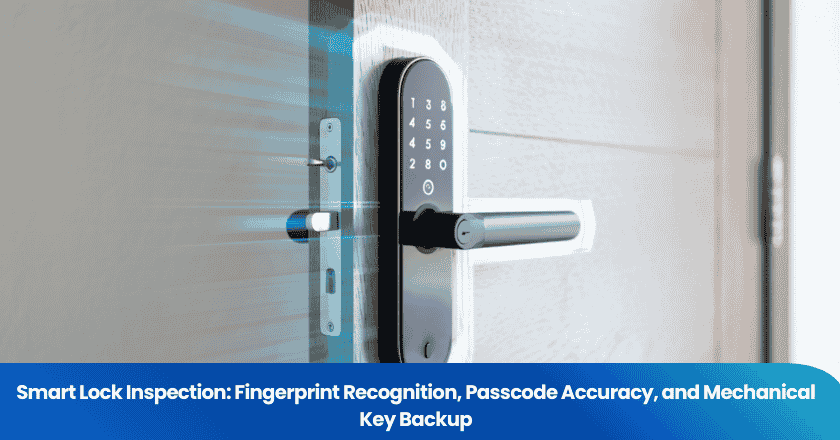
Smart lock inspection verifies that every access method works correctly before products leave the factory. For importers and Amazon sellers sourcing smart locks from China, a structured pre-shipment inspection covering fingerprint sensor accuracy, passcode entry reliability, and mechanical key backup is essential for reducing return rates and protecting brand reputation. A single batch with defective fingerprint sensors or a failing mechanical backup can generate a wave of one-star reviews — catching these issues on-site is far less costly than dealing with them after delivery.
Key Takeaways
- Leading fingerprint locks should achieve 99% or higher recognition accuracy; buyers should require suppliers to document sensor performance data before accepting a batch.
- Passcode entry testing identifies security weaknesses at the factory level — catching defective keypads and firmware bugs before shipment prevents costly returns.
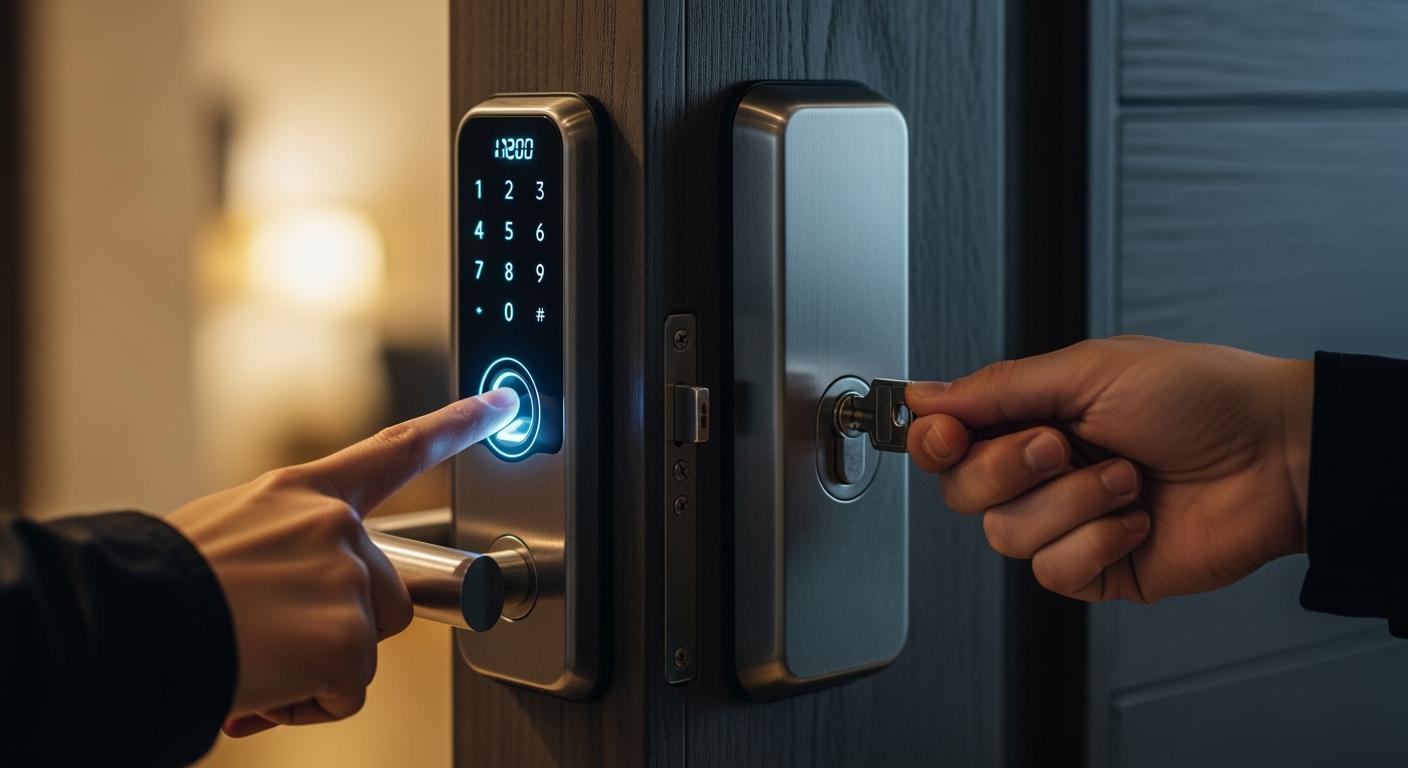
- Mechanical key backups are critical failsafe components; inspectors verify cycle durability against ANSI/BHMA and EN 12209 standards to confirm the product meets its rated grade.
- Consider professional inspection services to verify lock systems meet security standards and perform reliably over time.
Fingerprint Lock Accuracy Testing
Functional Testing Methods
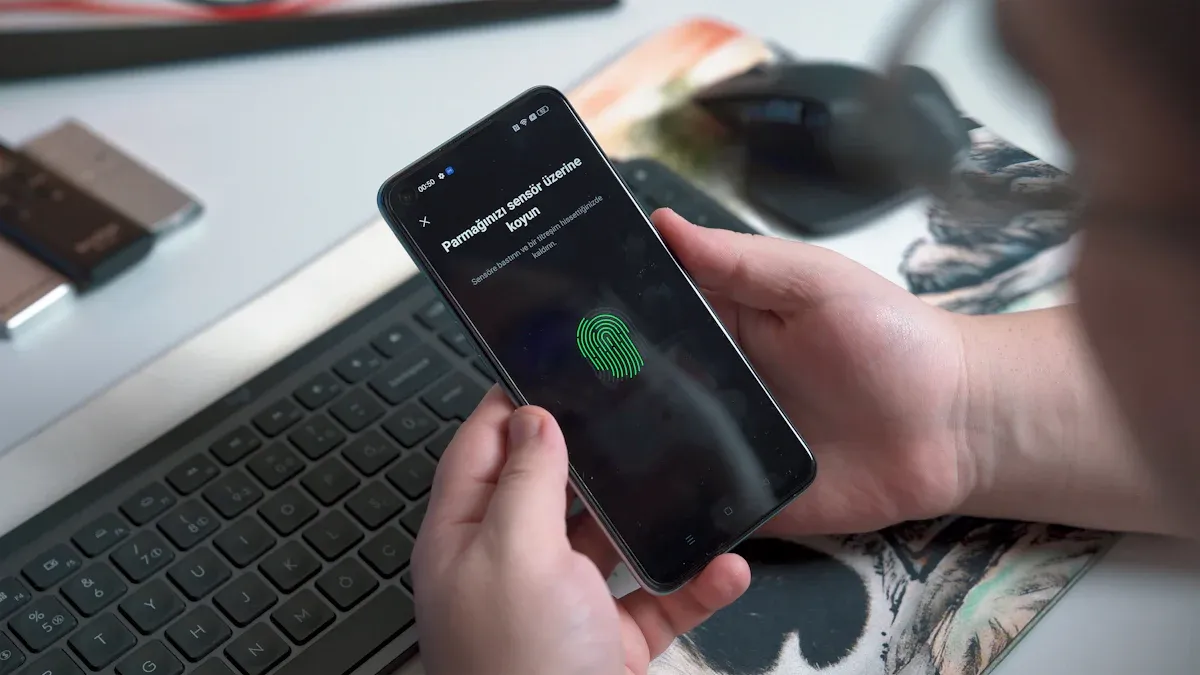
Inspectors from TradeAider use systematic functional and on-site testing to check fingerprint sensor accuracy. Multiple actual-use tests evaluate response time, recognition consistency, and rejection behavior. Inspectors register several fingerprints and run repeated tests to confirm the lock does not freeze, lag, or produce false rejections. Software and firmware stability are assessed during extended testing sessions.
| Brand / Category | Fingerprint Recognition Accuracy |
|---|---|
| Most leading brands | At least 99% |
| ULTRALOQ (top performer) | 99.8% |
Troubleshooting Common Fingerprint Issues
Environmental factors are the leading cause of recognition failures in practice. High humidity — particularly above 65% relative humidity — causes water vapor to blur fingerprint ridges, changing the way the sensor reads the pattern. Common causes of fingerprint recognition failure include dirt or moisture on the sensor surface, worn or damaged sensor hardware, poorly registered fingerprints from rushed enrollment, dry or injured fingers that reduce ridge clarity, software or firmware bugs, too many users stored in the lock's database, and low battery power affecting sensor performance.
During factory inspection, these failure modes are reproduced systematically: inspectors test sensors under simulated humid conditions, attempt enrollment with varied finger pressure, and run extended recognition trials to confirm the lock meets its rated accuracy specification. Any batch where recognition failures exceed the agreed AQL threshold is flagged for rework or rejection before shipment.
Environmental Factors and Performance
Buyers sourcing for tropical, coastal, or high-humidity markets should specify moisture-resistant sensor requirements in their product specification sheet. Modern fingerprint locks increasingly use moisture-repellent coatings and adaptive algorithms that reduce false rejections in humid conditions. Inspectors verify that the lock gives a clear low-battery warning before power drops to a level that impairs sensor function — a missing or delayed warning is classified as a major defect.
Passcode Entry and Security Verification
Passcode Testing Methods
Inspectors verify passcode entry by testing correct and incorrect combinations systematically. Each lock must recognize the right code quickly and reject wrong entries after the configured number of attempts. Keypad responsiveness — checking for lag, missed touches, or stuck keys — is evaluated separately. Temporary code functionality is tested by generating a guest code, confirming it works within its validity period, and verifying it expires correctly.
Security Features and Error Rate
A low error rate in passcode recognition indicates reliable security. Inspectors look for fast, accurate responses and verify advanced security features. Many locks use strong encryption to protect passcode data. Anti-tamper alarms that activate during break-in attempts, multi-factor authentication combining passcode and fingerprint, and user management features with per-code access logs all contribute to a comprehensive security posture.
Tip: Enable temporary codes for delivery personnel or service workers, set expiration dates for all guest access, and review access logs periodically to spot unexpected entry attempts.
What Buyers Should Verify Before Accepting a Shipment
Beyond factory testing, buyers should confirm that the firmware shipped with each unit is the latest stable release and that the lock's companion app is free of critical security vulnerabilities. Requiring suppliers to document the firmware version on the inspection report protects buyers from shipping products that are already outdated on arrival. Buyers targeting markets with strict data security requirements — such as the EU or California — should also verify that access log data is encrypted at rest and that the lock does not transmit data to unauthorized third-party servers.
Mechanical Key Backup Reliability
Testing the Mechanical Key
Mechanical key backups ensure building access when electronic features fail — dead batteries, software errors, or power outages all require a reliable physical fallback. Inspectors test the key by inserting and turning it through multiple cycles, checking for smooth operation and confirming the lock cylinder does not stick or jam. Industry standards define minimum cycle counts to prove durability:
| Standard | Minimum Cycles | Application |
|---|---|---|
| ANSI/BHMA Grade 1 | 1,000,000 | Highest durability — commercial buildings |
| ANSI/BHMA Grade 2 | 800,000 | Mid-range — light commercial and multi-family |
| ANSI/BHMA Grade 3 | 200,000 | Residential-grade locks |
| EN 12209 | 200,000 | General applications, European standard |
Assembly and alignment checks confirm the deadbolt and motor drive are secure and properly positioned. Impact and strength testing verifies the lock withstands physical force attempts, an important consideration for residential security.
Signs of Wear or Failure
Mechanical key backups degrade over time. Inspectors look for misalignment between the lock and strike plate, which prevents smooth operation; jamming from internal wear; and the need for lubrication indicated by sticking or resistance during key operation. Early detection of these issues keeps the backup entry method ready for emergencies and prevents a situation where the mechanical key is needed but fails to work.
Maintenance and Alignment Checks
During inspection, every mechanical component is checked for factory-level defects that would cause premature failure in the field. Inspectors verify that screws and mounting hardware are correctly torqued, that the deadbolt extends and retracts smoothly without binding, and that the key cylinder operates without excessive resistance. Products destined for markets with wide seasonal temperature ranges are assessed for housing material compatibility, since thermal expansion can cause misalignment between the lock body and strike plate over time.
Smart Lock Inspection Checklist
Step-by-Step Inspection Process
A thorough smart lock inspection covers every access method. Inspectors begin with the fingerprint sensor: registering multiple fingerprints, verifying recognition speed and accuracy, and repeating the process to confirm consistent performance. Next, passcode entry is tested with both correct and incorrect codes to evaluate keypad response and error handling. Temporary code generation and expiration are verified.
Mechanical key backup receives careful testing: insert and turn the key, check for smooth operation, inspect for wear or jamming, and confirm alignment with the strike plate. Battery voltage and low-power alerts are tested to prevent unexpected lockouts. Firmware version is checked and updated if needed. The full inspection also covers updating device software to patch vulnerabilities, verifying unique complex passwords are set for each smart device, and confirming all alert and alarm functions operate correctly.
Real-Time Verification and Reporting
TradeAider's inspection teams record video evidence while testing each access method. If a lock fails any test, inspectors classify the defect and notify the responsible party immediately. Instant feedback enables resolution before the lock ships. After inspection, TradeAider delivers an official report within 24 hours including all test results, video documentation, and a security feature summary. This process ensures transparency and builds confidence in the lock's reliability across all three access methods.
Integration with Smart Home Systems
Modern smart locks often integrate with broader smart home ecosystems — including Z-Wave, Zigbee, Wi-Fi, and Bluetooth protocols. During inspection, connectivity stability is verified by pairing the lock with a test hub and confirming that lock/unlock commands execute within an acceptable response time. Inspectors also confirm that the lock's app registers status changes in real time and that access logs sync correctly. Firmware compatibility with the connected ecosystem should be confirmed before shipment, as mismatched firmware versions between the lock and hub can cause pairing failures in the field.
For importers and online sellers, a structured smart lock inspection is the most reliable way to verify that every production batch meets agreed specifications before shipment. TradeAider’s third-party inspection process includes AQL sampling, appearance and workmanship checks, function testing (fingerprint recognition, passcode verification, and mechanical key operation), quantity verification, packaging inspection, and labeling compliance review.
During the inspection, TradeAider provides an online real-time report, allowing clients to monitor inspection progress and make timely decisions on defective products — whether to accept them, require on-site correction by the supplier, or reject them before shipment. A detailed official report is then issued within 24 hours after the inspection is completed, providing clients with reliable documentation to support quality assurance, shipment approval, and payment decisions, while minimizing the risk of shipping defective products.
FAQ
When in the production cycle should buyers arrange a smart lock inspection?
A pre-shipment inspection (PSI) is the most common and cost-effective approach — conducted when at least 80% of units are finished and packaged. For large orders or new suppliers, adding a during-production inspection (DPI) allows buyers to catch systematic defects early, before the entire batch is affected.
What defects are most commonly found during smart lock inspections?
The most frequently flagged defects are fingerprint sensor false rejections under humid conditions, keypad keys that require excessive force or register missed inputs, mechanical key cylinders that jam or have loose tolerances, and firmware that causes the app to lose connection with the lock. Catching these at the factory level — rather than through customer returns — is the core value of pre-shipment inspection.
How do inspectors verify the mechanical key backup meets durability standards?
Inspectors perform a cycle endurance check by operating the key through repeated insert-turn-remove sequences and comparing results against the applicable standard — ANSI/BHMA Grade 1 (1,000,000 cycles), Grade 2 (800,000), Grade 3 (200,000), or EN 12209 (200,000). Any sticking, jamming, or excessive wear observed during testing is documented and classified. Buyers should specify the required grade in their purchase order to ensure the factory produces to the correct standard.
What are signs that a mechanical key backup needs maintenance?
| Sign | What It Indicates |
|---|---|
| Sticking | Key does not turn smoothly — lubrication needed |
| Jamming | Lock feels rough or blocks rotation — possible internal wear |
| Misalignment | Key does not insert or seat properly — door or strike plate adjustment needed |
What should buyers include in their smart lock product specification to guide inspection?
A clear product specification should define the minimum fingerprint recognition accuracy rate, the number of recognition test cycles required, the passcode error lockout threshold, the required ANSI/BHMA or EN grade for the mechanical backup, and the firmware version to be shipped. Providing this specification to TradeAider before inspection ensures every unit is evaluated against the buyer's actual requirements rather than generic factory defaults.
Related Articles
Grow your business with TradeAider Service
Click the button below to directly enter the TradeAider Service System. The simple steps from booking and payment to receiving reports are easy to operate.

