
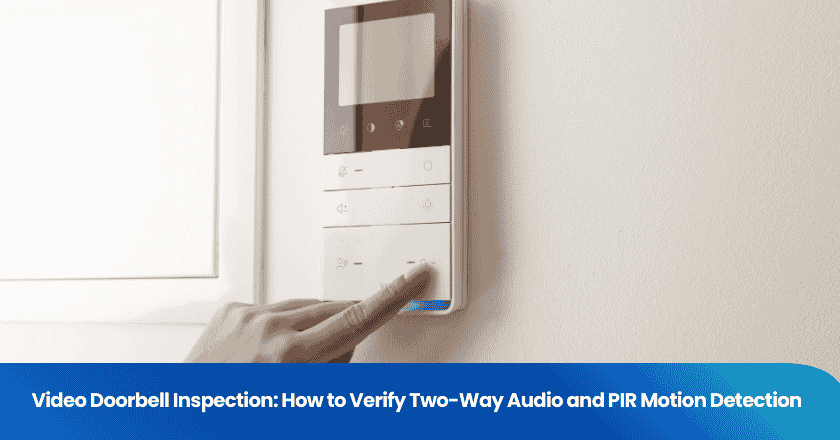
Video doorbells are one of the fastest-growing smart home product categories — across the United States alone, 20% of internet households now use one. For importers and Amazon sellers sourcing video doorbells from Chinese factories, two-way audio clarity and PIR motion detection range are the most failure-prone features and the most common drivers of negative reviews and returns. A structured pre-shipment inspection validates both before goods leave the factory, giving buyers documented evidence of product performance and a clear basis for accept or reject decisions.
| Testing Aspect | Description |
|---|---|
| Image Quality | Stringent testing methods adapted for doorbell cameras, covering exposure, texture, and noise. |
| Evaluation Methods | Combines objective tests (white balance, texture) and perceptual evaluations based on ITU standards. |
| Field of View | Each doorbell is tested at its default field-of-view setting per manufacturer specifications. |
| Key Attributes | Evaluates exposure, details, and artifacts to ensure effective face recognition at the door. |
Key Takeaways
- Pre-shipment video doorbell inspections give buyers documented evidence of audio and motion detection performance before goods leave the factory.
- Two-way audio defects — dropped audio, low volume, microphone failure — are among the top causes of one-star reviews; catching them at the factory prevents costly returns.
- PIR motion detection range should be verified against the product specification; units that under-perform on range or trigger excessive false alerts are a major defect.
- Buyers should require suppliers to confirm Wi-Fi connectivity stability and app integration during inspection — connectivity failures discovered post-delivery are expensive to resolve.
- Buyers sourcing for outdoor use should specify weatherproofing and night vision requirements in their product spec and verify compliance during pre-shipment inspection.
Video Doorbell Inspection Essentials
Audio Testing Steps
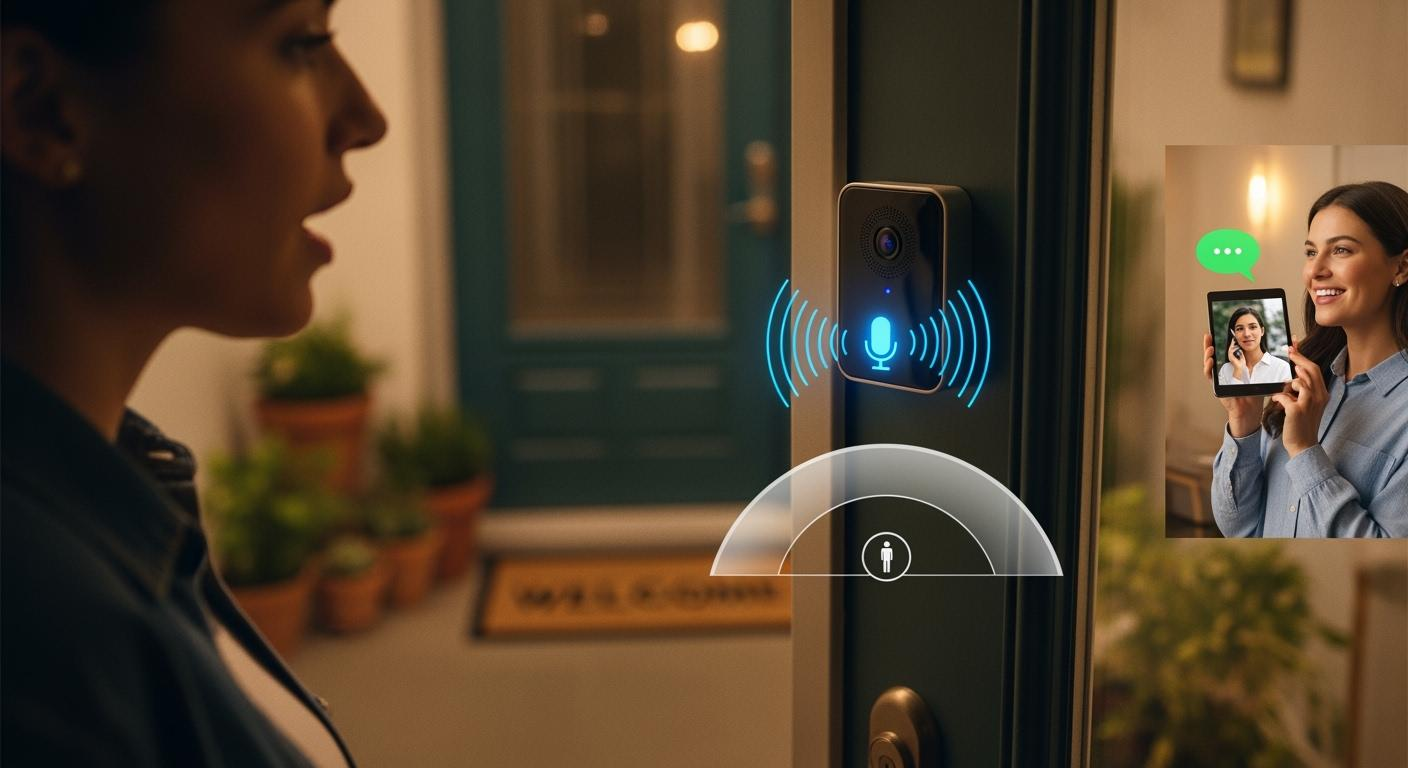
A comprehensive inspection begins with two-way audio clarity. Inspectors simulate real-world use by initiating a two-way call through the companion app and evaluating both the doorbell speaker and microphone for static, latency, and volume consistency. Real-time audio-visual evidence is uploaded immediately, allowing buyers to review communication quality remotely. Audio defects are classified by severity: a non-working speaker or microphone is a major defect, while any defect that defeats the primary security function is classified as critical and triggers automatic batch rejection.
PIR Range Testing
Inspectors use quantitative measurement to verify PIR sensor performance. Distances are marked at five-foot intervals from the mounting location up to the maximum detection range. A person walks across the detection field at each distance, and the inspector records where the sensor activates. Most video doorbells detect motion between 15 and 30 feet, with optimal performance occurring within 15 to 20 feet.
| Detection Distance | Performance Level |
|---|---|
| 5 - 15 feet | Excellent — detects people, pets, and vehicles with high precision |
| 15 - 25 feet | Good — identifies larger heat sources reliably |
| 25 - 30 feet | Inconsistent — limited to large, warm objects only |
Functional and Quantitative Verification
The inspection protocol combines functional and quantitative verification. Inspectors confirm mounting at the optimal height of 48 to 56 inches, stable Wi-Fi connectivity, and correct app configuration. All failures are documented with video evidence and quantitative data, giving buyers a clear audit trail to support supplier accountability discussions and return merchandise authorization (RMA) claims if defects appear post-delivery.
Tip: Buyers should require the factory to provide the firmware version number on every inspection report. Shipping units with outdated firmware is a common source of app connectivity complaints that appear only after customers set up the product at home.
| Inspection Step | Purpose |
|---|---|
| Audio Testing | Ensures clear two-way audio communication |
| PIR Range Testing | Verifies motion detection accuracy |
| Functional Verification | Confirms installation and smart features work correctly |
| Quantitative Measurement | Documents detection range and product conformity |
Two-Way Audio Clarity in Video Doorbells
Common Audio Issues
Video doorbells rely on two-way audio to support clear communication between the property occupant and visitors at the door. During inspection, the most frequently encountered problems include audio dropping out suddenly, low audio levels, connectivity-related lag, and complete speaker or microphone failure. A major defect involves a non-working component; if the defect affects the primary security function, it is classified as critical and triggers immediate action.
Optimizing Audio Performance
Technical managers use a structured troubleshooting process to resolve audio issues:
- Verify network stability. Check signal strength in device settings. A weak connection directly causes audio lag or dropout.
- Test the device speaker. Press the doorbell button or trigger a test event to confirm the chime activates correctly.
- Check the phone microphone. Record a voice memo or make a test call to confirm the microphone is functional.
- Grant app permissions. Ensure the app has microphone access in the phone's system settings.
PIR Motion Detection Range Verification
PIR Sensor Testing Methods
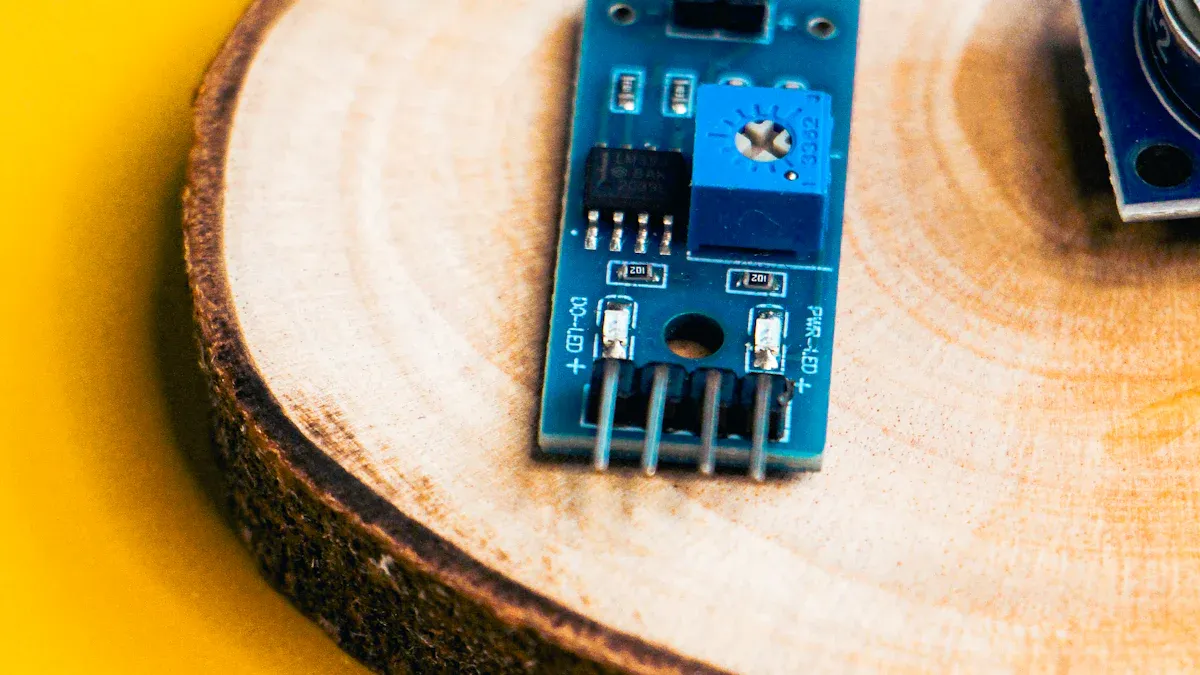
Inspectors measure detection range by marking distances from the doorbell and recording where motion triggers alerts. This verifies that the smart video doorbell meets technical specifications. Sensor and firmware stability are assessed by repeating motion tests at different times and angles. For compliance purposes, all results are documented to confirm the doorbell meets listing requirements.
| Detection Type | How It Works |
|---|---|
| Person Detection | Uses advanced algorithms to identify human figures, reducing false alarms from non-human movement. |
| Vehicle Detection | Identifies cars, trucks, and four-wheeled vehicles, minimizing false alerts. |
| Pet/Animal Detection | Distinguishes between pets, wildlife, and other motion for precise alerting. |
Factors Affecting PIR Accuracy
Several factors can reduce motion detection accuracy. Inadequate sensitivity settings may cause the doorbell to miss slow-moving people or those approaching from an angle. Poor placement — especially mounting too high — can result in the motion zone missing foot traffic. Environmental interference from direct sunlight, reflective surfaces, HVAC units, or wind-blown debris can also disrupt detection. Adjusting sensitivity settings and mounting angle resolves most of these issues.
Troubleshooting Motion Detection
When motion detection problems arise, a structured approach resolves most issues: adjust sensitivity settings, ensure the PIR sensor faces the primary approach direction, verify the path and typical speed of visitors, check Wi-Fi connectivity, and use smaller detection windows with larger target sizes to reduce false recordings. Inspecting mounting height, sensor distance, and signal strength together addresses the majority of field-reported detection failures.
Inspection Strategy for Video Doorbell Buyers
When to Inspect
The right inspection timing depends on order size, supplier history, and product complexity. For most video doorbell orders, a pre-shipment inspection (PSI) — conducted when at least 80% of units are finished and packaged — provides the best balance of coverage and cost. The following framework helps buyers decide on inspection frequency by product type:
| Product / Supplier Scenario | Recommended Inspection Approach |
|---|---|
| Standard indoor doorbells, established supplier | PSI on first order; sampling-based thereafter |
| Outdoor / weatherproof models, new supplier | DPI + PSI on first order |
| High-value or custom-spec doorbells | PPI + DPI + PSI for full production coverage |
What to Specify in Your Inspection Checklist
Buyers achieve better inspection outcomes when they provide a detailed product checklist to their inspection partner before the visit. For video doorbells, the checklist should cover: lens clarity and freedom from defects, firmware version verification, two-way audio test (both speaker and microphone), PIR range measurement at defined distances, Wi-Fi connectivity and app pairing confirmation, night vision activation and image quality, weatherproof seal integrity for outdoor models, and packaging completeness. TradeAider's inspection service helps buyers build product-specific checklists that align with their AQL thresholds and target market requirements.
Pre-Production Oversight
Before launching a new video doorbell model, manufacturers should use pre-production oversight to verify every component. This includes demanding third-party test reports from accredited third-party labs, conducting virtual factory audits to inspect SMT assembly lines and QC stations, and ordering pre-production samples for real-world stress testing. These steps confirm that motion detection, audio, and alert features all meet technical requirements before products reach the market.
Wi-Fi Connectivity and App Integration Testing
A video doorbell that cannot maintain a stable Wi-Fi connection will miss motion events and fail to deliver real-time notifications — which defeats the core purpose of the device. Inspectors verify Wi-Fi connectivity by checking signal strength at the intended mounting location, confirming the doorbell maintains a stable connection during extended operation, and testing whether the app receives push notifications reliably when motion is detected or the doorbell button is pressed. Network dropout behavior is also evaluated: the device should reconnect automatically without requiring a manual reset. App pairing, account login, and remote viewing are confirmed during inspection to ensure the end-user setup experience is smooth and the device functions correctly from first use.
Night Vision and Low-Light Performance
Many doorbell security events occur at night, making infrared night vision a critical performance factor. Inspectors evaluate night vision range, image clarity in low light, and the transition between color and night vision modes. The infrared LED indicators are checked for even illumination across the field of view, and the camera's ability to capture recognizable face detail at night at typical entry distances (3 to 8 feet) is verified. Units that fail to produce usable night vision imagery are classified as having a major defect, as this directly impairs the doorbell's primary security function.
For importers and online sellers, a thorough video doorbell pre-shipment inspection is the most direct way to protect margins and brand reputation. Verifying two-way audio, PIR detection range, Wi-Fi connectivity, and night vision before goods leave the factory eliminates the most common causes of returns and negative reviews — and gives buyers a documented basis for supplier accountability when issues do arise.
FAQ
At what stage of production should buyers arrange a video doorbell inspection?
Pre-shipment inspection (PSI) is the standard approach — scheduled when at least 80% of units are complete and packaged. For new suppliers or first-time orders of a new model, adding a during-production inspection (DPI) at the 30–50% production mark allows buyers to catch systematic defects before the full batch is affected, reducing rework costs significantly.
What defects are most commonly found during video doorbell inspections?
The most frequently flagged defects are one-way audio (microphone or speaker failure), PIR sensor range falling short of the specification, Wi-Fi connection instability causing missed motion alerts, night vision image quality below the required threshold, and firmware versions that cause app pairing failures. These defects are almost impossible for buyers to detect by reviewing samples alone — systematic on-site testing is required to surface them reliably.
How should buyers specify weatherproofing requirements for outdoor video doorbells?
Buyers should require a minimum IP65 rating for outdoor models and verify that the factory has test documentation to support this claim. During inspection, TradeAider's team checks seal integrity around the camera housing, cable entry points, and button mechanisms. Buyers targeting markets with heavy rainfall or extreme temperatures should additionally specify the operating temperature range and require the factory to confirm compliance with documentation.
Why is two-way audio one of the highest-priority items to inspect?
Two-way audio failure is one of the leading causes of one-star reviews and return requests for video doorbells. A unit with a failed microphone or speaker passes visual inspection and basic power-on testing — the defect only surfaces during actual use. On-site audio testing by a trained inspector, using the companion app under real network conditions, is the only reliable way to catch this defect before shipment.
Related Articles
Grow your business with TradeAider Service
Click the button below to directly enter the TradeAider Service System. The simple steps from booking and payment to receiving reports are easy to operate.

