
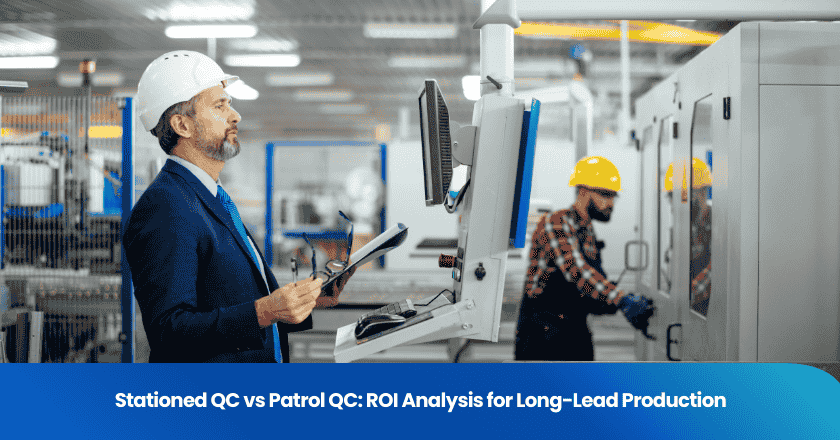
Stationed QC provides robust financial protection for manufacturers handling long-lead or OEM orders. This method guarantees product quality while sharing liability between the client and factory. Many companies prefer Stationed QC because it mitigates risk and prevents costly errors during extended production periods. ROI analysis confirms that continuous control minimizes defects and builds confidence in final results.

Key Takeaways
- Stationed QCoffers continuous oversight, ensuring product quality and reducing the risk of defects during long production runs.
- Patrol QCis cost-effective for short-term projects but may leave gaps in quality control, increasing the risk of undetected defects.
- Choosing the right QC method depends on production scale, risk tolerance, and product complexity.
- Investing in Stationed QC can lead to significant savings by preventing costly defects and ensuring compliance with industry standards.
- Real-time reporting in Stationed QC enhances communication and allows for quick responses to quality issues.
QC Methods Overview
What Is Stationed QC?
Stationed QC is a quality control approach where inspectors remain on-site throughout the entire production process. They monitor every stage, ensuring products meet defined quality standards. This structure enhances product quality by identifying defects early and preventing recalls. TradeAider's WeGuarantee service exemplifies this model.
- Enhances product quality by catching defects early.
- Minimizes rework and waste, lowering costs.
- Protects brand reputation by preventing recalls.
What Is Patrol QC?
Patrol QC involves inspectors conducting periodic or random checks during production. This method focuses on monitoring quality at specific intervals. It helps identify deviations in real time, allowing immediate corrective actions. However, it does not provide 24/7 coverage.
| Aspect | Description |
|---|---|
| Patrol Inspection | Periodic or random checks during production to monitor quality. |
| Purpose | Identifies deviations in real time for immediate corrective action. |
| Limitations | Potential gaps in oversight between inspection visits. |
Key Differences for Long-Lead Production
Stationed QC provides continuous oversight, making it ideal for long-lead or OEM orders where production spans extended periods. Patrol QC offers only a snapshot of quality at specific points. For long-lead production, ROI analysis shows Stationed QC delivers stronger risk mitigation and financial protection.
ROI Analysis Criteria
Defect Rates and Quality Assurance
Manufacturers measure defect rates to determine the effectiveness of quality control methods. Stationed QC maintains continuous oversight, reducing the chance of undetected defects. Patrol QC relies on periodic checks, so some issues may go unnoticed between inspections.
Cost Structure and Labor
Cost plays a major role in ROI analysis. Patrol QC typically uses a variable daily rate (e.g., $199 per man-day), making it attractive for short-term production. Stationed QC often uses a fixed fee structure (e.g., starting at $399 per order), offering guaranteed quality for a set price.
Tip: Fixed fees for Stationed QC simplify financial planning and reduce unexpected expenses for long projects.
Downtime and Risk Mitigation
Stationed QC minimizes downtime by identifying and resolving issues immediately. Patrol QC may allow problems to persist until the next inspection. Stationed QC shares liability with the factory, protecting manufacturers from financial loss if defects occur.
Stationed QC ROI Analysis
Continuous Control and Guaranteed Quality
Stationed QC delivers uninterrupted oversight throughout the entire production cycle. Companies like TradeAider and WeGuarantee set the benchmark for this approach. Their teams use advanced tools and real-time reporting to catch defects early. For example, in complex electronics assembly, continuous monitoring can detect soldering errors instantly, preventing mass rework.
ROI Example: The Cost of "Good Enough"
Scenario: 10,000 units of Smart Watches.
- Patrol QC Cost: 5 visits x $300 = $1,500.
Risk:3% defect rate missed = 300 bad units x $50 =$15,000 Loss. - Stationed QC Cost: Fixed Project Fee (e.g., $2,000).
Benefit:Defects caught on line.$0 Loss.
Conclusion: Stationed QC costs slightly more upfront but saves thousands in potential losses.
Financial Risk Reduction
Stationed QC significantly reduces financial exposure by preventing quality issues before they escalate. Their constant on-site oversight helps manufacturers avoid costly defects, shipment delays, and supplier fraud—directly minimizing losses tied to rework, returns, chargebacks, and disrupted delivery schedules.
Patrol QC ROI Analysis
Cost-Effective Sampling
Patrol QC uses a sampling approach. Inspectors visit the factory at scheduled intervals. This method is affordable and allows manufacturers to control costs by limiting inspection days. It works well for projects with tight budgets or short production cycles.
Risk of Accumulated Defects
Patrol QC relies on periodic checks, which can leave gaps. If a defect appears between inspections, the problem may continue unnoticed. Thousands of units could be affected before the next visit. ROI analysis shows that while Patrol QC saves money upfront, it may expose manufacturers to greater risk.
Direct Comparison: Stationed QC vs. Patrol QC
ROI Factors Table
The following table presents a side-by-side comparison of Stationed QC and Patrol QC for long-lead orders.
| Factor | Stationed QC | Patrol QC (DPI Service) |
|---|---|---|
| Cost Structure | Fixed Fee (Predictable Budget) | Variable (Daily Rate) |
| Coverage | Continuous, On-Site Monitoring | Periodic, Sampling Inspections |
| Defect Prevention | Immediate Detection & Correction | Issues May Accumulate Between Visits |
| Suitability | Long-Lead, High-Risk, OEM Orders | Stable, Low-Risk, Short Runs |
Strengths and Weaknesses
Stationed QC ensures every stage meets standards and reduces financial risk by sharing liability. However, it requires a higher commitment per order. Patrol QC is cost-effective and flexible but may miss defects that occur between visits.
Tip: For high-stakes orders with extended timelines, Stationed QC offers the best protection and value.
Recommendations for Manufacturers
Choosing the Right QC Method
Manufacturers should match the QC approach to their production scale and risk profile. For long-lead or OEM orders, Stationed QC offers the most robust protection. Patrol QC remains suitable for stable, low-risk production environments.
Tips for Maximizing ROI
- Evaluate the complexity of your product.
- Assess the risk of potential quality failures.
- Compare the total cost of potential defects vs. the cost of inspection.
- For high-value products, invest in Stationed QC to prevent losses that exceed the initial cost.
Stationed QC stands out as the best choice for long-lead production. This method guarantees quality and shares liability, which leads to a stronger ROI. Decision-makers can protect their investments and strengthen their operations by choosing Stationed QC.
FAQ
What makes Stationed QC more suitable for long-lead production?
Stationed QC provides continuous oversight and guarantees quality. This method reduces the risk of large-scale defects accumulating over weeks of production.
How does Patrol QC help control costs?
Patrol QC uses scheduled inspections, which lowers upfront costs. This approach works best for short runs where continuous monitoring isn't necessary.
Does Stationed QC offer real-time reporting?
Yes. Stationed QC services like TradeAider provide real-time updates through web apps. Clients monitor production progress and quality status at any time.
When should a manufacturer choose Patrol QC?
Manufacturers should select Patrol QC for low-risk, routine production. This method fits projects with simple specifications and trusted suppliers.
Related Articles

Grow your business with TradeAider Service
Click the button below to directly enter the TradeAider Service System. The simple steps from booking and payment to receiving reports are easy to operate.

