
- About Us

- Our Services
- Your Industry
- Resources
- News & Blog
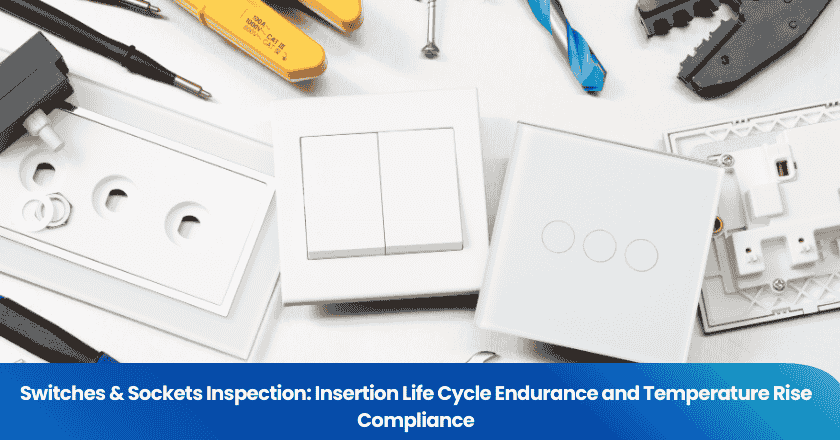
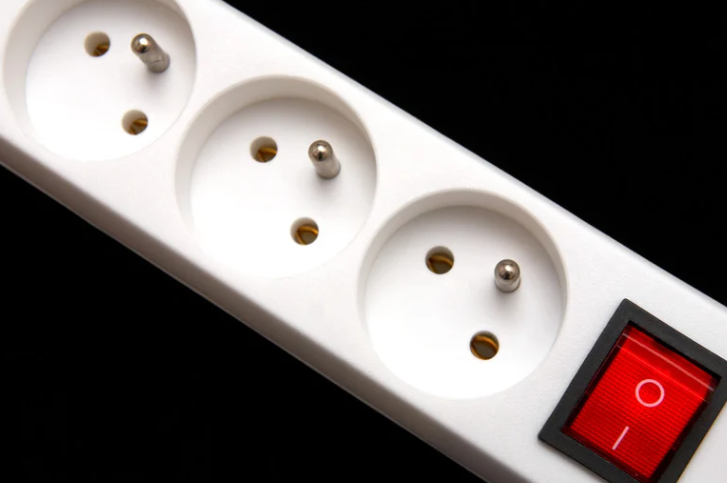
Switches and sockets are among the most frequently used electrical components in any building. Inspection focuses on two areas that directly predict long-term safety: insertion life cycle endurance -- how many connection cycles a device can withstand before mechanical or electrical failure -- and temperature rise compliance, which confirms that the device does not overheat when carrying its rated current. Neglecting either check leads to products that pass quality control visually but fail in the field, creating fire risks and system outages. International standards from IEC, UL, and NEC establish the thresholds and test conditions that govern both tests.
Key Takeaways
- Regular inspection of switches and sockets prevents mechanical failure and electrical hazards caused by wear over time.
- Endurance testing simulates years of insertion cycles, identifying wear before it becomes a safety issue.
- Temperature rise checks confirm devices do not overheat under rated load, preventing insulation breakdown and fire risk.
- Compliance with IEC 60884-1, UL, and SASO standards ensures products meet both safety and durability requirements across global markets.
- Real-time reporting enables immediate corrective action when devices fail tests, reducing the risk of defective products shipping.
Switches & Sockets Inspection: Endurance Testing
Life Cycle and Durability Testing
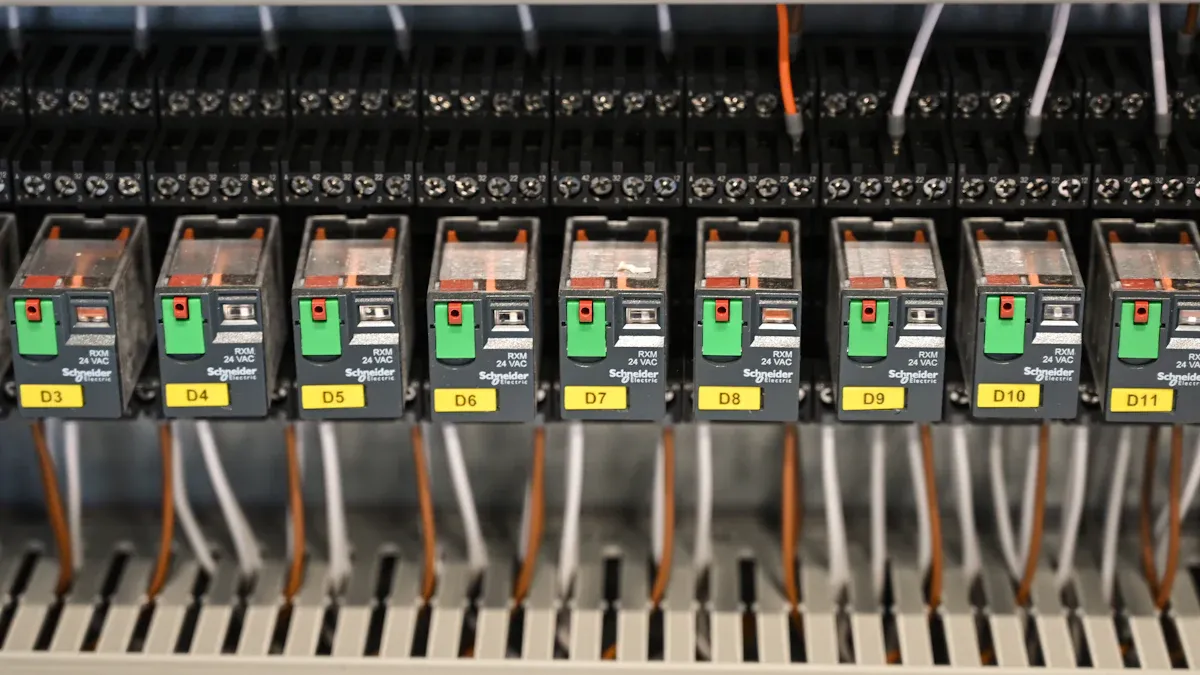
Endurance testing uses specialized equipment to simulate repeated insertion, withdrawal, and switching actions at a rate that compresses years of typical use into a controlled test period. TradeAider's team uses multi-station endurance testers that comply with IEC 60669 and IEC 60884-1, running devices through thousands of cycles while monitoring for signs of mechanical wear, contact resistance change, or electrical fatigue.
Environmental factors accelerate degradation and must be factored into test design:
| Environmental Factor | Impact on Device Lifespan |
|---|---|
| Temperature | Thermal expansion and contraction of housing and contact materials accelerates mechanical fatigue |
| Humidity | Moisture causes corrosion of contact surfaces, increasing resistance and reducing conductivity |
| Dust | Particle accumulation interferes with mechanical operation and can cause premature failure |
Note: Durable materials and good mechanical design significantly improve insertion cycle life. Inspectors also evaluate ergonomics, contact alignment, and ease of re-insertion during endurance testing.
Mechanical and Compatibility Checks
Beyond cycle counting, inspectors assess whether contacts maintain secure electrical connection throughout the endurance test. They check for contact adhesion (contacts that stick in the closed position), long-term disconnection (contacts that fail to maintain connection), and excessive contact resistance increase after repeated use. Compatibility testing confirms that the device accepts the range of plug types it is rated for, without mechanical damage at the maximum specification end.
| Check | Purpose |
|---|---|
| Safety Standards Compliance | Confirms device meets IEC, UL, or regional safety requirements |
| Mechanical Stress Testing | Assesses housing integrity and contact geometry after repeated use |
| EMC Evaluation | Checks for electromagnetic interference under switching load conditions |
Compliance Standards
Switches and sockets inspection is governed by several international standards, each addressing specific performance dimensions:
- IEC 60884-1: plugs and socket-outlets for household and similar use -- the primary standard for insertion endurance and temperature rise.
- IEC 60669-1: switches for household and similar fixed electrical installations.
- IEC 62368-1: comprehensive safety requirements for audio/video and IT equipment, replacing earlier standards in many categories.
- UL and NEC: certification and installation standards for North American markets.
Common Failures and Solutions
The most frequent defects identified during switches and sockets inspection are excessive contact wear from repeated insertion, contact adhesion under load, and mechanical housing damage from over-insertion force. Environmental degradation -- particularly corrosion from humidity and dust accumulation -- accelerates all of these failure modes. Recommended solutions include specifying silver-alloy or gold-plated contacts for high-cycle applications, improving housing material selection for high-humidity environments, and tightening assembly tolerances to reduce insertion force variability.
Tip: Identifying endurance failures early in a production run prevents the same defect from affecting the entire batch.
Temperature Rise Compliance
Thermal Performance Testing
Temperature rise testing measures how much hotter a device becomes compared to ambient temperature when carrying its rated current continuously. Inspectors run devices at rated current until the temperature stabilizes (typically requiring at least 3 hours of steady-state operation), then record maximum temperature rise at the most thermally critical point. The IEC 60695-10-2 ball pressure test verifies that housing materials do not deform at elevated temperatures, which would compromise insulation and safe contact spacing.
- Both internal contacts and external enclosure surfaces are monitored for thermal compliance.
- Ambient temperature is recorded separately to calculate the true temperature rise above ambient.
- Thermal cameras with adjustable emissivity settings improve accuracy across different surface materials.
Operational Safety and Overload Testing
Overload tests simulate conditions where devices are subjected to currents above their rated value, as happens when large appliances are connected to inadequately specified circuits. Inspectors use dedicated overload test equipment and verify that protection devices respond correctly:
| Safety Device | Function |
|---|---|
| Earth Fault Relay | Detects leakage current and disconnects the circuit to prevent electric shock |
| Core-Balance CT | Senses residual current imbalance and activates relay when limits are exceeded |
| Circuit Breaker / Contactor | Disconnects supply when a fault or overload is detected |
Standards and Temperature Rise Limits
| Standard | Temperature Rise Limit | Test Conditions |
|---|---|---|
| IEC 60320-1 | Max 45K rise | 1 hour at 1.25x rated current (e.g., 10A connector tested at 12.5A) |
| IEC 60884-1 | Max 45K rise | At rated current or per table 20 values |
| SASO 2815:2021 | Extended to 52K for current-carrying parts | Test current reduced from 16A to 14A; test period extended to over 4 hours |
The SASO 2815:2021 update is particularly relevant for exporters targeting Saudi Arabia and GCC markets. The extended test period and revised current levels reflect real-world usage patterns more accurately than the earlier standard.
Inspection Best Practices and Reporting
Tools and Equipment
Accurate switches and sockets inspection requires the right tools for each test type: socket testers confirm correct wiring polarity and earth continuity; multimeters measure contact resistance and insulation values; spirit levels verify correct installation angle; and thermal cameras with adjustable emissivity settings capture surface temperature distribution during load testing. Inspectors record ambient temperature independently to calculate accurate temperature rise values.
Real-Time Monitoring and Documentation
At TradeAider, inspectors document all findings with photos, videos, and measurement data, resulting in conform, non-conform, or pending verdicts. All results are uploaded in real time to the TradeAider Service System, allowing clients to access the Online Real-Time Report and monitor inspection progress as it happens.
Non-conforming or pending items are communicated immediately, enabling clients to decide whether to accept the products, request on-site rectification under inspector supervision, or reject the batch. This real-time reporting supports timely corrective actions and helps prevent defective products from being shipped.
An Official Inspection Report is issued within 24 hours after the inspection, providing detailed results for compliance records and supplier evaluation.
| Benefit | Description |
|---|---|
| Real-Time Online Reporting | Clients can access live inspection results and monitor quality status while the inspection is in progress |
| Immediate Feedback and Decision | Non-conforming findings are reported instantly, allowing clients to approve, request correction, or reject products without delay |
| Complete Visual Documentation | Photos, videos, and measurement records provide clear evidence to support inspection conclusions and quality decisions |
| Official Report Within 24 Hours | A detailed formal report is issued after inspection for compliance records and supplier evaluation |
Inspection Frequency and Pre-Shipment Checks
Pre-shipment inspection provides a final compliance gate before products leave the factory. For large orders, ongoing batch inspections throughout production ensure that quality issues are caught before they propagate. Inspectors allow a minimum of 3 hours of steady-state operation before recording temperature rise readings. Official reports confirming compliance, or detailing corrective actions required, are delivered within 24 hours of inspection completion.
Tip: Frequent inspection combined with detailed reporting shifts quality control from reactive to proactive, reducing total cost of defect management.
Regular endurance and temperature rise inspection keeps switches and sockets safe and reliable throughout their service life. Combining advanced testing tools, strict adherence to IEC and UL standards, and real-time digital reporting gives buyers and manufacturers the confidence that products will perform safely in the field. Continuous improvement -- using inspection data to refine material selection, assembly processes, and supplier qualification -- reduces defect rates and strengthens long-term product quality.
Ready to secure your product quality before shipment?
As your third-party inspection, testing & certification partner in China, TradeAider supports brands and sourcing teams across the entire production process, helping you identify quality risks early, ensure compliance, and strengthen your team’s capabilities before shipment.
Book an Inspection or Testing Service with TradeAider today, or for tailored solutions and expert guidance, contact us at services@tradeaider.com.
FAQ
What is insertion life cycle endurance testing?
Insertion life cycle endurance testing uses automated equipment to simulate thousands of plug insertion and withdrawal cycles. Inspectors monitor contact resistance, mechanical integrity, and electrical performance throughout the test to identify devices that would fail prematurely in normal use.
Why do inspectors check temperature rise in switches and sockets?
Excessive temperature rise indicates poor contact quality or insufficient conductor sizing, both of which create fire and insulation breakdown risks. Testing at rated current confirms the device operates safely within the limits set by IEC 60884-1, IEC 60320-1, or the applicable regional standard.
Which standards govern switches and sockets inspection?
The primary standards are IEC 60884-1 for plugs and socket-outlets, IEC 60669-1 for switches, and UL standards for North American certification. Saudi Arabia and GCC markets follow SASO 2815:2021, which has specific temperature rise limits and test conditions that differ from IEC requirements.
How does real-time reporting help during inspections?
Real-time reporting gives clients immediate access to test results, photos, and defect records as the inspection progresses. This enables on-site corrective action rather than post-shipment rework, reducing delays and lowering the cost of quality management.
What tools do inspectors use for these checks?
Inspectors use endurance cycle testers for mechanical durability, thermal cameras for temperature distribution, multimeters for contact resistance and insulation, and socket testers for polarity and earth continuity verification. Calibrated instruments ensure measurements are traceable and repeatable.
Related Articles

Grow your business with TradeAider Service
Click the button below to directly enter the TradeAider Service System. The simple steps from booking and payment to receiving reports are easy to operate.

