
Random Sampling
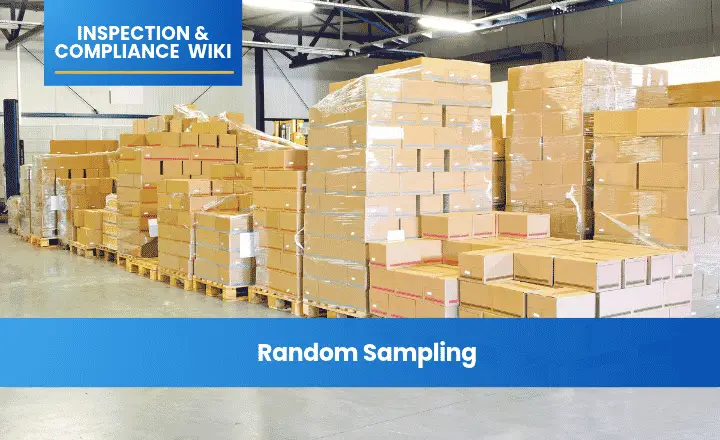
Random sampling is one of the most widely used approaches in manufacturing quality control and third-party product inspection. It provides a structured way to select products, components, or production units for examination without allowing personal preference to determine which items are checked.
However, selecting items at random is not simply a matter of picking a few products from a carton or asking an inspector to choose whatever is convenient. A reliable random sampling procedure starts with a clearly defined population, uses an appropriate selection method, and ensures that selected items can be identified and traced.
This guide explains how random sampling works, how to select samples in practice, how to avoid selection bias, and how the method can be applied to manufacturing quality control and product inspections.
What Is Random Sampling?
Random sampling is a method of selecting items from a defined population through a chance-based process. In simple random sampling, every possible sample of a specified size has an equal probability of being selected.
The population may include:
- Finished products in a production lot.
- Components or raw materials received from a supplier.
- Units manufactured during a specific production period.
- Cartons or packages within a shipment.
- Products presented for a third-party pre-shipment inspection.
The key principle is that the selection process should not depend on an inspector's personal judgment about which items look suitable or are easiest to access.
For example, if a shipment contains 1,000 identical products and 50 units need to be inspected, the inspector should use a random selection procedure to identify the 50 units rather than simply taking the first 50 products available.
Random selection helps reduce subjective selection bias. However, it does not guarantee that every sample will perfectly represent the population, particularly when the sample size is small or the population contains substantial variation. [1]
How Does Random Sampling Work?
A basic random sampling procedure involves four elements:
- Population: The complete group of items from which samples will be selected.
- Sampling frame: A list or identification system that allows the individual sampling units to be selected.
- Sample size: The number of units required for examination, determined by the applicable inspection plan or quality control objective.
- Random selection mechanism: A process that determines which units are included in the sample.
Once these elements are established, the selection process can be carried out using random numbers, sampling software, or a suitable physical randomization method.
Step 1: Define the Population
First, establish exactly which products or production units belong to the population.
For product inspection, this may be a defined shipment or production lot. For manufacturing quality control, it may be all units produced during a particular shift, production run, or time period.
The population should be clearly defined before sampling begins.
For example:
- Product: Electric kettles
- Total quantity: 1,000 units
- Production batch: Batch A
- Inspection scope: Finished products ready for shipment
If products from different production batches are included, determine whether they should be treated as one population or separate groups. Combining different groups without reviewing their characteristics may affect how representative the selected sample is.
Step 2: Establish a Sampling Frame
A sampling frame is the list or identification structure used to select individual units.
For example, if 1,000 products are arranged in 100 cartons containing 10 units each, the inspector can establish a numbering system for the cartons and individual products.
A simple numbering structure might look like this:
| Carton number | Product numbers |
|---|---|
| C001 | 001–010 |
| C002 | 011–020 |
| C003 | 021–030 |
| ... | ... |
| C100 | 991–1000 |
Each product now has a unique identification number.
For a large production lot, the sampling frame may come from production records, product serial numbers, carton labels, or another traceable identification system.
The frame should cover the entire defined population. If certain products are missing from the list or cannot be located, the sampling process may no longer give all units the intended opportunity for selection.
Step 3: Determine the Sample Size
The sample size should be established before selecting individual items.
It depends on the inspection objective, population characteristics, risk level, required statistical precision, and any applicable sampling plan.
For example, a third-party pre-shipment inspection may use an agreed AQL sampling plan to determine the sample quantity and acceptance criteria.
It is important to distinguish sample size from sample selection:
- Sample size determines how many units need to be inspected.
- Random sampling determines which units are selected.
Random sampling does not automatically determine the required number of samples.
Step 4: Select Items Randomly
Once the population has been numbered and the sample size established, individual items can be selected using a randomization tool or another documented random procedure.
The selected item numbers should then be used to locate the actual products for inspection.
The selection process should be completed before the inspector begins examining the products. This helps prevent inspection findings or product appearance from influencing which items are included.
Common Methods for Selecting Random Samples
Several practical methods can be used to generate a random sample. The appropriate method depends on the size of the population, the available identification system, and the inspection environment.
1. Computer-Generated Random Numbers
A random number generator is one of the most convenient methods for selecting samples from a numbered population.
The procedure is straightforward:
- Assign a unique number to every item.
- Enter the population range into a random number generator.
- Generate the required number of unique selections.
- Match the selected numbers to the product identification records.
- Locate and inspect the corresponding items.
For example, a shipment contains 1,000 products, and 50 units need to be selected.
The population is numbered from 1 to 1,000. A random number generator produces 50 unique numbers within that range.
If the generated numbers include 18, 47, 106, 238, and 915, the corresponding products are selected for inspection.
For sampling without replacement, a selected item cannot appear more than once in the final sample. This is the usual approach when inspecting distinct products within a production lot.
Computer-generated selection is particularly useful for large populations because it is quick, repeatable, and easier to document than informal manual selection.
2. Random Number Tables
Random number tables provide another way to select items without relying on personal judgment.
Each item is assigned a number, and the inspector uses a predefined starting position in the table to read a sequence of digits.
For example, if products are numbered from 001 to 999, three-digit groups can be read from the table. Numbers within the defined range are selected, while invalid numbers and duplicates are skipped when sampling without replacement.
Although this method is less convenient than modern software, it can still be used when electronic tools are unavailable.
3. Physical Random Selection
In some inspection environments, a complete digital list of individual products may not be available.
A physical randomization method can be used when the population can be represented by identifiable units.
For example:
- Prepare identical slips or tokens representing the eligible items.
- Assign each slip a unique item or carton number.
- Mix the slips thoroughly in a container.
- Draw the required number without looking.
- Match the selected numbers to the actual products.
This approach can work for smaller populations, but it becomes difficult to manage for large shipments. The process also needs to ensure that every eligible item has an appropriate chance of selection.
For larger production lots or shipments, a documented computer-generated method is generally easier to control.
Practical Example: Random Sampling During Pre-Shipment Inspection
A buyer orders 1,000 electric kettles from a Chinese manufacturer. Production is complete, and the goods are packed into 100 cartons, with 10 units in each carton.
The buyer arranges a third-party pre-shipment inspection before shipment.
The agreed inspection plan requires 50 units to be examined.
A practical random sampling procedure could be:
1. Confirm the inspection lot
The inspector verifies that the 1,000 electric kettles belong to the defined inspection lot and confirms the carton quantity.
2. Establish product identification
The cartons and individual units are assigned unique identification numbers, from C001 to C100 and 001 to 1000 respectively.
3. Generate the sample list
A random number generator selects 50 unique product numbers from the range of 1 to 1,000.
4. Locate the selected products
The inspector uses the identification records to locate the selected units. If the selected products are distributed across different cartons, the inspector retrieves them from their corresponding locations.
5. Conduct the inspection
The selected kettles are examined according to the agreed inspection checklist, which may include:
- Appearance and workmanship.
- Product dimensions and assembly.
- Electrical and functional checks.
- Accessories and included components.
- Product labels and markings.
- Packaging and carton condition.
6. Record the results
The inspector documents the findings, including defect descriptions, photographs, affected quantities, and relevant product or carton identification.
The results are then evaluated against the agreed inspection criteria and sampling plan.
This procedure helps ensure that sample selection is not based solely on which products are easiest to access or appear to be in the best condition.
Random Sampling in Manufacturing Quality Control
Random sampling is not limited to finished-product inspection. It can also be used to monitor quality during manufacturing.
In production environments, randomly selected units can be examined to evaluate whether products meet specified requirements at different points in a production run.
Typical applications include:
- Checking dimensions of machined components.
- Examining molded plastic parts for surface defects.
- Testing selected products from an assembly line.
- Checking incoming raw materials from a defined delivery.
- Reviewing finished units from different production periods.
For example, a factory produces 5,000 plastic housings during one production run. The quality team may randomly select a predetermined number of units from the completed production lot and measure critical dimensions.
The results can help identify whether the observed products meet the defined specifications.
However, if the purpose is to monitor changes throughout the production process, a single random sample taken at the end of production may not provide sufficient information about when a problem occurred. In such situations, sampling should also consider production time, shifts, lines, or batches. Stratified or systematic sampling may be more appropriate.
Common Sources of Selection Bias
Random sampling is designed to reduce subjective selection bias, but errors in implementation can undermine the process.
1. Selecting Only Easily Accessible Products
Taking samples from the first few cartons or from products near the warehouse entrance is convenient, but it does not necessarily provide a random sample of the entire shipment.
Products stored in other locations may have different production histories or conditions.
Best practice: Use a predefined selection list and locate the selected items, rather than choosing products based on convenience.
2. Allowing the Supplier to Choose Samples
If the supplier selects products for inspection, there is a possibility that the chosen units will not represent the full production lot.
The supplier may unintentionally or deliberately select products that are easier to present or appear to be in better condition.
Best practice: The inspector should control sample selection according to the agreed inspection procedure.
3. Replacing Selected Items Without Documentation
Sometimes a selected product cannot be located, has already been removed, or is inaccessible.
Simply choosing another convenient product without recording the change can affect the integrity of the sampling procedure.
Best practice: Record why the original item could not be inspected and follow a predefined replacement procedure. Any replacement should preserve the intended random selection process as far as practical.
4. Using an Incomplete Sampling Frame
If some products, cartons, or production units are missing from the identification list, they cannot be selected.
This creates a coverage problem: the actual population available for selection is smaller than the intended population.
Best practice: Reconcile the product quantity and identification records before generating the sample list.
5. Ignoring Differences Within the Population
A random sample from a combined population may not include enough units from smaller or higher-risk groups.
For example, a shipment containing several colors or production batches may have different quality characteristics across those groups.
Best practice: Review the population structure before sampling. If important subgroups need separate coverage, consider stratified random sampling rather than relying on simple random sampling alone.
Random Sampling vs. Judgmental Sampling
Random sampling and judgmental sampling are different approaches to selecting products.
In random sampling, items are selected through a chance-based process. In judgmental sampling, the inspector or quality professional selects items based on experience, observations, or known risk factors.
| Aspect | Random sampling | Judgmental sampling |
|---|---|---|
| Selection basis | Chance-based selection | Professional judgment |
| Main purpose | Reduce subjective selection bias | Focus on known or suspected problem areas |
| Selection probability | Defined by the sampling procedure | Not necessarily known |
| Typical application | General lot or production assessment | Investigating suspected defects or specific concerns |
| Statistical inference | Can support statistical inference when the design and assumptions are appropriate | Generally cannot support the same population-level inference |
Judgmental sampling can be useful when a specific concern needs to be investigated. For example, an inspector may examine products showing visible damage or components from a machine that has recently experienced problems.
However, those targeted samples should not be confused with a random sample used to assess the wider population.
The two approaches can complement each other. A general random sample can be used for the planned inspection, while additional targeted checks can investigate specific concerns. The results should be recorded separately so that targeted findings are not mistakenly treated as part of the probability-based sample. [1]
Random Sampling vs. AQL Sampling Plans
Random sampling and AQL sampling plans serve different purposes in product inspection.
Random sampling determines how individual products are selected. An AQL sampling plan determines the sample size and the acceptance and rejection criteria used to evaluate a lot.
For example, a buyer may specify an AQL-based inspection plan for a shipment of finished goods. The applicable plan determines how many units must be examined and the relevant acceptance and rejection numbers.
The inspector then uses a random selection procedure to identify which products will be inspected.
ISO 2859-1 provides sampling procedures for inspection by attributes, including AQL-indexed sampling schemes for lot-by-lot inspection. [2]
AQL should not be interpreted as a guaranteed defect rate or as a promise that a shipment contains no more than a specified percentage of defective products.
The inspection plan, sample selection procedure, and defect classification criteria should all be established before the inspection begins.
Best Practices for Reliable Random Sampling
A well-managed random sampling procedure should be transparent, consistent, and traceable.
The following practices help improve its reliability:
1. Define the population clearly.
Confirm which products, batches, or production units are included before sampling.
2. Use a complete identification system.
Make sure every eligible unit can be identified and located.
3. Establish the sample size in advance.
Use the applicable inspection plan or quality control objective rather than changing the sample quantity informally.
4. Use a documented randomization method.
Computer-generated random numbers are practical for large populations. Physical methods may be suitable for smaller groups when properly controlled.
5. Prevent convenient substitutions.
Inspect the selected products rather than replacing them with easier-to-access items.
6. Record the selection process.
Keep the population definition, sample list, selection method, and any exceptions for future reference.
7. Review population differences.
If products come from different batches, production lines, or product variants, consider whether simple random sampling provides sufficient coverage.
8. Keep sampling separate from inspection evaluation.
The selection method identifies which items are examined. The inspection criteria and acceptance rules determine how the results are assessed.
The Role of Third-Party Inspection in Random Sampling
During a third-party product inspection, random sampling helps ensure that the products examined are not selected solely by the supplier or based on convenience.
An independent inspector can verify the inspection lot, establish or review the sampling frame, select the required products, and conduct checks according to the buyer's agreed requirements.
At TradeAider, inspection activities may include Pre-Production Inspection (PPI), During Production Inspection (DUPRO), and Pre-Shipment Inspection (PSI). For finished-product inspections, sample selection and inspection scope are determined according to the agreed requirements and applicable inspection plan.
The inspection report documents the findings so buyers can review product conditions and make decisions before shipment.
Learn more about TradeAider's third-party quality inspection services.
Frequently Asked Questions
1. How do you select a random sample from a production lot?
First, define the production lot and identify all eligible units. Assign each unit a unique number, determine the required sample size, and use a random number generator or another documented randomization method to select the required items.
2. Is random sampling always better than judgmental sampling?
No. Random sampling is useful for assessing a defined population while reducing subjective selection bias. Judgmental sampling is useful when investigating specific suspected problems or high-risk areas. The appropriate approach depends on the inspection objective.
3. Can random sampling be used for pre-shipment inspection?
Yes. Random sampling is commonly used to select finished products for pre-shipment inspection. The inspector selects units from the defined inspection lot and checks them against the agreed requirements and sampling plan.
4. Does random sampling guarantee that all defects will be found?
No. Random sampling examines only a subset of the population. Defects may remain undetected, especially when they are rare or unevenly distributed. Detection depends on factors such as sample size, defect distribution, inspection methods, and product characteristics.
5. What is the difference between random sampling and systematic sampling?
Random sampling selects individual units through a chance-based procedure. Systematic sampling selects units at regular intervals after establishing a starting point. Both can be useful, but they have different selection mechanisms and limitations.
6. Should samples be selected before or after products are packed?
It depends on the inspection objective and the agreed procedure. For pre-shipment inspection, products are generally selected from the defined finished-goods lot. Depending on the inspection arrangement, cartons may be opened to retrieve the selected units. The selection procedure should ensure that the inspected products come from the intended population.
Sources & References
[1] U.S. Environmental Protection Agency (EPA). Selecting a Sampling Design. https://www.epa.gov/quality/selecting-sampling-design
[2] International Organization for Standardization (ISO). ISO 2859-1: Sampling Procedures for Inspection by Attributes — Part 1: Sampling Schemes Indexed by Acceptance Quality Limit (AQL) for Lot-by-Lot Inspection. https://www.iso.org/standard/77582.html
[3] U.S. Environmental Protection Agency (EPA). Guidance on Choosing a Sampling Design for Environmental Data Collection: for Use in Developing a Quality Assurance Project Plan (EPA QA/G-5S). https://www.epa.gov/sites/default/files/2015-06/documents/g5s-final.pdf
Related Knowledge Base
TradeAider