
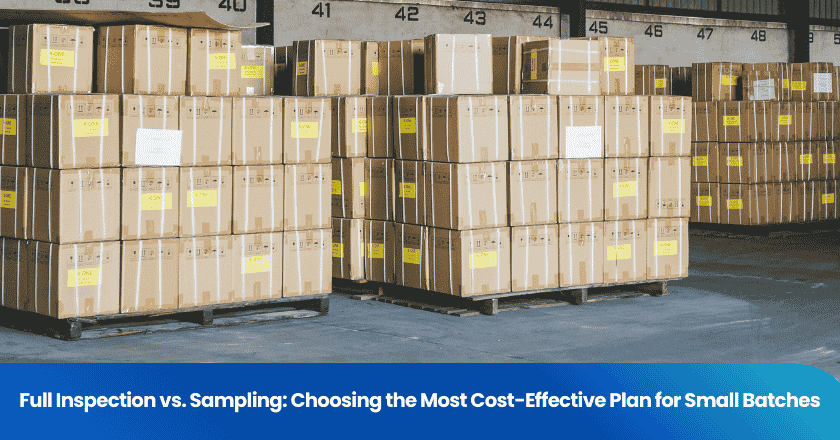
When deciding between Full Inspection vs. Sampling for small batch production, Full Inspection often delivers higher effectiveness in ensuring customer satisfaction, especially for high-value or critical goods. Companies must balance inspection cost, risk, and quality to match their goals. Industry guidelines, such as ANSI/ASQ Z1.4 for sampling, help manufacturers choose the right inspection plan. Each production scenario requires careful consideration of defect risks and customer expectations.

| Guideline/Standard | Description | Example Application |
|---|---|---|
| ANSI/ASQ Z1.4, ISO 2859-1 | Acceptance Sampling (AQL) | Sampling plans for balancing effort and risk |
| ISO 7870 series | Statistical Process Control (SPC) | Real-time defect trend monitoring |
Key Takeaways
- Full Inspection is often the best choice for small batches of high-value or safety-critical products, ensuring zero defects reach customers.
- Sampling Inspection can save time and costs for larger batches, but it may miss defects, making it less suitable for small, critical orders.
- Consider product value, defect risk, and customer requirements when choosing between Full Inspection and Sampling to ensure effective quality control.
- Evaluate supplier reliability and past quality issues to determine the appropriate inspection method for each batch.
- Regularly monitor inspection outcomes and train quality inspectors to maintain high standards and prevent recurring defects.
Full Inspection vs. Sampling: Quick Answer
Cost-Effectiveness for Small Batches
When manufacturers compare Full Inspection vs. Sampling for small batches, Full Inspection often stands out as the most cost-effective choice. Checking every unit ensures no defective product reaches the customer. For small batch sizes, the extra cost of inspecting each item is usually manageable. This approach prevents losses from returns or complaints, especially for high-value or safety-sensitive products.
Sampling, on the other hand, involves checking only a portion of the batch. While sampling saves time for large shipments, it carries the statistical risk of missing defects in small batches where every item matters. Companies seeking maximum assurance often choose Full Inspection for small orders to protect their brand reputation.
Tip: For small batches, the cost effectiveness of Full Inspection increases because the inspection workload remains reasonable, while the risk of missing defects drops to zero.
Key Influencing Factors
Several factors help companies decide between Full Inspection and Sampling. The following table summarizes common scenarios and the suggested method:
| Scenario | Suggested Method |
|---|---|
| Is the product high-risk or safety-sensitive? | 100% Full Inspection |
| Is the supplier experienced and consistent in quality? | AQL Sampling |
| Is the shipment large and time-sensitive? | AQL Sampling |
| Is this the first shipment from a new supplier? | 100% Inspection or Strict AQL |
| Have past shipments experienced frequent issues? | 100% Inspection until quality stabilizes |
Inspection Methods Explained
What Is Full Inspection?
Full Inspection(or 100% Inspection) means checking every unit in a batch before shipment. Inspectors measure, examine, and test each product to compare results with specified requirements. This process ensures that only products meeting quality control standards reach customers. Companies use Full Inspection to prevent defective items from leaving the factory.
| Element | Description |
|---|---|
| Independence & Objectivity | Maintains ethical standards in operations. |
| Personnel Management | Manages staff to uphold quality. |
| Monitoring | Reviews compliance with standards. |
What Is Sampling Inspection?
Sampling Inspection involves checking a subset of products from a batch based on statistical plans, such as AQL (Acceptable Quality Limit). The process uses general levels (I, II, III) to determine how many items to inspect. Level II is common for standard cases.
| Component | Description |
|---|---|
| Inspection Levels | Set discrimination ability for inspections (I, II, III). |
| Sampling Plans | Use AQL to assess batch quality based on probability. |
Typical Costs and Risks
Full Inspection increases upfront costs because every item receives attention. However, this method eliminates the downstream cost of shipping defective products. Companies often accept higher initial costs for critical or high-value goods to avoid expensive returns. Sampling Inspection lowers upfront costs but introduces the statistical risk of defects slipping through.
Full Inspection vs. Sampling: Pros and Cons
Comparison Table
The table below compares Full Inspection vs. Sampling for small batch production:
| Criteria | Sampling (AQL) | Full Inspection (100%) |
|---|---|---|
| Costs | Lower upfront | Higher upfront, but saves return costs |
| Efficiency | Faster process | Slower, every item checked |
| Defect Detection | May miss rare defects | Catches every defect |
| Suitability | High-volume, stable production | Critical products, zero tolerance |
| Risk | Statistical risk exists | Zero risk of known defects |
Efficiency and Risk
Efficiency plays a major role in choosing a quality control method. Sampling speeds up the process and works well for high-volume production where statistical reliability is acceptable. Full Inspection ensures the elimination of defects and supports zero tolerance, making it indispensable for critical products.
Note: Hybrid inspection plans combine both methods. For example, a company may use sampling for general production and switch to Full Inspection for critical products or final shipments.
Choosing the Right Inspection Plan

Product Type and Value
The value and type of a product influence the inspection method. High-value products demand thorough checks to protect investments and reputation. Lower-value products may not justify the expense of inspecting every unit, making sampling a more viable option.
| Inspection Type | Product Value | Justification |
|---|---|---|
| Full Inspection | High-value products | Ensures thorough, reliable, and impartial quality assessments. |
| Sampling Inspection | Lower-value products | Cost-effective alternative, especially with a good supplier track record. |
Defect Risk Level
Defect risk shapes the inspection plan. High-risk products, such as medical devices or automotive parts, require stricter controls. Full Inspection becomes crucial when the risk of defects involves safety concerns or regulatory non-compliance.
Customer and Regulatory Needs
Customer expectations and regulatory requirements often drive the decision. Some industries must follow strict standards like ISO 9001 or FDA guidelines to maintain compliance.
| Standard | Description |
|---|---|
| ISO 2859 / ANSI/ASQC Z1.4 | Statistical sampling procedures for inspection by attributes. |
| Industry-specific guidelines | FDA for medical, CE for EU compliance, etc. |
Actionable Steps for Small Batches
Step-by-Step Decision Guide
- Define Product Value and Risk:Assess whether the product is high-value or safety-critical.
- Review Requirements:Check if customers or regulations demand 100% inspection.
- Evaluate Supplier Reliability:Consider the supplier's track record. Reliable suppliers may allow for Sampling.
- Estimate Costs:Compare the costs of Full Inspection versus Sampling for your specific batch size.
- Select Method:Choose Full Inspection for critical small batches; use AQL Sampling for larger, lower-risk orders.
Need help deciding?
Contact a TradeAider specialist today to calculate the exact ROI of Full Inspection vs. Sampling for your next order.

FAQ
What is the main difference between Full Inspection and Sampling?
Full Inspection checks every product in a batch. Sampling examines only a selected portion. Full Inspection finds all defects, while Sampling uses statistics to estimate quality.
When should a company choose Full Inspection for small batches?
A company should choose Full Inspection for high-value, safety-critical, or new products. This method ensures no defective items reach customers.
Does Sampling Inspection always save money?
Sampling Inspection usually costs less upfront for large batches. However, for small batches, the savings may be negligible compared to the risk. Full Inspection offers better value by preventing costly defects.
Can Sampling Inspection miss defects?
Yes. Sampling Inspection relies on probability and may miss rare or hidden defects. Full Inspection finds every defect, making it better for products with strict quality needs.
Related Articles
Grow your business with TradeAider Service
Click the button below to directly enter the TradeAider Service System. The simple steps from booking and payment to receiving reports are easy to operate.

