
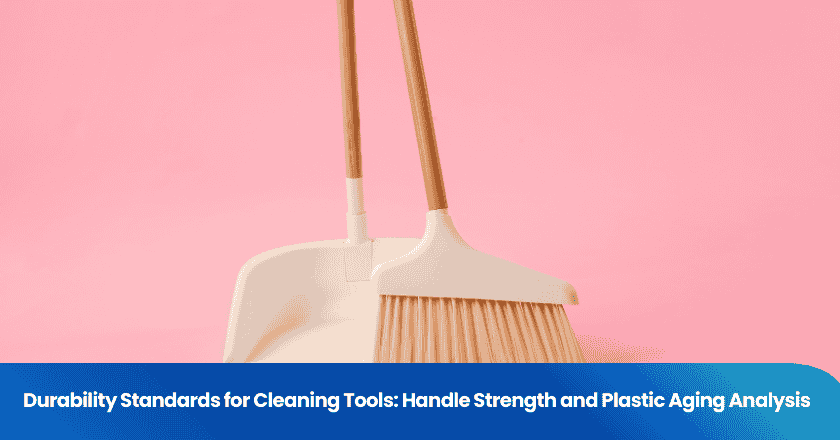
The structural integrity of cleaning tools is a fundamental requirement in both industrial maintenance and domestic sanitation. Mops, brooms, and squeegees, classified within the Hardline Products sector, are subject to significant mechanical stress and aggressive chemical environments. To mitigate the risk of premature failure, manufacturers must implement rigorous testing protocols focusing on handle tensile strength and the molecular stability of plastic components. By analyzing mechanical load resistance and environmental aging, stakeholders can ensure that these tools meet global safety and performance benchmarks, ultimately enhancing user productivity and operational safety.
Key Takeaways
- Handle strength testing ensures structural resilience against buckling and fracture during intensive use.
- Plastic aging tests verify the resistance of polymers to UV degradation and chemical stress cracking (ESCR).
- VDE and Green Seal certifications serve as reliable indicators of multi-dimensional quality and environmental safety.
- Thermal cycle testing identifies material weaknesses that could lead to brittleness in extreme storage conditions.
- Professional quality control checks are essential for identifying manufacturing defects like black spots and weld line weaknesses.
The Material Science of Cleaning Tool Handles
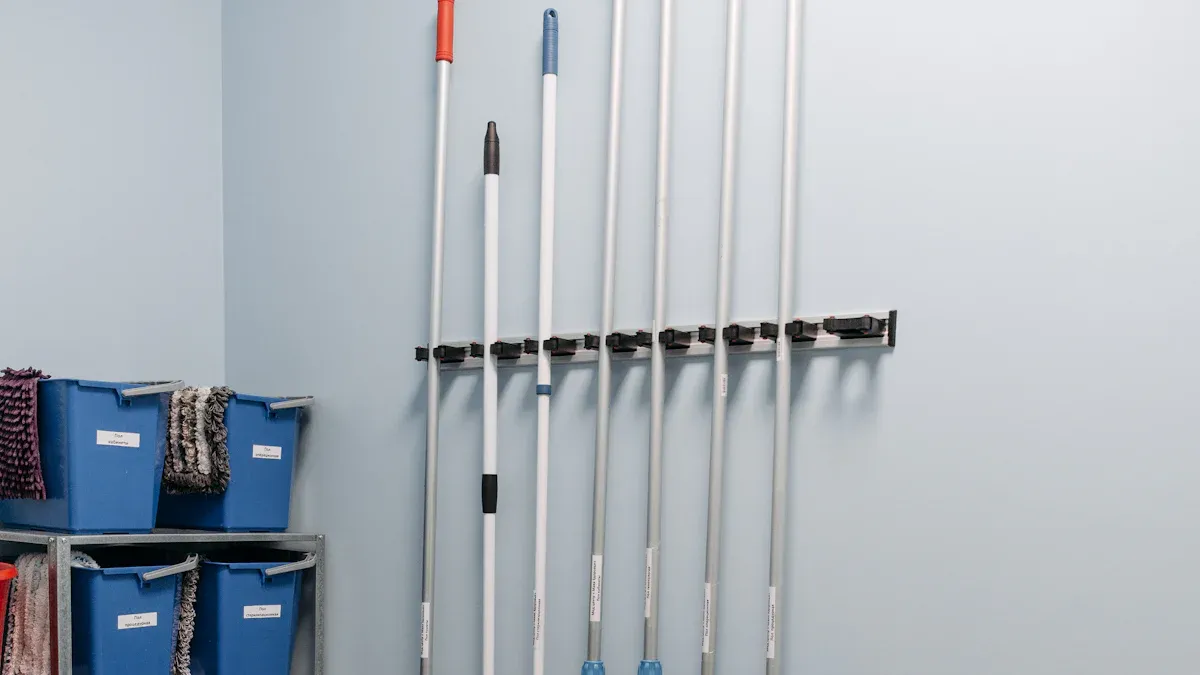
The choice of material for a mop or broom handle directly influences its flexural modulus and durability. While wood was historically dominant, modern manufacturing utilizes various alloys and composites to balance weight and rigidity. Each material requires a specific testing approach to determine its "limit of proportionality"—the point beyond which it will no longer return to its original shape.
| Material Type | Strength-to-Weight Ratio | Failure Mode | Technical Consideration |
|---|---|---|---|
| Aluminum Alloy | High | Permanent Deformation | Anodizing required for corrosion resistance |
| Fiberglass / FRP | Excellent | Splintering / Delamination | Non-conductive; ideal for electrical environments |
| Hardwood (Ash/Hickory) | Moderate | Brittle Fracture (Splitting) | Susceptible to moisture-induced rot |
| Stainless Steel | Moderate | Bending / Buckling | Ideal for high-sanitation medical zones |
Mechanical Strength Protocols: Tensile and Flexural Tests
Handle failure typically occurs at the connection point between the shaft and the tool head. To prevent this, manufacturers utilize Universal Testing Machines (UTM) to perform the Handle Pull-Off Test. This procedure measures the force required to separate the components, ensuring it exceeds the maximum force applied during heavy-duty scrubbing. Furthermore, Flexural Strength Tests determine the handle's resistance to "snapping" when lateral pressure is applied—a common occurrence when users attempt to pry dirt from corners.
Advanced Loading Analysis
Standardized mechanical load tests include:
- Static Load Testing: Applying a constant weight for a prolonged period to assess "creep" or slow deformation.
- Dynamic Fatigue Testing: Simulating thousands of "stroke cycles" to identify fatigue-induced micro-cracks in the handle material.
- Torsion Test: Measuring the resistance of the screw-in thread to "stripping" when the tool head is tightened.
- Technical Insight: The transition zone where a plastic socket meets a metal handle is a high-stress area. If the injection molding process is not optimized, "weld lines" in the plastic can act as stress concentrators, leading to sudden mechanical failure.
Polymer Stability: Plastic Aging and Environmental Resilience
Most cleaning tool heads and sockets are composed of Polypropylene (PP) or High-Density Polyethylene (HDPE). These polymers are susceptible to aging factors that alter their molecular structure. Environmental testing, such as UV exposure and High-Low Temperature Cycling, is conducted to predict the real-world lifespan of the tool.
Environmental Stress Cracking Resistance (ESCR)
Cleaning tools are frequently exposed to surfactants and detergents. Some chemicals can trigger a phenomenon known as Environmental Stress Cracking, where a plastic component under stress (like a broom socket) develops deep cracks when exposed to a specific chemical. Manufacturers must test chemical compatibility to ensure the tool head will not shatter after prolonged contact with industrial cleaners.
| Environmental Stressor | Technical Impact | Testing Protocol |
|---|---|---|
| UV Radiation | Photo-oxidation / Fading | Xenon Arc Lamp Exposure |
| Thermal Cycling | Expansion / Contraction Stress | -20'C to +60'C Chamber Cycles |
| Chemical Exposure | Polymer Chain Scission | Immersion / ESCR ASTM D1693 |
| Humidity | Hydrolytic Degradation | Saturated Vapor Chamber |
Regulatory Framework and VDE Certification
Certification is the only objective method to verify quality claims. In the European market, VDE certification is highly regarded, ensuring that tools used in professional environments are safe and ergonomic. Furthermore, Green Seal standards evaluate the environmental impact of the plastic used, focusing on the absence of heavy metals and the use of post-consumer recycled content.
Ensuring compliance requires an integrated approach to quality control and assurance. For global procurement, a factory audit is essential to verify that the manufacturer maintains consistent resin batch records and calibrated testing equipment.

Practical Quality Control for Bulk Procurement
For large-scale facility managers and distributors, identifying a high-quality cleaning tool goes beyond a visual check. During the standardized product inspection, several on-site tests should be performed:
- Drop Test: Dropping the tool from 1.5 meters onto a hard surface to check for shattering of plastic components.
- Thread Integrity: Repeatedly screwing and unscrewing the tool head to check for plastic wear.
- Impact Resistance: Striking the handle against a corner to check for buckling or splintering.
By prioritizing tools that have undergone comprehensive Hardline Product analysis, organizations can reduce the "hidden costs" of cleaning tool failure, which include worker injury, productivity loss, and excessive waste generation.
Frequently Asked Questions
What is the most common cause of mop handle breakage?
The most frequent cause is "stress concentration" at the screw-thread interface. If the plastic is too brittle or the thread pitch is incorrect, the leverage applied during mopping creates a fracture point that results in a snap.
Why do plastic broom heads turn white or become dusty?
This is a sign of UV degradation or "chalking." The polymer chains have been broken down by light exposure, causing the material to lose its flexibility and eventually crumble. High-quality tools use UV stabilizers to prevent this effect.
Is an aluminum handle always better than a plastic one?
Not necessarily. Aluminum is more rigid but can be prone to permanent bending if overloaded. A high-quality reinforced fiberglass or composite handle often offers a better balance of flexibility and strength for industrial use.
How does "post-consumer recycled" content affect durability?
Recycled plastic can be as durable as virgin resin if processed correctly. However, if not properly "compatibilized," recycled content can reduce impact strength. Quality certifications ensure that recycled materials meet the same performance standards as virgin polymers.
What should I look for in a professional mop connection?
A high-quality tool should feature a "shroud" or collar that covers the connection point. This design distributes the stress over a larger area of the handle, significantly reducing the risk of fracture compared to exposed screw-in designs.
Related Articles
Grow your business with TradeAider Service
Click the button below to directly enter the TradeAider Service System. The simple steps from booking and payment to receiving reports are easy to operate.

