- Acerca de Nosotros

- Nuestros Servicios
- Su Industria
- Recursos
- Noticias y Blog
Pre-Shipment Inspection (PSI)
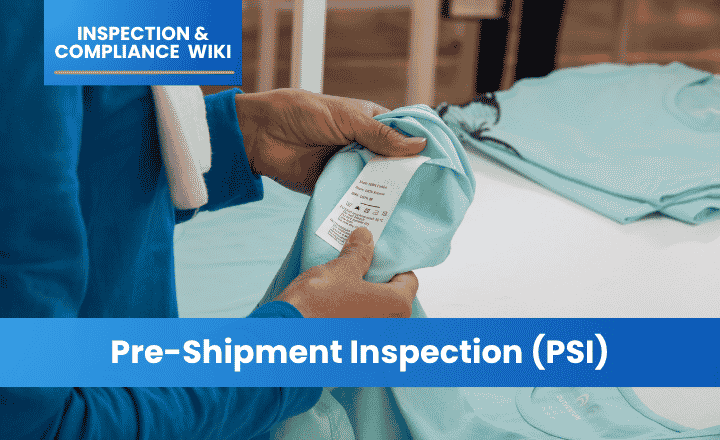
In international trade, releasing the final balance payment to a foreign supplier is the point of no return. Once the container is sealed and the ship departs the port, your leverage to demand reworks, refunds, or quality fixes drops to near zero.
To mitigate this catastrophic risk, experienced importers rely on the Pre-Shipment Inspection (PSI)—also known as a Final Random Inspection (FRI).
This guide explains what a PSI is, when you should schedule it, how the on-site process works, and why it is the ultimate safety net for your supply chain.
What is a Pre-Shipment Inspection (PSI)?
A Pre-Shipment Inspection (PSI) is a systematic quality control step conducted when production is completed and the goods are packed for shipping. It is carried out by an independent, third-party inspection agency to verify that the mass-produced goods conform to the buyer's approved specifications, purchase order, and international safety standards.
Unlike earlier checks in the production cycle, a PSI evaluates the finished product, its function, safety, labeling, and retail packaging in its final state.
The Golden Rule of Timing: The 80/20 Formula
To ensure a PSI is statistically valid and legally protective, it must be performed under strict timing conditions:
- The 80% Rule: The inspection must only take place when at least 80% of the total order quantity is fully produced.
- The 100% Rule: Preferably, 100% of the goods must be finished, and at least 80% must be fully packed in their final export cartons.
If a supplier tries to push you to inspect when only half the batch is completed, do not agree. Factories often hide defective units in the unproduced portion, or rush the final assembly after the inspector leaves. Inspecting at the milestone ensures the inspector sees a true representative sample of the entire run.
Inspect Before You Ship: Eliminate Quality Risks on Site. Eliminating quality risks before your cargo leaves the factory floor. ➔ Book an Inspector
The On-Site PSI Checklist: What the Inspector Does
On the day of the PSI, a professional quality inspector visits the factory and executes a standardized, multi-step workflow. Here is what happens on-site:
Step 1: Quantity Verification
The inspector physically counts the export cartons to verify the factory has produced the correct volume. They cross-reference the actual packed carton count against the packing list and purchase order.
Step 2: Random Sampling (AQL)
Using the ANSI/ASQ Z1.4 tables, the inspector calculates the required sample size based on your chosen Inspection Level (typically Level II). They then randomly select cartons from different parts of the warehouse stack—top, middle, and bottom—to ensure the sample is highly representative.
Step 3: Visual & Workmanship Check
Every sampled unit is examined for cosmetic, structural, and material defects. These findings are systematically logged and categorized as Critical, Major, or Minor using your approved Defect Classification List (DCL).
Step 4: Functional & On-Site Testing
The inspector performs hands-on, real-world tests. For example:
- Electronics: Power-on tests, battery charge/discharge checks, Wi-Fi pairing.
- Garments: Pull tests on buttons, seam strength checks, barcode readability.
- Carton Drop Test: Dropping a packed master carton from standard heights to ensure products survive transit forces.
Step 5: Packaging & Labeling Check
The inspector verifies that carton marks, bar codes, shipping labels, retail gift boxes, user manuals, and mandatory warning prints (such as CE, FCC, or suffocation warnings) perfectly match your approved digital files.
Why Importers Must Never Skip the PSI
Operating without a PSI is the equivalent of importing blind. Here is why this step is non-negotiable for professional buyers:
Reason A: It Secures Your Balance Payment
Never release the final payment (usually the remaining of the PO value) until you receive a "Pass" inspection report. If the cargo fails, you hold the financial leverage to demand the factory open the cartons, sort out the bad pieces, and rework the batch before shipping.
Reason B: It Protects Your Brand Reputation
If a batch contains a high percentage of defects, shipping it to your warehouse means you will face expensive customer returns, chargebacks from retailers like Amazon, and highly damaging -star reviews that can kill a product listing overnight.
Reason C: It Prevents Custom Rejection & Legal Liability
A PSI verifies that all mandatory certificates, compliance markings, and country-of-origin labels are printed correctly. Missing a single regulatory warning can result in custom authorities seizing your entire cargo at the port of entry.
Conclusion: Make PSI a Standard Contract Term
A Pre-Shipment Inspection should not be treated as an optional fallback; it is a contract-level requirement. Always state clearly in your original purchase contract or Proforma Invoice (PI) that:
- A third-party pre-shipment inspection will be performed at the factory.
- The final balance payment will only be released upon a "Passed" report certified by your QC agency.
- The supplier is responsible for the cost of re-inspection if the first attempt fails.
By establishing these rules early, you set clear quality expectations and protect your sourcing budget from the very beginning.
Related Knowledge Base
TradeAider