
- About Us

- Our Services
- Your Industry
- Resources
- News & Blog
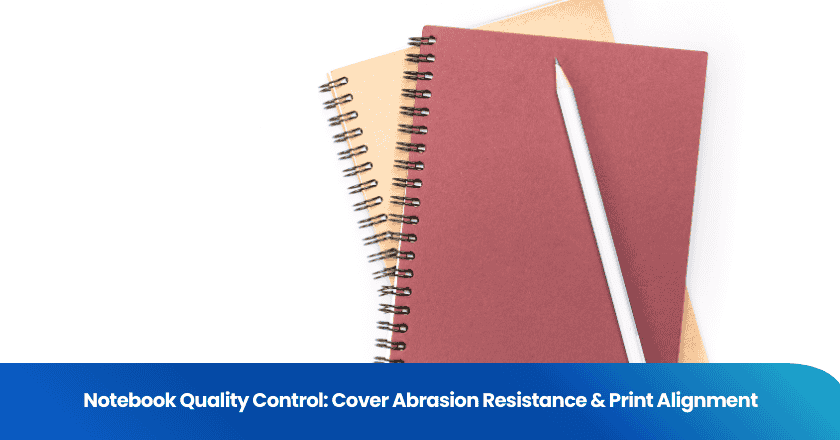
Whether for jotting down ideas, managing daily tasks, or sketching, a notebook is an essential tool. Its longevity depends heavily on two factors: cover abrasion resistance and inner page printing alignment. A durable cover withstands constant handling without looking worn, while precise print alignment ensures lines or grids are neat, making writing comfortable. Quality control teams rigorously test these aspects to guarantee that journals meet high standards, helping students, artists, and professionals stay organized and focused.
Tip: Always check for sturdy covers and sharp, clear page prints when selecting a journal.
Key Takeaways
- Choose notebooks with strong covers for better durability. A tough cover protects against scratches and extends the product's lifespan.
- Look for well-aligned pages to enhance your writing experience. Straight lines and grids make it easier to take organized notes.
- Check for quality control labels. Reliable brands ensure their products meet high standards for durability and print accuracy.
- Consider the material. Options like PU leather and hardbound paper offer great protection and a premium feel.
- Inspect the print quality. Clear, consistent printing prevents distractions and helps maintain focus while writing.
Cover Abrasion Resistance in Notebooks
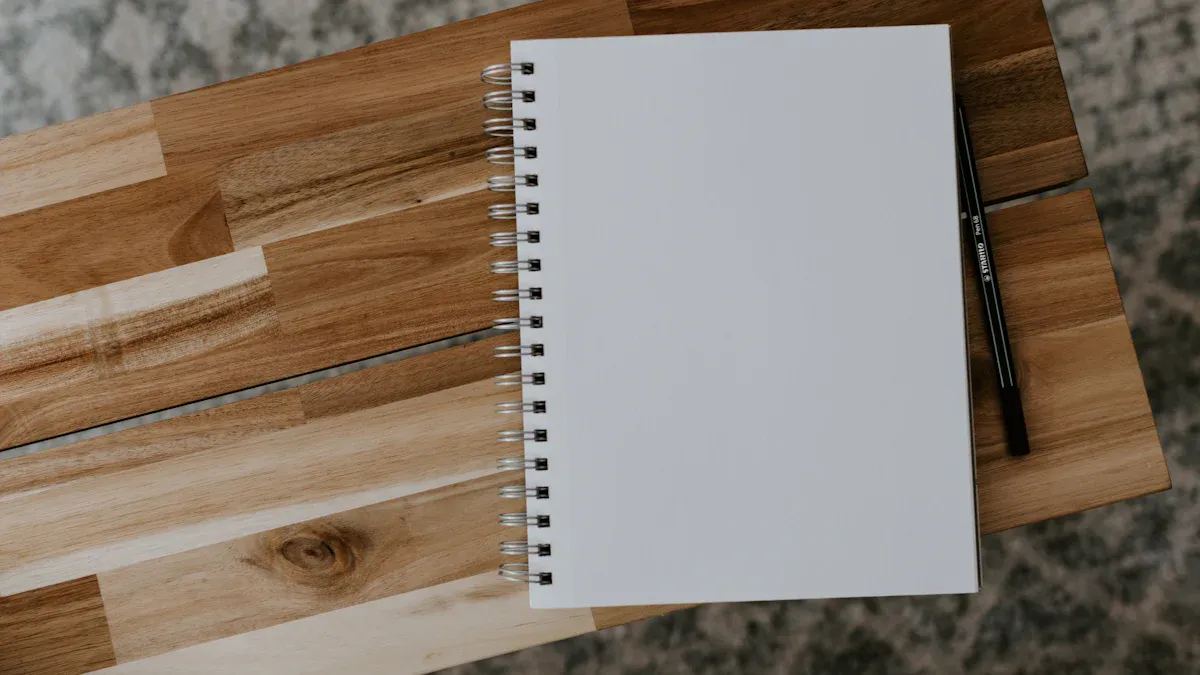
What Is Cover Abrasion Resistance?
Cover abrasion resistance describes how well a notebook cover stands up to rubbing, scratches, and daily handling. When tossed into a backpack or slid across a desk, the cover faces constant friction. High resistance ensures the surface remains clean and new-looking, protecting it from scuffs and marks.
Manufacturers use specialized lab tests, such as the Martindale or Taber tests, to simulate real-life wear. These methods rub the material against abrasive surfaces to measure how quickly it degrades, helping makers choose durable materials for long-lasting products.
Why Durability Matters
Durability is key for daily use. A robust cover protects inner pages from spills, bumps, and rough handling. Hardcover journals typically outlast softcover versions because their rigid structure offers superior protection. While fabric covers are stylish, they may fray faster under heavy use.
| Feature | High-End Journal | Standard Notebook |
|---|---|---|
| Cover Material | Genuine leather, fabric-wrapped board | Cardstock or laminated paper |
| Lifespan | Years with regular use | Months; often discarded quickly |
Materials and Coatings for Resistance
Material choice dictates longevity. Some thermoplastic polymers start with low resistance but become tough with the addition of hard coatings. Clear coatings can significantly boost surface hardness, making even basic covers resilient against erasers and scratches.
Common durable materials include:
- Vinyl (PVC and PU): Flexible and durable; PU offers a softer, elegant finish.
- Leather: Genuine and synthetic options provide a luxurious look and reliable wear resistance.
- Coated Fabrics: PVC coatings offer stronger abrasion resistance compared to simple laminates.
Surface Performance Testing and QC Standards
Quality control teams conduct surface performance testing to ensure every cover meets protection standards. These tests check resistance to scratches and scuffs, ensuring mechanical strength for normal use.
| Standard | Description |
|---|---|
| MIL-STD-810H | Tests products against environmental stresses like shock and vibration. |
| Durability Tests | Assess performance under temperature and humidity changes. |
Abrasion resistance testing is crucial for quality assurance. Physical testing confirms that mechanical properties are sufficient to handle daily wear and tear.
Inner Page Printing Alignment and Quality
Print Alignment in Notebooks
Print alignment ensures lines, grids, or artwork appear straight and consistent. Crooked lines or shifting text make writing uncomfortable. Manufacturers maintain accuracy by monitoring label quality, adjusting machine settings, and controlling environmental conditions like humidity, which can cause paper to expand or contract.
| Factor | Impact on Alignment |
|---|---|
| Machine Settings | Incorrect setup leads to blurring or distortion. |
| Conveying Stability | Vibration causes deviations in print positioning. |
| Environment | Temperature/humidity changes affect paper dimensions. |
Visual and Dimensional Inspection
Quality control teams use both manual and automated processes. Trained inspectors check for misprints and color inconsistencies, while high-speed cameras detect defects instantly. Optical Character Recognition (OCR) verifies text accuracy, and color measurement devices ensure consistency across batches.
Common Alignment Defects
Defects can significantly lower the user experience:
- Crooked Lines: Makes writing difficult and disorganized.
- Distorted Images: Reduces clarity and professionalism.
- Faint/Blurry Text: Causes eye strain and readability issues.
- Color Bleeding: Ink spreading beyond intended areas looks messy.
Ensuring Accuracy in Spiral Bound Books
Spiral binding presents unique challenges as pages can shift. Quality control focuses on the prepress stage to check digital files, in-line inspection during printing to monitor consistency, and post-press checks on binding strength and cutting precision.
Tip: For spiral-bound notebooks, verify that pages line up perfectly and the print is clear. Good alignment means a better writing experience.
Choosing Durable and Accurate Personalized Notebooks
Key Factors for Cover Resistance
Durability starts with the cover. PU leather and hardbound paper offer excellent protection. Vegan leather is a strong, eco-friendly alternative. Smooth finishes and hard coatings help the notebook survive busy days without showing wear.
What to Look for in Print Alignment
Straight lines and clear grids are non-negotiable. Buyers should look for printing that is consistent from page to page. Important indicators of quality include accurate colors (Pantone matching), durable binding methods (like case binding or spiral coil), and appropriate paper thickness (80gsm to 120gsm).
Buying Tips
Match the notebook to your routine. For heavy use, choose hardbound covers. For creative work, look for flexible designs. Verify the cover material's durability and ensure the print alignment supports your writing style.
| Material Type | Durability | Best Use |
|---|---|---|
| PU Leather | Flexible & Durable | Daily carry, professional meetings |
| Hardbound | Sturdy & Premium | Long-term journaling, archiving |
| Softbound | Lightweight | Quick notes, travel |
A notebook with strong cover abrasion resistance and perfect print alignment stands out. These features ensure longevity and a pleasurable writing experience. Standardized inspection protocols help manufacturers deliver reliable products that meet customer expectations for quality and usability.
FAQ
What makes a notebook cover resistant to abrasion?
Strong materials like PU leather or hardbound paper, often treated with hard coatings, protect against scratches and daily wear, ensuring the cover stays looking new.
How can I check print alignment before buying?
Flip through the pages rapidly. If the lines or grids jump around or look uneven, the alignment is poor. Consistent positioning indicates high quality.
Why does print alignment matter?
Alignment keeps writing neat. Straight lines help organize thoughts, while poor alignment can be distracting and make notes hard to read.
Are spiral bound notebooks prone to alignment issues?
They can be, as pages shift during binding. However, strict quality control ensures pages align correctly. Look for reputable brands that prioritize precision.
What features define a durable personalized notebook?
A durable notebook features a resistant cover, secure binding (like sewn or high-quality spiral), and consistent, clear printing on quality paper.

Related Articles

Grow your business with TradeAider Service
Click the button below to directly enter the TradeAider Service System. The simple steps from booking and payment to receiving reports are easy to operate.

