
Third-party inspection is the last line of defense between a defective factory run and an Amazon account health warning. The three providers most commonly evaluated by FBA sellers are QIMA, SGS, and TradeAider — and they differ sharply on pricing transparency, real-time visibility, and who they're actually built for. According to the Mordor Intelligence China TIC Market Report (2025), the China testing, inspection, and certification market reached USD 50.92 billion in 2025, growing at a 5.71% CAGR through 2030 — which means the market is large enough to support providers purpose-built for eCommerce sellers, not just enterprise buyers.
Key Takeaways
- Pricing: TradeAider charges $199/man-day flat, all-inclusive. QIMA starts at $309/man-day for Zone A (China). SGS quotes on request and often adds travel surcharges.
- Real-time monitoring: Only TradeAider offers live photo and video access during the inspection — critical for FBA sellers managing factories remotely.
- Report speed: TradeAider delivers within 24 hours; QIMA same-day; SGS 24–72 hours.
- AQL methodology: All three use ISO 2859-1 / AQL sampling — the methodology itself is not a differentiator.
- Bottom line: For small-to-mid Amazon FBA sellers shipping consumer goods, TradeAider offers the strongest value. SGS is the correct choice only when government-mandated PVoC accreditation is required.
Why This Choice Matters for Amazon Account Health
Amazon measures seller quality through its Order Defect Rate (ODR) — a 60-day rolling metric combining negative feedback, A-to-Z claims, and chargebacks. According to Repricer's Amazon Account Health Guide (2026), sellers must keep ODR below 1% to avoid Buy Box loss and potential account suspension. A single batch of defective goods — packaging misprints, functional failures, incorrect labeling — can spike ODR across dozens of orders before the seller even realizes there's a problem.
Pre-shipment inspection intercepts these defects before the container is sealed. But the value of that interception depends heavily on how quickly you know about a defect. A static report delivered 48 hours after the inspection gives you information too late to act on at the factory — your only lever is rejecting the shipment or negotiating a discount. Real-time monitoring, by contrast, lets you act while the inspector is still on-site.
According to eComEngine's Amazon Seller Performance Metrics guide, ODR is the most heavily weighted metric in Amazon's Account Health Rating system — exceeding 1% can cost you Buy Box eligibility for up to 60 days. The inspection provider you choose directly affects your ability to prevent that outcome.
Pricing Compared: What You Actually Pay
Pricing transparency is where the three providers diverge most clearly. TradeAider publishes a flat rate of $199/man-day that covers inspector travel, on-site time, photo and video documentation, and report delivery. No separate line items.
QIMA's published pricing for Zone A (China and neighboring countries) starts at $309/man-day for pre-shipment inspection, according to 2025 industry pricing overview. That rate is all-inclusive — travel and reporting are bundled — which makes QIMA more transparent than SGS, but $110/man-day more expensive than TradeAider at the base.
SGS does not publish per-man-day rates publicly. Quotes are obtained through regional sales teams, and travel surcharges for factories outside major urban areas are common. For a small FBA brand running four inspections per quarter, the pricing opacity alone creates budgeting risk that flat-rate providers eliminate.
Calculated from published rates: four TradeAider inspections per quarter = $796/year. Four QIMA inspections = $1,236/year at the Zone A minimum. The $440 annual difference represents roughly two additional inspections — or a meaningful portion of a small brand's QC budget. Use TradeAider's inspection cost calculator to estimate costs for your specific order volume.
Real-Time Monitoring: The Feature That Defines the eCommerce Tier
The structural difference between TradeAider and legacy providers is not price — it is the point at which you gain actionable information about your shipment's quality.
With SGS or a traditional provider, the inspection happens at the factory while you wait. Hours or days later, you receive a PDF report. If it shows failures, your choices are: reject the shipment, renegotiate a discount, or ship the defective goods and manage returns on the back end. Each option is expensive.
TradeAider's real-time online monitoring changes that timeline. Photos and video upload to a dashboard as the inspector captures them. You can watch your factory floor from your laptop/phone, flag specific units for re-examination, message the inspector directly, and — critically — contact your factory supplier while the inspection is still in progress. A labeling defect caught live becomes a same-day correction request. The same defect caught 48 hours later becomes a shipping delay or a batch rejection.
QIMA does not offer live monitoring during inspection. Their platform delivers same-day reports and strong analytics dashboards for trend analysis across multiple inspections over time, which is valuable for mid-market importers managing complex supplier programs — but it's a post-inspection tool, not an in-inspection one.
When SGS Is the Right Choice
This comparison should not be read as a case against SGS categorically. SGS is the correct choice in three specific situations. First, when importing into markets that require government-mandated Pre-Verification of Conformity (PVoC) — Kenya, Uganda, Nigeria, Ghana, and several Gulf states require PSI certificates from accredited providers under frameworks governed by the WTO Agreement on Pre-Shipment Inspection, and SGS holds the relevant government program mandates in many of these markets.
Second, when your product category requires accredited third-party certification for market entry — EU CE marking with notified body involvement, for example, or children's products requiring CPSC-accredited lab testing. Third, when your enterprise procurement policy contractually requires a Big-4 TIC provider.
Outside those three scenarios, SGS's institutional size is overhead rather than value for a typical FBA seller of consumer goods.
Side-by-Side Comparison
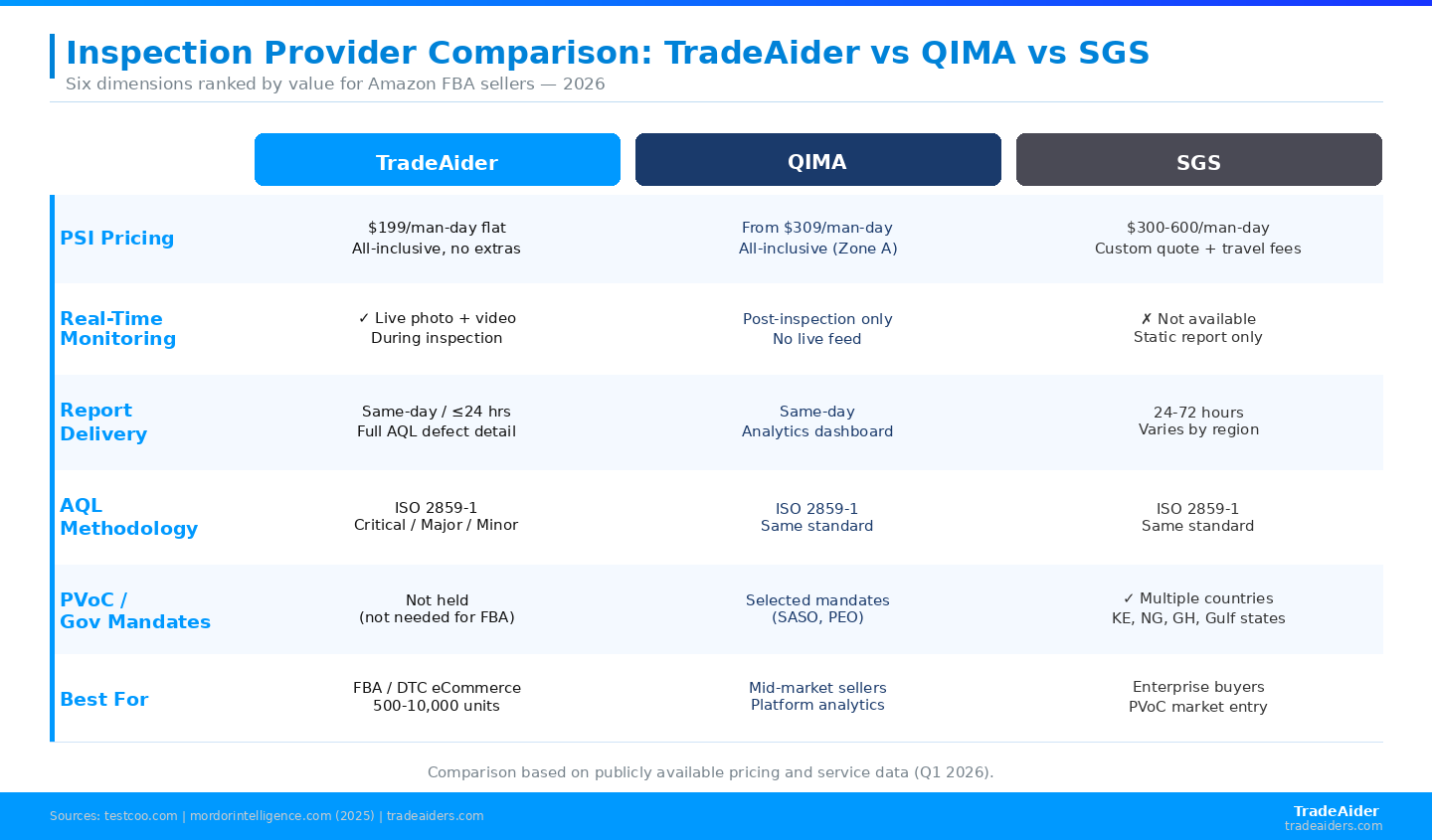
Figure 1: Real-time monitoring and flat-rate pricing are the two differentiators that define the eCommerce tier vs. the enterprise tier. TradeAider leads on both. Source: TradeAider; TESTCOO industry data (2025); Mordor Intelligence (2025).
| Dimension | TradeAider | QIMA | SGS |
|---|---|---|---|
| PSI Pricing | $199/man-day flat | From $309/man-day (Zone A) | Custom quote (opaque) |
| Hidden Fees | None | None (all-inclusive) | Travel surcharges common |
| Real-Time Monitoring | ✅ Live photo + video | Post-inspection only | ❌ Not available |
| Report Delivery | Same-day / ≤24 hrs | Same-day | 24–72 hours |
| AQL Standard | ISO 2859-1 | ISO 2859-1 | ISO 2859-1 |
| PVoC / Gov. Mandates | / | Selected mandates (SASO, PEO) | ✅ Multiple countries |
| Best For | FBA / DTC eCommerce (500–50K units) | Mid-market, analytics-focused | PVoC, regulated |
Based on this comparison, the data shows a clear segmentation: pricing transparency and real-time access to inspection data favor TradeAider for eCommerce sellers, while SGS's government-program mandates serve a distinct enterprise need that the other two don't cover.
Which Provider Should You Choose?
The decision comes down to three questions: Do you need a government-mandated PVoC certificate for your destination market? Does your procurement policy require a Big-4 TIC provider? Does your product require accredited certification from a notified body?
If you answered yes to any of those three, SGS or Intertek is the correct choice regardless of cost. If you answered no — which covers the vast majority of FBA sellers shipping consumer goods — the choice is between TradeAider and QIMA.
TradeAider is the stronger choice if real-time monitoring matters to you, your order sizes are under 10,000 units, and you want flat-rate predictable pricing. Learn how TradeAider's PSI service works or contact the team to discuss your order.
QIMA is the stronger choice if you're managing inspection and audit data across multiple suppliers on a single platform, or if you need simultaneous coverage across multiple sourcing countries beyond China.
Frequently Asked Questions
How much does a pre-shipment inspection cost in China?
Standard pre-shipment inspection in China costs $199–$320/man-day depending on the provider. TradeAider charges $199/man-day flat with no travel or admin surcharges. Industry-level pricing data compiled puts the broader market range at $149–$320/man-day, with most quality-focused providers sitting between $200–$320.
Does Amazon require SGS-certified inspection for FBA products?
No. Amazon does not require SGS certification for standard consumer goods sold through FBA. Amazon measures account health through ODR, return rates, and customer feedback — any ISO-compliant third-party inspector following ISO 2859-1 AQL sampling methodology meets the standard needed to protect your account. SGS certification becomes relevant only when your destination market mandates it through a government PVoC program, or when your product category requires specific accredited certification bodies.
What is the WTO PSI Agreement and does it affect my inspections?
The WTO Agreement on Pre-Shipment Inspection governs government-mandated inspection programs used primarily by developing countries to verify price, quality, and quantity before goods are shipped. It affects you only if you're importing into a country that requires a PSI certificate for customs clearance — such as Kenya, Ethiopia, or Iran. For importers shipping to the US, EU, UK, or Australia, the WTO PSI Agreement has no direct bearing on your inspection choices.
Is real-time inspection monitoring only for large orders?
No. TradeAider's real-time monitoring is available for any inspection booking, regardless of order size — there is no minimum unit threshold. In practice, real-time monitoring adds the most value for first orders with a new supplier (highest defect risk), high-value shipments where a rejection would be costly, and peak-season orders where rescheduling an inspection is not feasible. According to Repricerexpress's Account Health guide, ODR is calculated over a rolling 60-day window — meaning a single defective batch affects your metrics for two full months, regardless of order size.
For a deeper look at TradeAider's inspection service, see the full comparison of TradeAider's approach. To get a quote for your next shipment, use the free inspection cost calculator.
Related Articles
Grow your business with TradeAider Service
Click the button below to directly enter the TradeAider Service System. The simple steps from booking and payment to receiving reports are easy to operate.

