
For online furniture retailers, shipping damage is a major profitability killer. ISTA 3A packaging standards, established by the International Safe Transit Association, provide the definitive benchmark for protecting parcel delivery shipments. By implementing rigorous drop tests and vibration analysis, sellers can simulate the harsh reality of the logistics chain. Adhering to these standards not only reduces breakage and returns but also significantly boosts customer satisfaction by ensuring products arrive in pristine condition.

Key Takeaways
- ISTA 3A standards are essential for protecting furniture during parcel delivery, reducing damage and improving customer satisfaction.
- Drop tests simulate real-world impacts, identifying packaging weaknesses before products leave the warehouse.
- Investing in robust packaging lowers return rates and shipping costs, protecting your bottom line.
- Clear labeling and assembly instructions enhance the unboxing experience and reduce customer frustration.
- Regular quality checks ensure consistent packaging standards and long-term brand reliability.
E-commerce Guide to Packaging Standards

Hardline Products and Quality Assurance
Furniture falls under the "hardline" category, which often involves bulky, heavy, yet fragile items. Quality assurance protocols are critical for maintaining shipping integrity. Inspectors verify materials, assembly, and packaging strength to prevent transit damage.
| Protocol | Focus Area |
|---|---|
| Durability Testing | Ensures product longevity and structural integrity. |
| Safety Compliance | Verifies adherence to safety regulations and standards. |
| Material Sourcing | Checks for eco-friendly and compliant materials. |
| Packaging Verification | Confirms packaging strength against drops and compression. |
Role of ISTA in E-commerce
The International Safe Transit Association (ISTA) sets the global standards for packaging. For furniture, ISTA standards are pivotal. ISTA 3A specifically targets parcel delivery system shipments, making it the gold standard for e-commerce.
| Standard | Best Use Case |
|---|---|
| ISTA 1A | Basic integrity testing for products < 150 lbs (non-simulation). |
| ISTA 3A | Simulation testing for parcel delivery system shipments (most common for e-commerce). |
| ISTA 6A | Amazon-specific testing protocols (SIOC - Ships In Own Container). |
Research indicates that up to 20% of transit damage can be prevented with compliant packaging. Implementing these standards directly translates to fewer claims and higher profitability.
ISTA 3A Standard Overview
What is ISTA 3A?
ISTA 3A is a general simulation test for individually packaged products shipped via a parcel delivery system. It is designed to evaluate the packaging's ability to protect the product against the specific hazards of the parcel shipping environment, such as drops, vibrations, and compression.
The standard includes several critical test categories:
| Test Category | Purpose |
|---|---|
| Atmospheric Conditioning | Simulates temperature and humidity changes during transit. |
| Shock (Drop Test) | Simulates impacts from handling and sorting. |
| Vibration | Simulates movement in trucks and aircraft. |
Customized Testing Requirements
Furniture e-commerce often requires tailored testing protocols. Large or irregular items may need specific reinforcements like corner guards or edge boards to pass. Clear assembly manuals and global compliance labeling (barcodes, country of origin) are also verified during these inspections.
| Challenge | Solution |
|---|---|
| Heavy Items | Reinforced double-wall cartons and foam corners. |
| Flat-pack Design | Compact packaging engineering to reduce freight volume. |
| Assembly Issues | Clear, user-friendly manuals included in the box. |
Tip: Work with a lab to customize your ISTA 3A protocol, ensuring it addresses the specific weak points of your furniture designs.
Drop Tests for Furniture Packaging
Carton Drop Test Explained
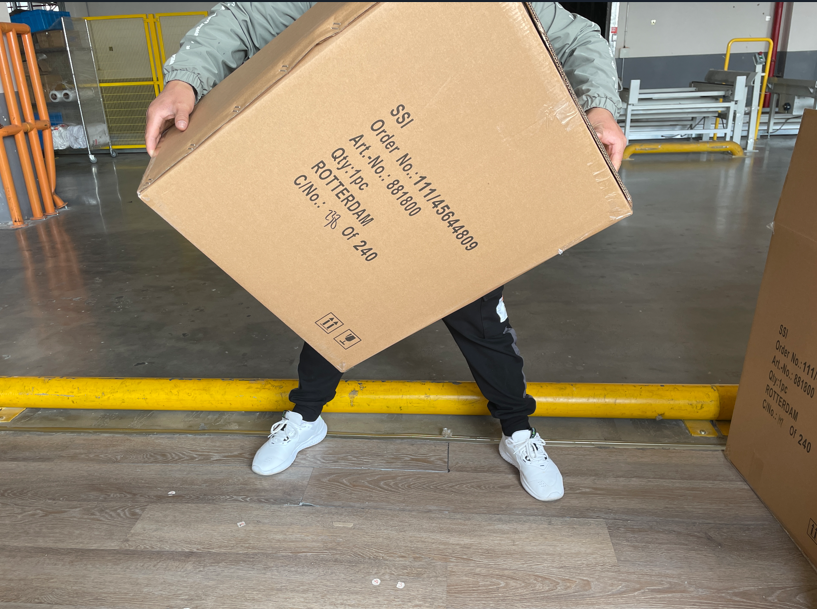
The carton drop test is a cornerstone of ISTA 3A. It involves dropping the packaged product from specific heights onto various faces, edges, and corners. The drop height varies based on the package weight—heavier packages are dropped from lower heights, but the impact force remains significant.
Key steps in the drop test sequence:
- Atmospheric preconditioning to stabilize materials.
- Drops on the most fragile face, edges, and corners.
- Vibration testing to simulate transport.
- Final drops to test integrity after vibration stress.
Unit Drop Test Importance
While carton tests check the outer shell, the unit drop test focuses on the product itself inside the packaging. It verifies that internal cushioning effectively absorbs shock, preventing the furniture from cracking or scratching against the box walls.
- Identifies internal collision points.
- Verifies foam density and placement.
- Prevents concealed damage claims.
Common Failures and Reporting
Inspectors document every failure point. Common issues include crushed corners, punctured boxes, and internal product abrasion. Detailed reporting allows manufacturers to reinforce specific areas without over-packaging the entire product.
ISTA 3A Compliance Benefits
Reducing Shipping Damage
Adhering to ISTA 3A standards drastically reduces shipping damage. By simulating the distribution environment, businesses can identify and fix packaging flaws before mass production.
Cost Savings and Fewer Returns
Robust packaging minimizes the "hidden factory" costs of returns: reverse logistics, restocking fees, and the loss of unsellable inventory. It also reduces the need for expensive rush replacements to appease angry customers.
Customer Satisfaction
A damage-free delivery is the first physical touchpoint with your customer. Secure packaging builds trust and brand loyalty.
| Metric | Potential Improvement |
|---|---|
| Damage Rate | Can be reduced to below 0.5% |
| Return Rate | Significant decrease in damage-related returns |
| Customer Rating | Higher reviews due to perfect arrival condition |
Loading Supervision for Safe Shipping
Container Loading Supervision (CLS)
Even perfect packaging can fail if loaded incorrectly. Container Loading Supervision (CLS) ensures cartons are stacked correctly, heavy items are at the bottom, and the container is dry and secure. Inspectors verify quantity, labeling, and condition before the doors are sealed.
| Checklist Item | Benefit |
|---|---|
| Container Condition | Prevents water damage and contamination. |
| Stacking Method | Prevents crushing of bottom cartons. |
| Quantity Verification | Ensures correct order fulfillment. |
Practical Tips for E-commerce Packaging
Packaging Design
Effective design balances protection with cost. Use double-walled cartons (BC flute) for heavier items and reinforce corners with hard cardboard or foam. Flat-pack designs not only save shipping costs but are inherently more resistant to structural damage during transit.
Ongoing Quality Control
Continuous QC is vital. Don't just test the prototype; verify production batches regularly. Packaging materials can vary between batches, so ongoing drop tests and inspections ensure standards don't slip over time.
ISTA 3A standards and drop tests are indispensable tools for furniture e-commerce. By rigorously testing packaging and supervising loading, businesses can drastically reduce damage rates, save costs, and build a reputation for reliability. Consistent attention to these details transforms logistics from a risk into a competitive advantage.
FAQ
What does ISTA 3A mean for furniture e-commerce?
ISTA 3A is a testing standard that simulates the parcel delivery environment. It helps sellers design packaging that survives the drops, vibrations, and handling of courier networks.
Why are drop tests important?
Drop tests verify that packaging can absorb impact shock. They identify weak spots in cushioning and box strength before the product ships.
How does ISTA 3A certification benefit online stores?
It provides proof that packaging meets industry safety standards, leading to fewer returns, lower costs, and increased customer confidence.
Can any furniture product use ISTA 3A packaging?
ISTA 3A is suitable for individual packages weighing up to 150 lbs (70 kg). Heavier or palletized items may require ISTA 3B or other specific protocols.

Похожие статьи


Развивайте свой бизнес с услугами TradeAider
Нажмите кнопку ниже, чтобы войти непосредственно в систему услуг TradeAider. Простые шаги от бронирования и оплаты до получения отчетов легко выполнить.

