
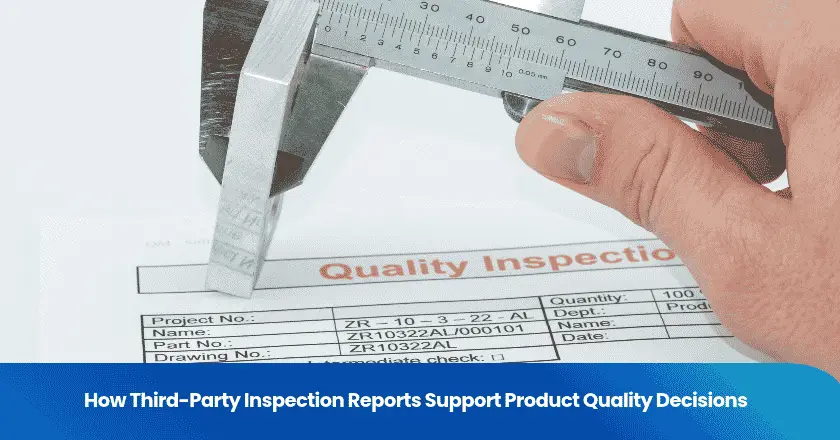
When purchasing products from manufacturers, buyers need reliable information to determine whether goods meet their agreed quality requirements. However, they may not be able to visit the factory or check every product themselves.
A third-party inspection report helps address this challenge by documenting the condition of inspected products at a specific stage of production. It provides objective findings, including inspection results, defect records, measurements, and photographs, giving buyers a clearer basis for evaluating product quality and deciding what action to take.
But what exactly can a third-party inspection report tell you? And how should businesses use it?
What Is a Third-Party Inspection Report?
A third-party inspection report is a document prepared by an independent inspection provider after conducting an inspection according to an agreed scope and set of criteria.
Unlike a manufacturer's internal quality control record, the report provides an external assessment of the inspected products or production conditions. It records what the inspector checked, what was found, and whether the results met the specified acceptance criteria.
Depending on the inspection type and product requirements, a report may cover:
- Product appearance and workmanship
- Dimensions, weight, materials, and other specifications
- Functional checks within the agreed inspection scope
- Defect descriptions, quantities, and classifications
- Packaging, labeling, and carton markings
- Inspection photographs, measurements, and supporting evidence
- Sampling information and overall inspection results
The report's value comes from the evidence it provides. It allows buyers to review actual inspection findings instead of relying only on a supplier's statement that the goods are ready.
Why Are Third-Party Inspection Reports Important?
1. Provide an Independent Record of Product Quality
Manufacturers normally conduct their own quality control checks. These internal processes are essential, but buyers may still want an independent assessment before accepting an order.
A third-party inspection report provides a separate record of the product condition observed during the inspection. It can help buyers compare the actual findings with their approved samples, product specifications, purchase requirements, and agreed quality standards.
This is particularly useful when buyers and manufacturers are located in different countries and cannot easily verify production in person.
2. Help Identify Defects Before Shipment
An inspection report can document defects that might otherwise remain unnoticed until goods arrive at the buyer's warehouse or distribution center.
Depending on the inspection scope, findings may include scratches, stains, incorrect dimensions, poor workmanship, missing components, packaging damage, or incorrect labeling.
When problems are identified before shipment, buyers have an opportunity to discuss corrective action with the supplier. Depending on the findings, they may request repair, replacement, sorting, or re-inspection.
Early identification does not eliminate all quality risks, but it can provide more time to address known problems before the goods leave the factory.
3. Support More Informed Shipment Decisions
A supplier may report that an order has been completed, but buyers still need to determine whether the finished goods meet their requirements.
An inspection report provides relevant evidence for this decision. It records the inspection scope, sample size where applicable, observed defects, and results against the agreed acceptance criteria.
Based on the findings, buyers can decide whether to accept the inspected lot, request corrective action, arrange another inspection, or discuss the results further with the supplier.
The report supports the buyer's decision; it does not automatically approve a shipment or replace the buyer's contractual acceptance process.
4. Improve Communication Between Buyers and Suppliers
Quality disputes often arise because buyers and suppliers have different understandings of a defect or its severity.
A detailed inspection report gives both parties a common reference. Instead of relying on general descriptions, they can review photographs, measurements, defect locations, and the number of affected samples.
This makes it easier to clarify the problem, agree on corrective actions, and verify whether the required improvements have been made.
5. Maintain Traceable Quality Records
Inspection reports can also become part of a company's quality documentation.
When reports are consistently maintained, buyers can review inspection history across different orders and suppliers. This may help them identify recurring defects, compare quality performance over time, and determine whether additional production monitoring is needed.
For businesses managing multiple product categories or manufacturing partners, organized inspection records provide a useful reference for ongoing quality management.
What Should a Third-Party Inspection Report Include?
A useful inspection report should be sufficiently detailed for buyers to understand what was inspected and how the results were determined.
The following table outlines common report elements.
| Report element | What it tells the buyer |
|---|---|
| Inspection information | Inspection date, location, product, order details, and inspection stage |
| Inspection scope | Which product characteristics and requirements were checked |
| Sampling information | Number of units selected and the applicable sampling plan, where relevant |
| Product specifications | Requirements used as the basis for inspection |
| Inspection findings | Actual observations, measurements, and functional check results |
| Defect records | Defect descriptions, classifications, and quantities |
| Photographic evidence | Visual documentation of product conditions and identified issues |
| Overall result | Whether the inspected lot meets the agreed acceptance criteria |
The report should also make clear which checks were performed and which were outside the inspection scope. This is important because a report cannot provide evidence for characteristics that were never examined or tested.
Third-Party Inspection Reports vs. Laboratory Testing Reports
One important distinction is that a third-party inspection report is not necessarily a laboratory testing report.
Although both can provide independent quality information, they serve different purposes.
| Aspect | Third-Party Inspection Report | Laboratory Testing Report |
|---|---|---|
| Main purpose | Document product condition against specified inspection criteria | Evaluate specific product characteristics using defined test methods |
| Typical checks | Appearance, workmanship, dimensions, quantity, packaging, and specified functional checks | Physical performance, chemical composition, material properties, and other measurable characteristics |
| Method | On-site inspection and agreed sampling procedures | Laboratory test methods and equipment |
| Main output | Inspection findings, defect records, photographs, and inspection results | Test data, measurements, and results against specified test requirements |
For example, a pre-shipment inspection of a batch of plastic kitchenware may check appearance, dimensions, workmanship, quantity, and packaging. However, determining whether the material meets a specific chemical migration limit requires appropriate laboratory testing.
If a buyer needs evidence of a particular safety or regulatory requirement, the relevant laboratory tests, technical documentation, or certification may also be necessary.
An inspection report should never be treated as a substitute for a laboratory test report or product certification when those are required.
When Should Businesses Request a Third-Party Inspection Report?
The timing of an inspection affects the type of information the report can provide. Buyers can arrange inspections at different production stages according to their requirements.
| Stage | Inspection type | What the report helps verify |
|---|---|---|
| Before mass production | Pre-Production Inspection (PPI) | Materials, components, product specifications, and production preparations |
| During manufacturing | During Production Inspection (DUPRO/DPI) | Product quality and recurring defects while production is underway |
| After production | Pre-Shipment Inspection (PSI) | Finished product quality, quantity, workmanship, packaging, and labeling |
| During container loading | Container Loading Supervision (CLS) | Loading conditions, product quantities, packaging condition, and loading arrangements |
For example, a buyer introducing a new product may want an early inspection to check materials and specifications. A buyer managing a large production order may arrange a during-production inspection to identify recurring problems before the order is completed.
A pre-shipment inspection report, meanwhile, provides a documented assessment of the finished goods before shipment.
The appropriate inspection plan depends on the product, order requirements, production schedule, and potential quality risks.
What a Third-Party Inspection Report Cannot Prove
Although inspection reports are useful quality records, businesses should understand their limitations.
It does not guarantee that every product is defect-free. When a sampling inspection is used, only selected units are examined. The results provide a basis for lot acceptance under the agreed sampling plan, not proof that every unit has been checked.
It does not automatically prove regulatory compliance. A routine inspection cannot establish compliance with every safety, chemical, or technical requirement. Specific laboratory testing, technical documentation, or certification may be needed.
It does not certify a company's reputation. An inspection report documents the findings from a particular inspection. It is not a general endorsement of the manufacturer or proof of its overall business credibility.
It does not replace the manufacturer's quality control responsibilities. The manufacturer remains responsible for maintaining production quality and addressing defects. The inspection report provides independent findings that help buyers monitor the results.
Understanding these limitations helps businesses use inspection reports appropriately and avoid making claims that the inspection evidence does not support.
How TradeAider Provides Transparent Inspection Reports
TradeAider provides third-party inspection services in China for international buyers, importers, wholesalers, and e-commerce businesses. Its inspection services cover different stages of production, including pre-production inspection, during-production inspection, pre-shipment inspection, and container loading supervision.
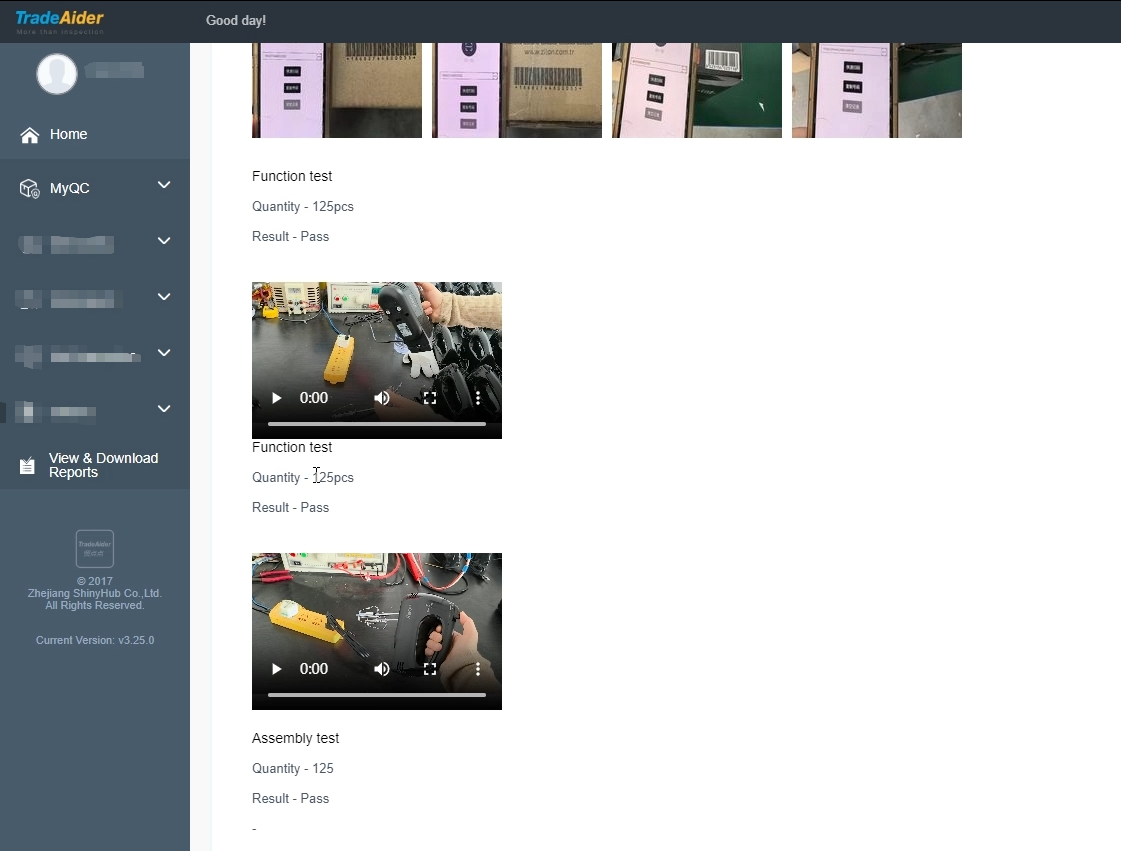
A key feature of TradeAider's reporting process is real-time online access. Buyers can review inspection photographs, videos, measurements, defect records, and inspection results through the online platform while the inspector is still at the factory. This gives buyers an opportunity to review findings and communicate instructions during the inspection rather than waiting until the process is finished. When quality issues are identified, buyers can discuss corrective action with the supplier. Where required, TradeAider can also support follow-up inspections to verify whether specified improvements have been made.
An official PDF inspection report is generally provided within 24 hours after the inspection is completed.
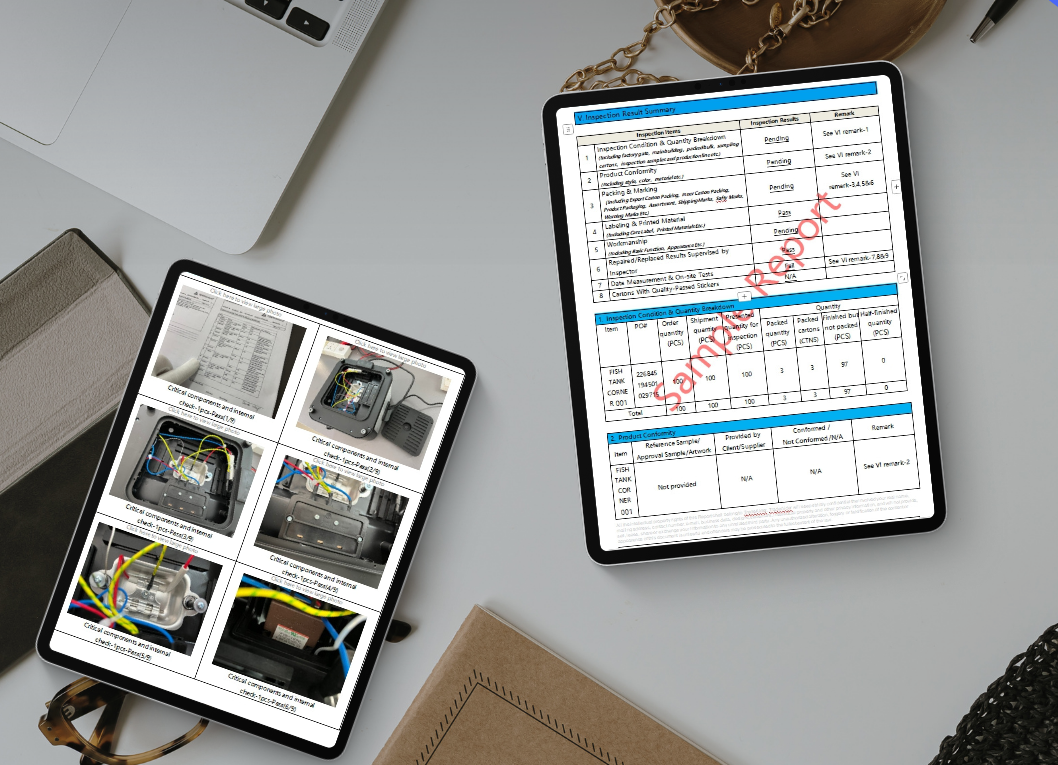
By combining on-site inspection with real-time reporting and documented findings, TradeAider helps buyers gain better visibility into product quality and make more informed decisions before shipment.
Frequently Asked Questions
Is a third-party inspection report proof that a product is high quality?
It provides documented findings about the products inspected against specified criteria. It does not guarantee that every unit is defect-free or that the product meets requirements outside the inspection scope.
Can businesses use third-party inspection reports to demonstrate product quality?
Businesses may use inspection reports as supporting quality records, provided that any claims accurately reflect the inspection scope, findings, and date. A report should not be presented as a product certification or a guarantee of regulatory compliance unless it actually represents such an assessment.
How long does it take to receive a third-party inspection report?
The reporting time depends on the inspection provider and service arrangement. TradeAider generally provides an official PDF report within 24 hours after the inspection is completed. Real-time online findings are also available during the inspection.
Does a third-party inspection report replace product certification?
No. Inspection reports and product certificates serve different purposes. Certification involves an applicable certification scheme and its specific requirements. A routine product inspection report does not replace required certification.
Should buyers keep third-party inspection reports?
Yes. Keeping reports can help businesses maintain quality records, review supplier performance, identify recurring problems, and refer to previous inspection findings when placing repeat orders.
Conclusion
A third-party inspection report is more than a document stating whether an order passes or fails. It provides a record of what was inspected, what was found, and how the results compare with the agreed requirements.
For businesses sourcing products internationally, these reports support independent quality verification, defect follow-up, communication with manufacturers, and more informed shipment decisions.
The key is to understand both what an inspection report can demonstrate and what falls outside its scope. When supported by clearly defined inspection criteria and reliable on-site execution, it becomes a practical tool for managing product quality throughout the manufacturing process.
Похожие статьи

Развивайте свой бизнес с услугами TradeAider
Нажмите кнопку ниже, чтобы войти непосредственно в систему услуг TradeAider. Простые шаги от бронирования и оплаты до получения отчетов легко выполнить.