
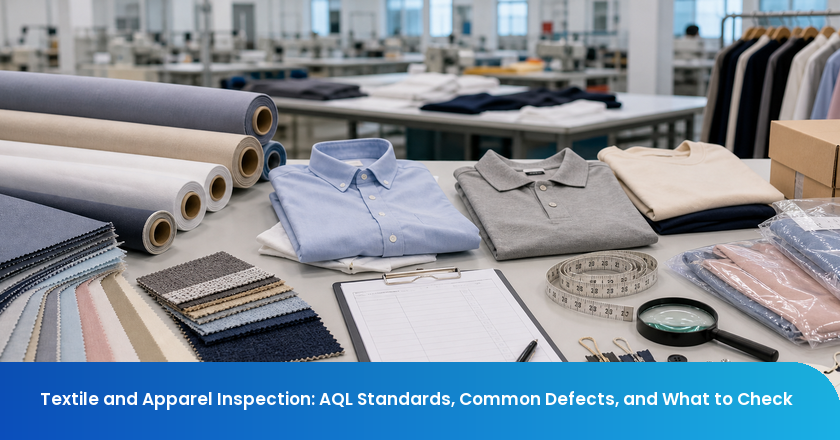
Textile and apparel inspection should combine AQL standards with checks for fabric defects, workmanship, measurements, trims, labels, care instructions, color, shade, odor, packing, carton marks, and destination-market requirements. The goal is not only to count sewing defects; it is to confirm that the shipped garments match the approved sample, specification, label file, and buyer release rule.
Textile and apparel inspection covers a wide range of products: woven shirts, knit tops, trousers, dresses, jackets, uniforms, underwear, socks, towels, bedding, fabric goods, and accessories. Each category has different risks, but the inspection logic is similar. The buyer needs sampling discipline, clear defect classes, measurement rules, label checks, packing checks, and evidence that the lot matches the approved files.
The most common inspection weakness is treating apparel as only a sewing-quality issue. Sewing defects matter, but so do fabric shade, measurement, size ratio, fiber label, care label, country-of-origin label, hangtag, barcode, folding, polybag, carton mark, and shipment packing. A garment can look well sewn and still fail commercially because the size is wrong or the care label is missing.
- AQL standards: use a current sampling standard and define defect classes before inspection.
- Common defects: fabric flaws, open seams, skipped stitches, stains, shade variation, measurement failure, wrong labels, and poor packing.
- Compliance checks: flammability, fiber labeling, care labeling, country of origin, and children's apparel rules where applicable.
- Decision rule: release only when workmanship, measurements, labels, packing, and required evidence all align.
The Direct Answer
Textile and apparel inspection should apply AQL to visible defects while separately verifying measurements, labels, packing, and market-specific compliance evidence.
ISO 2859-1:2026 is the current ISO standard for AQL-indexed sampling procedures for lot-by-lot inspection by attributes. Source: ISO 2859-1:2026.
CPSC clothing guidance explains flammability requirements for wearing apparel under 16 CFR part 1610 and related children's sleepwear standards. Source: CPSC clothing business guidance.
FTC apparel labeling guidance explains that most textile and wool products must be labeled with fiber content, country of origin, and responsible business identity. Source: FTC apparel labeling.
FTC care labeling guidance explains that manufacturers and importers must provide care instructions for covered textile wearing apparel and certain piece goods. Source: FTC Care Labeling Rule.
These sources show why apparel inspection should not be limited to appearance. Some issues require lab testing or legal compliance review. The inspection role is to verify the physical shipment, labels, packing, and visible conformity against the buyer's approved files.
Textile And Apparel Defect Categories
A good checklist separates fabric, workmanship, measurement, label, and packing risks.
| Defect Category | Examples | Why It Matters | Inspection Control |
|---|---|---|---|
| Fabric | Holes, stains, slubs, shade bands, pilling, odor, color mismatch | Customer sees fabric before construction details | Compare to swatch, lab dip, sample, and shade standard |
| Workmanship | Open seam, skipped stitch, broken stitch, puckering, loose thread, poor pressing | Affects durability and perceived quality | Inspect critical seams and visible construction |
| Measurement | Chest, waist, sleeve, inseam, length, rise, tolerance failure | Creates fit complaints and returns | Use size spec and defined measurement sample |
| Labels and trims | Wrong size label, missing care label, wrong fiber, broken zipper, missing button | Can create compliance or use failure | Open sampled garments and compare label files |
| Packing | Wrong ratio, polybag issue, barcode error, carton mark, crushed pack | Affects receiving and customer presentation | Check carton, pack, ratio, barcode, and marks |
This table helps importers avoid a narrow inspection. AQL can count visible defects, but the buyer still needs to decide how measurement failures, label errors, and packing errors affect release. For apparel, those checks can be as important as workmanship defects.
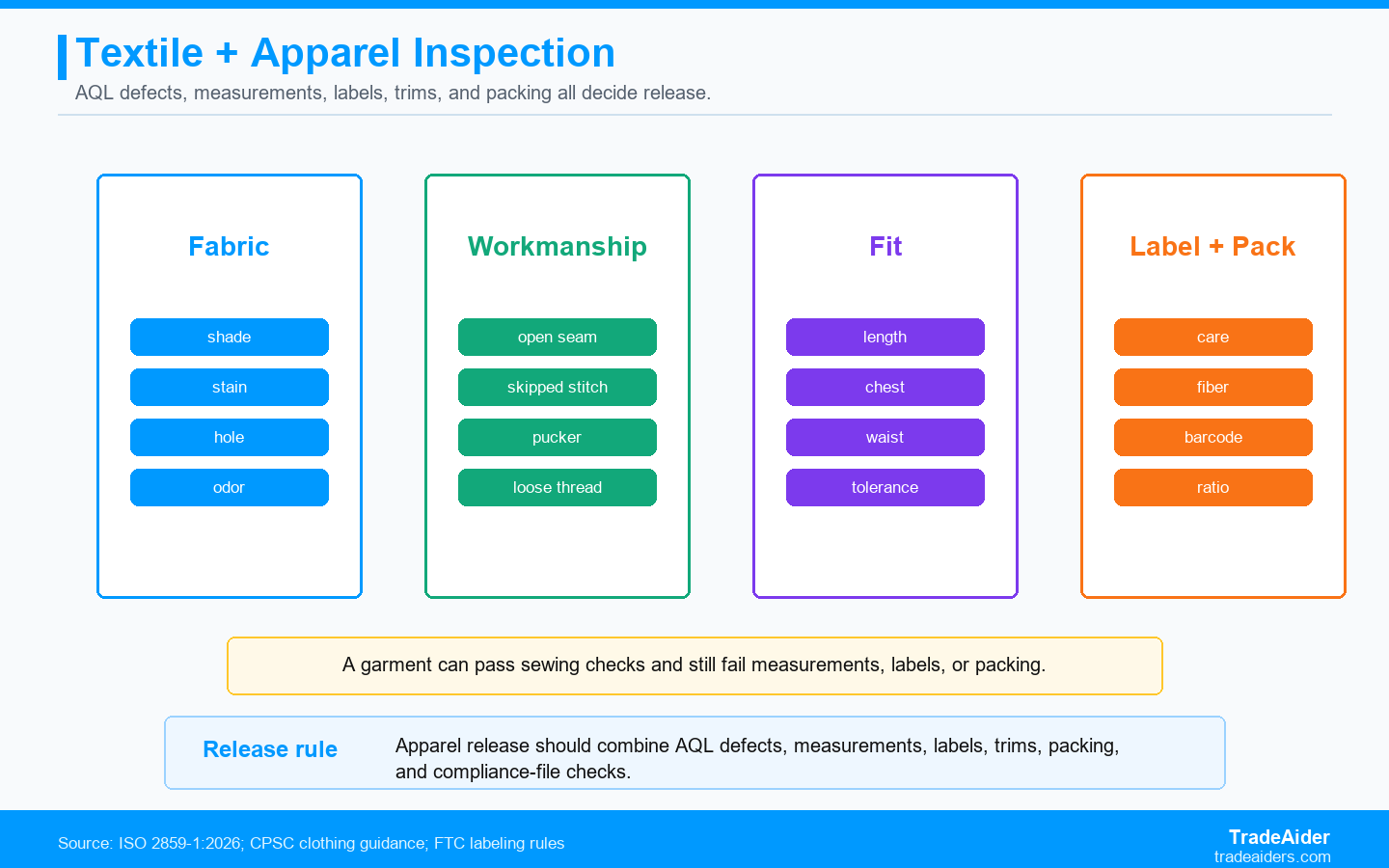
Apparel release should combine AQL defects, measurements, labels, trims, packing, and compliance-file checks.
Fabric Defects To Check
Fabric defects often create visible customer disappointment before the garment is worn.
Fabric defects include holes, stains, oil marks, needle damage, slubs, barre, shade bands, color variation, pilling, snagging, printing defects, embroidery defects, odor, mold, and fabric-hand inconsistency. The inspector should compare fabric against approved swatches, lab dips, strike-offs, and sample photos where available.
Shade variation is especially important when garments have multiple panels or sets. A shirt with sleeves that do not match the body, trousers with mismatched panels, or bedding with inconsistent fabric shade can look defective even when seams are correct. The buyer should specify shade grouping rules before inspection.
Odor and moisture should be documented. Strong chemical smell, damp packing, mold spots, or fabric discoloration can create serious arrival problems. These issues may require supplier investigation, drying, repacking, or rejection depending on severity.
Workmanship And Measurement Defects
A garment can fail because it is poorly made or because it does not fit.
Workmanship defects include open seams, broken stitches, skipped stitches, poor seam allowance, puckering, twisting, loose threads, uneven hems, misaligned pockets, poor button attachment, zipper failure, and bad pressing. The inspector should focus on high-stress seams and customer-visible areas.
Measurement defects require a consistent method. The inspector should lay garments in the agreed way, measure the defined points, apply tolerances, and record results by size. Stretch fabrics, washed garments, and padded items need clear measurement instructions because small method differences can change results.
The buyer should not bury measurement failure inside the general minor defect count. If one size is systematically out of tolerance, the entire size run may need sorting or correction. Measurement findings should be reported separately so the buyer can identify size-specific risk.
Labels, Trims, And Packing Checks
Label and packing defects can block sale even when sewing quality is acceptable.
Labels should match the approved file: brand label, size label, care label, fiber label, country of origin, RN or responsible business identity where relevant, hangtag, price ticket, barcode, and warning label where applicable. The inspector should check placement, spelling, durability, and consistency across sizes and colors.
Trims include buttons, snaps, zippers, drawcords, elastic, toggles, patches, embroidery, heat transfers, lace, and decorative hardware. Missing trims, weak attachment, sharp components, poor zipper function, or wrong color can turn a garment into a customer return. Trims should be pulled or function-checked according to buyer instructions where practical.
Packing checks include folding, hanger, polybag, carton quantity, assortment ratio, size ratio, color ratio, barcode, shipping mark, carton condition, and e-commerce pack presentation. A correctly made garment can still create warehouse errors if the carton mark or barcode is wrong.
Where TradeAider Fits In Apparel Inspection
TradeAider fits by converting textile and apparel files into inspection evidence before release.
TradeAider can use Pre-Shipment Inspection to verify apparel workmanship, fabric defects, measurements, labels, trims, packing, carton marks, and AQL findings before shipment.
When apparel problems need earlier control, During Production Inspection can check sewing, finishing, washing, labeling, and packing while correction is still possible. If the supplier has repeated failures, factory audit service can review process controls.
The business fit is preventing small garment defects from becoming expensive returns. TradeAider helps buyers turn product files, label files, and defect history into inspection checkpoints.
SPAR Scenario: The Sewing Was Fine But The Labels Failed
The shipment looked good until the buyer checked the label file.
Situation: A buyer orders 15,000 woven shirts from a China apparel factory. The supplier says sewing quality is strong and shipment is ready.
Problem: PSI finds few workmanship defects, but several sampled garments have wrong fiber labels and two sizes have incorrect care labels. The carton ratio is also wrong for one color.
Action: TradeAider reports workmanship separately from label and packing failures, documents affected cartons, and asks the supplier to relabel and correct carton assortments before reinspection.
Result: The buyer avoids a shipment that could have passed cosmetic inspection but failed retail receiving and labeling review.
Action Card: Textile And Apparel Inspection Checklist
Inspect garment quality, not only sewing quality.
- Define AQL values and defect classes for critical, major, and minor defects.
- Cover size, color, style, carton location, and fabric lot in the sampling plan.
- Check fabric defects, shade, stains, odor, hand feel, and visible surface quality.
- Check workmanship: seams, stitches, hems, pockets, zippers, buttons, trims, and pressing.
- Measure sampled garments against the size spec and tolerances.
- Verify care label, fiber label, country of origin, size label, hangtag, barcode, and packing ratio.
The buyer should keep apparel inspection files organized by style. Each style file should include tech pack, size chart, approved sample photos, label artwork, trim card, packing method, carton mark, defect examples, and compliance documents where relevant. The inspector can only compare against what the buyer supplies.
After every shipment, the buyer should update the defect list. If customers complain about fit, adjust the measurement plan. If returns mention color, tighten shade checks. If the warehouse reports barcode errors, strengthen packing and label verification. Inspection should learn from real outcomes.
Apparel buyers should also decide which defects are brand-sensitive. A luxury garment, uniform, schoolwear item, sportswear product, and discount basic may require different cosmetic standards even when the AQL table is the same. The defect classification should reflect commercial promise.
What To Do After A Failed Apparel Inspection
A failed apparel inspection should produce sorting instructions, not only a disappointed email.
If workmanship defects fail the lot, the supplier should sort affected garments by defect type and show correction evidence before reinspection. The buyer should not accept a general promise that workers will be more careful. The reinspection should focus on the original failed defects and a fresh sample of the corrected lot.
If measurement defects fail the lot, the buyer should identify whether the issue affects one size, one color, one fabric lot, one cutting batch, or the full order. Some measurement issues can be sorted. Others require remake or commercial concession because the garment will not fit the intended customer. The decision should be based on data, not emotion.
If label or packing defects fail the lot, the supplier may need to relabel, repack, re-sticker, or correct carton assortments. The buyer should request photos and then reinspect enough cartons to verify the correction. Label errors are easy to underestimate because the garment looks good, but they can create compliance, warehouse, or customer issues.
How To Build An Apparel Defect Library
A photo library makes inspection standards clearer across seasons and suppliers.
The buyer should store defect photos by style, season, supplier, defect class, and location. A photo of a small hidden loose thread belongs in a different category from a front-body stain or broken zipper. Over time, the library helps new suppliers, new inspectors, and internal teams understand what the brand considers critical, major, or minor.
The library should include approved examples as well as failed examples. Showing a correct seam, correct label placement, correct fold, and correct carton mark can be just as useful as showing defects. Apparel quality improves when factories know what good looks like before inspection.
If you need textile or apparel inspection support, send TradeAider the tech pack, size chart, label files, trim card, packing plan, order quantity, and defect history. The next step is to ask TradeAider to build an apparel inspection checklist before shipment.
Frequently Asked Questions
What are the most common apparel defects?
Common defects include fabric stains, holes, shade variation, open seams, skipped stitches, measurement failures, wrong labels, missing trims, and packing errors.
Does AQL cover measurements?
AQL can support sampling, but measurements should be reported separately against size specs and tolerances because fit issues can affect whole sizes.
Do apparel labels need inspection?
Yes. Fiber, care, country-of-origin, size, hangtag, barcode, and responsible-identity labels can affect compliance, receiving, and customer use.
Can inspection replace textile compliance testing?
No. Inspection verifies shipment conformity. Flammability, fiber content, and other compliance evidence may require testing or legal review.
Related Articles

Grow your business with TradeAider Service
Click the button below to directly enter the TradeAider Service System. The simple steps from booking and payment to receiving reports are easy to operate.

