
- About Us

- Our Services
- Your Industry
- Resources
- News & Blog
Ensuring the safety of stuffed animals is paramount for protecting children and maintaining brand reputation. International safety standards heavily influence manufacturing and inspection processes. A rigorous inspection strategy focuses on identifying physical hazards, ensuring chemical compliance, and verifying structural integrity.

| Standard | Region | Key Aspects |
|---|---|---|
| EN71 | Europe | Mechanical safety, chemical limits, fire resistance |
| CPSIA | USA | Lead and phthalate limits, product labeling, testing requirements |
These measures ensure each inspection addresses safety in every plush toy produced.
Key Takeaways
- Rigorous quality control is crucial for child safety. Manufacturers must follow strict safety standards like CPSIA and EN71 to ensure toys are safe and compliant.
- Metal detection is a non-negotiable step in quality control. It helps identify and remove broken needles or metal fragments, preventing sharp hazards.
- Attachment strength tests, specifically pull tests on eyes and noses, ensure small parts remain secure to prevent choking risks.
Plush Toy Inspection and Safety Standards
Compliance Requirements
Plush toy inspection forms the foundation of safety and quality control in the toy industry. Manufacturers must adhere to strict regulations. The main safety standards include the CPSIA for the United States and EN 71 for Europe. These standards require checks for lead content, flammability, and phthalates, alongside thorough mechanical durability tests.
| Test Parameter | Description |
|---|---|
| Lead Content | X-ray fluorescence (XRF) spectrometry ensures lead does not exceed regulatory limits (e.g., 90-100 ppm). |
| Flammability | Flammability tests follow ASTM F1958-23 and EN 71-6:2019 to ensure fabric safety. |
| Phthalates Content | Gas chromatography-mass spectrometry (GC-MS) checks for restricted plasticizers. |
| Safety Evaluation | Mechanical tests (ASTM F963-17 / EN 71-2) to ensure structural integrity under stress. |
Inspection Categories
Inspection protocols must cover various international mandates. Each standard addresses different aspects of safety:
| Regulation | Description |
|---|---|
| EN71 | European standard for toy safety under the Toys Directive. |
| ASTM F963 | Standard Consumer Safety Specification for Toy Safety (USA). |
| CPSIA 2008 | U.S. Consumer Product Safety Improvement Act. |
| Canada CCPSA | Canada Consumer Product Safety Act requirements. |
| AS/NZS ISO 8124 | Safety of toys standard for Australia and New Zealand. |
Pre-shipment inspections focus on mechanical and physical safety, as well as chemical analysis. Conducting these checks at every stage of manufacturing reduces the risk of costly recalls and protects brand integrity.
Metal Detection and Quality Control

Metal Detection Process
Metal detection is a critical control point (CCP) in soft toy manufacturing. It identifies broken sewing needles or metal fragments that may have been accidentally left inside the stuffing. This process is vital for protecting children from sharp hazards.
Detectors are typically calibrated to detect ferrous metals between 1.5 and 2.5 mm, with a standard setting often at 1.0mm or 1.2mm depending on the needle size used in the factory. Each finished plush toy passes through the detector, and any rejection requires immediate quarantine and investigation.
Tip: Automated conveyor systems improve consistency in metal detection, removing the margin for human error associated with handheld wands.
The following checklist outlines the core metal detection steps:
- Calibrate the metal detector for the required sensitivity (e.g., 1.2mm Ferrous).
- Pass 100% of finished plush toys through the detector tunnel.
- Check the detector with test samples (Ferrous, Non-ferrous, SS) at regular intervals (e.g., hourly).
- Verify that the reject mechanism (stop belt or pusher) functions correctly.
- Maintain detailed audit trails for all inspection activities.
Sharp Hazard Prevention
Beyond metal detection, inspectors perform physical "sharp point" and "sharp edge" testing. This ensures that rigid components (like plastic eyes or battery compartments) do not have dangerous edges. Quality control teams also verify that materials are free from heavy metals such as lead, cadmium, and arsenic through chemical testing.
Attachment Strength and Plush Toy Quality Check
Pull Test Procedure
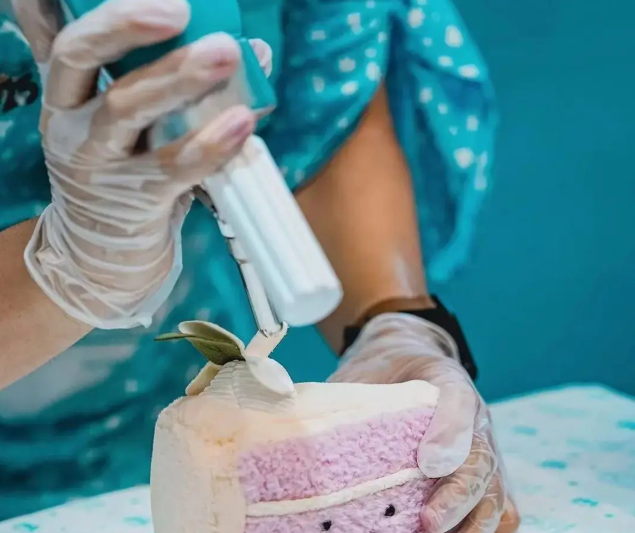
Weak attachments are a choking hazard. During inspection, special attention is paid to small parts like plastic eyes, noses, buttons, or decorative accessories. The "Pull Test" measures the force required to detach these components. If a child pulls on a part with their teeth or hands, it must not come loose.
Standard procedures involve applying a specific tensile force to the component for a set duration. For toys intended for children under 3 years old (or "all ages"), the standard is often stricter.
| Test Method | Objective | Standard Force (Typical) |
|---|---|---|
| Tension Test (Pull Test) | Ensure small parts do not detach under stress. | 90 Newtons (approx 20 lbs) for 10 seconds (EN71) or 15 lbs (ASTM). |
| Torque Test | Ensure parts cannot be twisted off. | Rotate part 180 degrees or apply 0.45 Nm torque. |
Seam and Component Inspection
Seam strength is the backbone of plush toy durability. Weak seams can burst, exposing stuffing that poses a suffocation or ingestion risk. Inspectors examine every seam for skipped stitches, loose threads, or "run-offs" (where the fabric wasn't caught by the thread).
A comprehensive on-site inspection checklist includes:
| Inspection Item | Description |
|---|---|
| Pull test on small parts | Apply 90N force; no breakage or detachment allowed. |
| Seam Strength Test | Apply 70N force to seams to ensure they do not burst. |
| Stuffing Check | Ensure stuffing is clean, dry, and free from foreign materials (insects, sharp objects). |
| Visual Check | No asymmetry, dirty marks, loose threads, or fabric defects. |
| Rub Test | Verify colorfastness so dye does not transfer to hands or clothes. |
| Labeling Check | Ensure age warnings, tracking labels, and CE/UKCA marks are correct. |
Effective plush toy inspection is a combination of rigorous testing and visual verification. By implementing mandatory metal detection, strict pull tests on attachments, and thorough seam inspections, manufacturers can ensure their products are safe for children. Adhering to standards like EN71 and CPSIA not only prevents recalls but builds lasting consumer trust and protects your brand reputation.
FAQ
What is the purpose of metal detection in plush toy inspection?
Metal detection is used to find broken sewing needles or other metal contaminants inside the toy's stuffing. This is a critical safety step to prevent puncture injuries.
How do inspectors test the strength of plush toy attachments?
Inspectors use a "Pull Test" (Tension Test). A calibrated force gauge applies a specific weight (e.g., 90 Newtons or 21 lbs) to eyes, noses, or buttons to ensure they do not detach and become choking hazards.
Why do plush toys need seam and component inspections?
Seam inspections identify weak spots that could burst open during play. If a seam opens, the stuffing becomes accessible, which can be a choking or suffocation hazard for small children.
Related Articles
Grow your business with TradeAider Service
Click the button below to directly enter the TradeAider Service System. The simple steps from booking and payment to receiving reports are easy to operate.

