
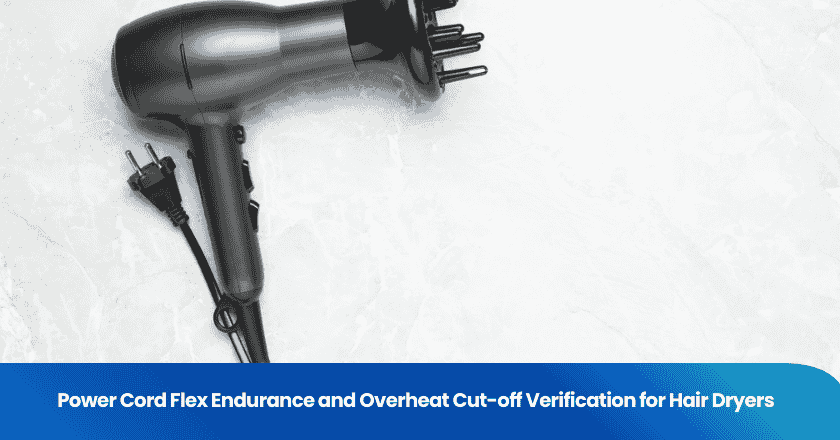
Hair dryers require strict verification of Power Cord Flex Endurance and overheat cut-off functions to ensure user safety. Inspectors use defect management and apply zero-tolerance policies for critical defects. These tests protect both standard and travel-sized hair dryers from fire hazards and mechanical failures.
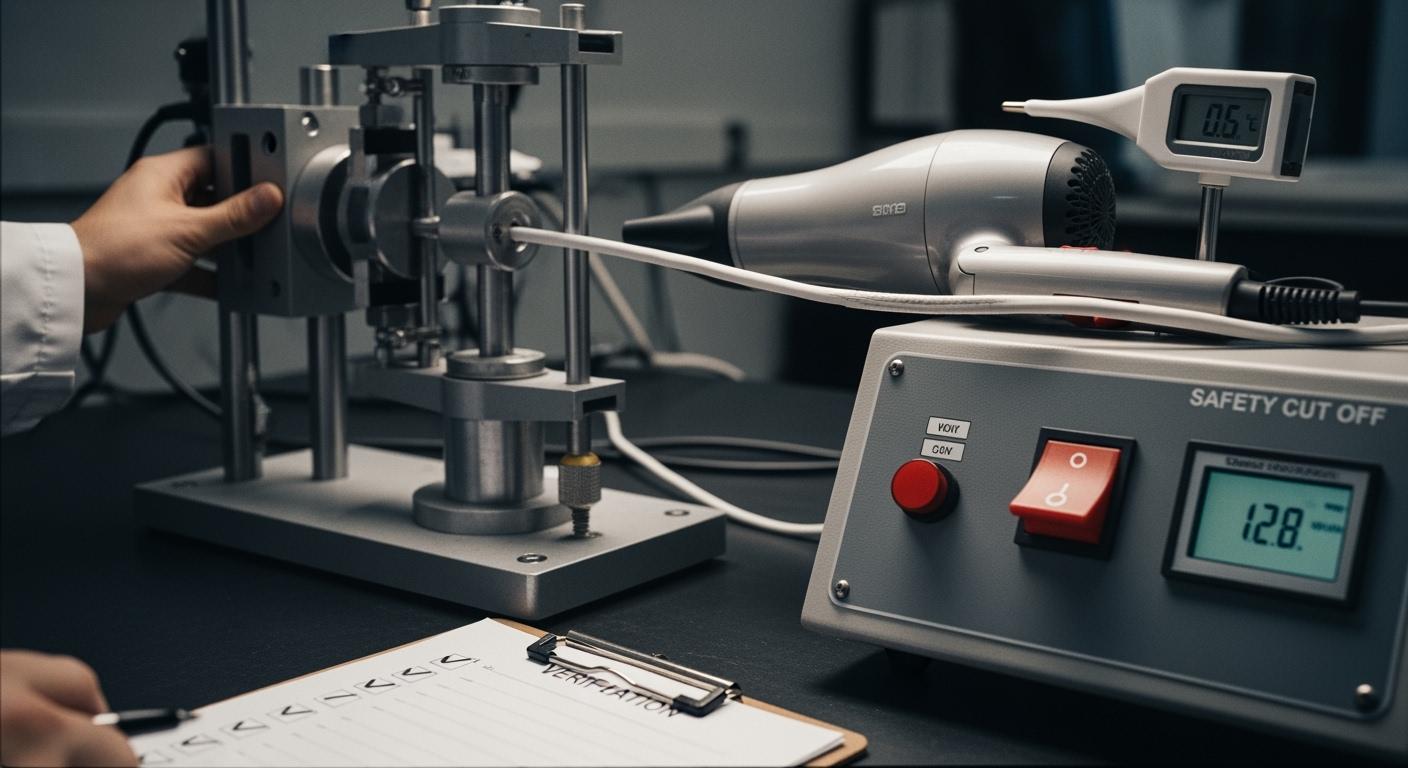
- Inspectors check cords and thermal controls for durability and reliability.
- Safety testing prevents electrical risks and ensures consistent performance.
Key Takeaways
- Inspectors test power cord flex endurance to ensure safety. A durable cord prevents electrical hazards and maintains performance.
- Regular cleaning of the air filter is essential. It helps prevent overheating and keeps the hair dryer safe during use.
- Manufacturers must comply with strict safety standards. Meeting these standards builds customer trust and reduces product returns.
- Travel-sized hair dryers require careful voltage checks. Proper certification ensures safe use in different countries.
Power Cord Flex Endurance Testing
What Is Power Cord Flex Endurance?
Power cord flex endurance describes how well a hair dryer's cord withstands repeated bending and twisting. Inspectors focus on this feature because users often move and rotate hair dryers during daily styling. If the cord fails, the device can expose wires or lose power. Manufacturers design cords to handle thousands of flex cycles without breaking. Power cord flex endurance ensures the cord remains safe and functional throughout the product's life.
Flex Test Procedures
Inspectors use specialized equipment to test power cord flex endurance. They bend the cord back and forth for a set number of cycles. Each cycle simulates real-life use. The test checks if the cord's insulation stays intact and if the internal wires remain protected. TradeAider's team records data during these tests and uploads results in real time. If the cord shows any sign of damage, the inspector marks it as a critical defect. The zero-tolerance policy means that even one failure leads to batch rejection. Inspectors also monitor for risks when users connect hair dryers to extension cords. Extension cords can increase strain and cause overheating. Wire combustion testing helps confirm that the cord's insulation resists fire, adding another layer of safety.
Inspectors rely on real-time reporting to catch defects quickly. This process protects users from electric shock and fire hazards.
Strain Relief and Wire Safety
Strain relief components play a key role in power cord flex endurance. These parts anchor the cord where it enters the hair dryer handle. They prevent the cord from pulling out or breaking at the connection point. Manufacturers use reinforced strain relief and thick, flexible boots to distribute stress. This design reduces the risk of wire breakage and protects internal wires.
| Feature | Benefit |
|---|---|
| Reinforced strain relief | Protects critical connection areas |
| Thick, flexible boots | Distributes stress over larger areas |
| Prevents wire breakage | Reduces risk of damage to internal wires |
Wire safety checks include combustion testing. Inspectors verify that the cord's insulation is flame-retardant. This step prevents fire hazards if the cord overheats. TradeAider's inspectors classify any failure in strain relief or wire safety as a critical defect. They report these issues instantly, allowing manufacturers to address problems before products reach consumers.
Overheat Cut-off and Thermal Safety
Overheat Cut-off Function
Hair dryers face several risks that can lead to overheating. The most common causes include insufficient insulation materials, blocked air circulation, and component deterioration. Poor insulation around the heating element allows heat to escape to the outer shell. Dust and lint can clog the air intake, forcing the motor and heating element to work harder. Over time, aging or defective parts may generate excess heat and overwhelm the cooling system.
To address these dangers, manufacturers install a thermal cutoff system. This system uses thermal cutoff switches, bimetallic strips, and heat sensors to monitor the temperature inside the dryer. When the temperature rises above a safe level, the thermal cutoff switch automatically shuts off the device. This action prevents the hair dryer from reaching dangerous temperatures and protects users from burns or fire hazards. Proper insulation materials also help keep the exterior cool and safe to touch.
Tip: Regularly cleaning the air filter helps maintain proper airflow and reduces the risk of overheating.
Thermal Performance Testing
Inspectors perform a series of thermal performance tests to verify the safety of each hair dryer. They measure the temperature rise of both the internal components and the outer casing during operation. These tests ensure that the heating element and motor do not exceed safe thermal limits. Inspectors also check that the thermal cutoff activates at the correct temperature.
Thermal performance testing includes:
- Monitoring the temperature of the heating element and motor during extended use.
- Checking the outer shell for excessive heat.
- Verifying that the thermal cutoff responds quickly to overheating.
- Ensuring that insulation materials prevent heat transfer to the exterior.
If a hair dryer fails any part of the thermal performance test, inspectors classify it as a critical defect. The zero-tolerance policy means that even one failure leads to batch rejection. Inspectors upload real-time reports, including photos and data, so manufacturers can take immediate action.
Operational Safety and Running Tests
Operational safety tests confirm that the hair dryer remains safe during normal and extreme conditions. Inspectors run the hair dryer for a set period to observe its thermal stability. They simulate overload and short-circuit situations to test the effectiveness of the thermal cutoff and other safety features.
Key steps in operational safety testing include:
- Running the hair dryer continuously to check for stable thermal performance.
- Simulating overloads to ensure the thermal cutoff activates before temperatures become unsafe.
- Testing short-circuit protection to prevent electrical fires.
- Inspecting the air filter for blockages that could cause overheating.
Regular filter maintenance plays a vital role in preventing fire hazards. Dust and lint buildup can block airflow, causing the dryer to overheat. By keeping the filter clean, users help the thermal cutoff system work effectively and extend the life of the appliance.
Note: Inspectors use real-time oversight to catch any operational failures. If a hair dryer fails, the entire batch may be rejected to protect consumer safety.
Industry Standards and Compliance
Safety Standards Overview
Hair dryers must meet strict international safety standards before reaching consumers. Inspectors check each device against requirements set by organizations like the International Electrotechnical Commission (IEC) and Underwriters Laboratories (UL). These standards cover electrical safety, mechanical durability, and thermal protection. IEC 60335-2-23 is one of the most recognized standards for hair dryers. It outlines safety requirements for power cords, heating elements, and thermal cut-off systems. UL standards, such as UL 859 and UL 1727, also play a key role in North America. Compliance with these standards ensures that hair dryers operate safely under normal and extreme conditions.
| Standard | Description |
|---|---|
| IEC 60335-2-23 | Addresses safety requirements for hair dryers and similar appliances, including power cord and thermal safety testing. Examples include hairdryers, curling irons, and hand dryers. |
Inspectors require proper documentation to verify compliance. Manufacturers must provide accurate nameplates, safety warnings, and instruction manuals. Certification documents and packaging integrity also form part of the regulatory inspection process.
| Documentation Element | Description |
|---|---|
| Nameplate accuracy | Correct power, voltage, and frequency specifications clearly marked |
| Safety warnings | Required electrical hazard warnings such as 'DANGER - ELECTROCUTION POSSIBLE' |
| Instruction completeness | Professional manuals with proper safety guidance and usage instructions |
| Certification documentation | Proper placement of required safety marks and compliance information |
| Packaging integrity | Clean, undamaged cartons with clear production date markings |
Certification and Labeling
Certification and labeling processes confirm that hair dryers meet minimum safety requirements. Inspectors conduct electrical safety testing, performance testing, and compliance verification. Electrical safety testing includes high voltage checks, insulation resistance measurement, and grounding verification. Performance testing covers power output, airflow, temperature control, and noise levels. Safety compliance verification ensures adherence to standards like IEC 60335-2-23, UL 859/1727, and CE marking.
| Testing Type | Description |
|---|---|
| Electrical Safety Testing | Involves high voltage testing, insulation resistance measurement, and grounding verification. |
| Performance Testing | Includes power performance, airflow measurement, temperature control, and noise level testing. |
| Safety Compliance Verification | Ensures adherence to international standards like IEC 60335-2-23, UL 859/1727, and CE. |
| Mandatory Safety Features | Features like automatic shut-off, thermal cut-off, overheating protection, and warning labels. |
| Quality Materials and Construction | Use of heat-resistant components and robust mechanical construction for long-term safety. |
TradeAider provides official reports and tailored checklists to help manufacturers document compliance. Inspectors upload real-time findings, allowing immediate action if any device fails to meet standards. Proper certification and labeling protect users and support safe product distribution.
Best Practices for Manufacturers and Consumers
Manufacturer Testing Protocols
Manufacturers use strict protocols to verify the safety of each dryer. They follow recognized standards to test power cord flex endurance and overheat cut-off functions. The table below shows two common methods:
| Testing Method | Description |
|---|---|
| EN3475-512 | Determines the average number of cycles a sample can withstand before losing continuity. Requires a minimum of three samples. |
| AS4373-704 | Evaluates the number of cycles before conductor strands break. Involves two parts: flexing six samples until separation and then flexing two virgin samples based on the average from part one. |
Quality control teams benefit from tailored safety checklists and flashcards. These tools help inspectors remember key steps and standards during each dryer inspection. Manufacturers also document every test result and upload real-time output for immediate review.
Consumer Tips for Safe Hair Dryers
Consumers can identify safe dryers by checking several important features:
- Current rating matches or exceeds the dryer's power output.
- Temperature trip point falls between 115°C and 125°C.
- Manual reset type offers extra safety; auto-reset works well with clear indicators.
- Insulation class H (180°C) or higher ensures durability against heat.
- Agency certification marks like UL 817, EN 60335-1, or AS/NZS 60335.1 confirm safety.
Regular filter maintenance prevents overheating. A clogged filter blocks airflow, causing internal components to overheat. Cleaning the filter reduces fire hazards and keeps the dryer running safely.
Travel-sized Hair Dryer Safety
Travel-sized hair dryer models present unique safety challenges. Voltage compatibility is essential for global use. In one case, a dryer labeled for 120V failed in a 230V region, showing the importance of proper certification. Dr. Lena Torres, an electrical safety engineer, explains:
"Voltage compatibility isn't about convenience--it's about safety certification. If a dryer lacks CE, UKCA, or PSE marks alongside explicit 100-240V input labeling, it hasn't undergone independent testing for global use."
Consumers should check for these marks and input labels before using a travel-sized hair dryer abroad. Proper thermal management and certified output protect users from electrical hazards.
Power cord flex endurance and overheat cut-off verification keep hair dryers safe and reliable. Real-time defect management and strict safety standards protect users from electric shock and fire hazards. Manufacturers who meet these standards gain long-term benefits:
| Benefit | Description |
|---|---|
| Customer Trust | Builds brand reputation through safety commitment. |
| Reduced Returns | Fewer defective products and complaints. |
| Market Access | Enables sales in regulated markets. |
- Adhering to safety protocols prevents violations and protects consumers.
- Consumers and manufacturers should always choose certified, safe products.
FAQ
What does dual voltage mean for hair dryers?
Dual voltage describes a hair dryer's ability to operate safely on both 110-120V and 220-240V power systems. Travelers can use dual voltage models in different countries without needing a separate converter. This feature helps prevent electrical hazards and ensures reliable performance.
How does auto-switching dual voltage improve safety?
Auto-switching dual voltage allows a hair dryer to detect the local voltage and adjust automatically. Users do not need to manually change settings. This technology reduces the risk of electrical damage and supports verified auto-switching voltage for global compatibility.
Why is cord strain resistance important?
Cord strain resistance protects the power cord from damage caused by frequent bending and pulling. Inspectors check this feature to ensure the cord stays intact during daily use. Strong cord strain resistance prevents exposed wires and reduces the risk of electric shock.
How can users verify a hair dryer's dual voltage capability?
Users should look for clear labeling on the device and packaging. The label must show both voltage ranges, such as 100-240V. Certification marks and instruction manuals also confirm dual voltage compatibility. Verified auto-switching voltage ensures safe operation in any region.
What maintenance helps prevent overheating in hair dryers?
Regular cleaning of the air filter keeps airflow steady and prevents dust buildup. This simple step helps the thermal cutoff system work properly. Users should check filters often, especially when using dual voltage models, to avoid overheating and fire hazards.
Related Articles
Grow your business with TradeAider Service
Click the button below to directly enter the TradeAider Service System. The simple steps from booking and payment to receiving reports are easy to operate.

