
- О нас

- Наши услуги
- Ваша отрасль
- Ресурсы
- Новости и блог
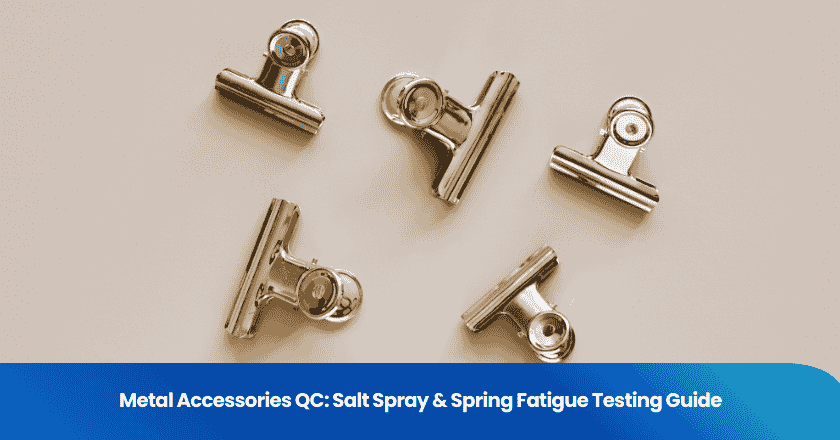
Quality control for metal accessories, such as binder clips and fasteners, relies heavily on two critical assessments: Salt Spray Testing and Spring Fatigue Tests. The former evaluates resistance to corrosion in harsh environments, while the latter measures the mechanical durability of spring mechanisms after repeated use. Together, these tests ensure that stationery products remain strong, reliable, and functional over time, meeting strict industry standards and customer expectations.
Key Takeaways
- Salt spray testing evaluates how well metal accessories resist corrosion, ensuring long-lasting performance in humid conditions.
- Spring fatigue testing measures the lifespan of mechanisms, confirming they can withstand thousands of cycles without failure.
- Manufacturers must follow industry standards like ASTM B117 and DIN 2095 for reliable and comparable results.
- Combining chemical (salt spray) and mechanical (fatigue) tests provides comprehensive quality assurance.
- Regular quality control ensures consistent product reliability and customer satisfaction.
Salt Spray Testing for Accessories
What Is Salt Spray Testing?
Salt spray testing, often referred to as the salt fog test, is a standardized method for measuring corrosion resistance. Manufacturers use this to check the durability of metal accessories found in stationery products. By simulating a harsh, saline environment, companies can evaluate the effectiveness of protective coatings like electroplating or powder coating before products reach the market.
Corrosion Resistance in Metal Accessories
Metal parts face various corrosion risks, from surface rust to contact corrosion. Understanding these types helps in selecting the right protection.
| Type of Corrosion | Description |
|---|---|
| Surface Corrosion | Damage to the passive layer leading to localized rust. |
| Contact Corrosion | Occurs when dissimilar metals touch in a corrosive environment. |
| Pitting Corrosion | Small, deep pits form due to localized anodic areas. |
Different coatings offer varying levels of protection. For instance, hot-dip galvanization provides excellent oxidation resistance, while powder coatings are primarily aesthetic with limited chemical resistance.
Salt Spray Testing Procedures
The testing process involves placing samples in a controlled chamber with a saline mist. Key steps include:
- Prepare a 5% sodium chloride solution with a pH between 6.5 and 7.2.
- Maintain the chamber temperature at 35°C.
- Suspend cleaned samples to ensure even exposure without touching.
- Expose samples for a specified duration (e.g., 24 to 96 hours).
- Rinse, dry, and inspect for signs of corrosion like peeling or red rust.
Understanding Test Results
Inspectors evaluate the samples for specific failure signs. Minimal or no corrosion indicates a pass, while significant rust or blistering signals a failure.
| Sign of Corrosion | Implication |
|---|---|
| Peeling/Flaking | Poor adhesion of the protective layer. |
| Red Rust | Base material corrosion due to coating failure. |
| Blistering | Moisture penetration underneath the coating. |
Standards and Best Practices
Adhering to standards like ASTM B117 (US) and ISO 9227 (International) is crucial for validity. Best practices include consistent sample preparation, precise solution concentration, and regular chamber calibration.
Spring Fatigue Testing
What Is Spring Fatigue Testing?
Spring fatigue testing measures a spring's ability to withstand repeated cyclic loading without losing tension or breaking. For stationery accessories like binder clips, this ensures the clip holds paper securely even after thousands of uses.
Mechanical Durability in Accessories
Springs can fail due to fatigue cracks, corrosion, or overloading. Early failure often indicates material defects (like inclusions in steel) or poor manufacturing. Testing helps identify these issues before mass production.
Testing Methods and Equipment
Inspectors use specialized equipment to simulate usage:
- Universal Testing Machines (UTMs): For compression and tensile tests.
- Fatigue Testing Machines: Specifically designed for high-cycle endurance testing.
- Cycle Counters: To track the exact number of operations before failure.
Interpreting Fatigue Test Results
A successful test means the spring survives the required number of cycles (often 10,000+) without significant loss of clamp force. Key benchmarks include clamp force capacity (Newtons) and material thickness consistency.
Industry Standards
Industry standards like DIN 2095 provide guidelines for spring testing. Meeting these ensures that products are reliable and safe for consumer use.
Integrating Test Methods
Complementary Roles in Quality Control
Salt spray and spring fatigue tests offer comprehensive protection. Salt spray checks surface integrity against environmental threats, while fatigue testing ensures internal mechanical reliability.
| Test Type | Main Focus | Benefit |
|---|---|---|
| Salt Spray Test | Corrosion Protection | Prevents rust in humid environments. |
| Spring Fatigue Test | Mechanical Durability | Ensures long-term functionality. |
When to Use Each Test
Use salt spray testing for products exposed to humidity or outdoor elements. Prioritize spring fatigue testing for any item with moving parts, such as clips, staplers, or punches. For high-quality stationery, both are often required.
Quality and Durability Impact
Ensuring Reliable Accessories
By strictly following protocols like ASTM and DIN, manufacturers can guarantee that their metal accessories are robust. This reduces the risk of product failure, returns, and negative reviews.
Real-World Performance
Real-world data confirms that products undergoing these rigorous tests perform better. For example, clips tested to DIN standards showed no rust after 96 hours of salt spray and maintained tension after 10,000 cycles, far exceeding cheaper, untested alternatives.
Salt spray and spring fatigue testing are vital for the stationery industry. They identify the best materials and coatings, ensure regulatory compliance, and improve safety. By implementing these best practices, manufacturers can deliver superior products that build brand trust and loyalty.
FAQ
What does salt spray testing measure?
It measures the corrosion resistance of materials and coatings, simulating long-term exposure to harsh, salty environments to predict rust formation.
How many cycles should a binder clip spring withstand?
Industry standards typically require at least 10,000 open-close cycles without failure or significant loss of tension.
Why use both tests?
Salt spray protects against environmental damage (rust), while fatigue testing ensures mechanical longevity. Together, they guarantee the product looks good and works well over time.
What standards guide these tests?
Common standards include ASTM B117 and ISO 9227 for salt spray, and DIN 2095 or ASTM F2923 for spring fatigue and mechanical testing.
Похожие статьи



Развивайте свой бизнес с услугами TradeAider
Нажмите кнопку ниже, чтобы войти непосредственно в систему услуг TradeAider. Простые шаги от бронирования и оплаты до получения отчетов легко выполнить.

