
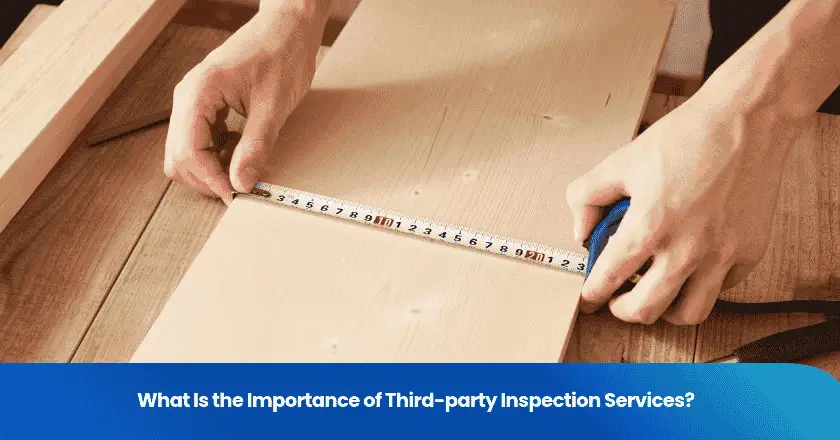
When buying products from overseas manufacturers, buyers cannot always be present to monitor production or verify product quality in person. Even when a supplier has its own quality control team, buyers may still need an independent assessment to understand whether the products meet the agreed specifications.
This is where third-party inspection services become important. An independent inspection provider examines products, materials, or production processes against the buyer's requirements and provides documented findings. For international buyers working with manufacturers in China, this creates a more transparent way to monitor quality and make informed decisions before shipment.
Why Are Third-Party Inspection Services Important?
The importance of third-party inspection services lies in their ability to provide independent, on-site quality information. They help buyers understand what is happening during manufacturing rather than relying entirely on supplier updates or waiting until goods arrive at their destination.
Several factors make this particularly relevant to international trade.
1. Buyers Cannot Always Monitor Production Directly
When a buyer is located in another country, visiting a factory regularly may be impractical because of travel costs, time differences, and production schedules.
Without on-site verification, buyers may have limited visibility into material quality, workmanship, production conditions, and the handling of defects.
A third-party inspector can visit the factory on the buyer's behalf, check products against agreed requirements, and provide photographs, measurements, defect records, and other inspection evidence.
This gives buyers a clearer picture of actual production conditions without having to be physically present.
2. Supplier Self-Inspection May Not Provide Independent Verification
Manufacturers generally have their own quality control procedures. These internal checks are important, but they are conducted within the supplier's own quality management system.
An independent inspection provides an additional perspective. Rather than replacing the manufacturer's quality control team, a third-party inspector assesses the products against the buyer's specifications and agreed inspection criteria.
This helps buyers identify differences between the supplier's internal assessment and the actual condition of the inspected goods.
3. Quality Problems Need to Be Identified at the Right Stage
Some defects can be identified before production starts, while others only become visible during manufacturing or after products are completed.
Waiting until the final inspection to discover a recurring production problem may leave limited time for corrective action.
Third-party inspection services can be arranged at different stages:
- Pre-Production Inspection (PPI): Checks relevant raw materials, components, product specifications, and production preparations before mass production.
- During Production Inspection (DUPRO/DPI): Examines products while manufacturing is underway, allowing buyers to identify recurring problems before the order is completed.
- Pre-Shipment Inspection (PSI): Checks finished products, workmanship, quantity, packaging, labeling, and other agreed requirements before shipment.
- Container Loading Supervision (CLS): Monitors the loading process to verify the products, quantities, packaging condition, and loading arrangements.
The appropriate inspection stage depends on the product, order size, production schedule, and potential quality risks.
4. Inspection Findings Support More Informed Decisions
A supplier's statement that an order is complete does not necessarily tell a buyer whether the goods meet the agreed requirements.
A structured inspection report provides more specific information, such as:
- Product specifications and measured results
- Visual and workmanship defects
- Defect quantities and classifications
- Packaging, labeling, and quantity findings
- Inspection photographs and supporting evidence
- Overall inspection results based on the agreed criteria
With this information, buyers can assess the findings and decide whether to accept the goods, request corrective action, arrange re-inspection, or discuss the next steps with the supplier.
An inspection report does not automatically determine whether an entire shipment is legally compliant or commercially acceptable. The final decision remains with the buyer and should take account of the agreed specifications, inspection scope, and applicable requirements.
5. Documented Findings Improve Communication and Follow-Up
Quality issues can lead to misunderstandings when buyers and suppliers rely on different descriptions or incomplete information.
For example, a buyer may report that a product has a surface defect, while the supplier may need more specific evidence to identify the affected units and investigate the cause.
Inspection reports with clear descriptions, photographs, measurements, and defect classifications provide a common reference for discussion.
When corrective action is required, follow-up inspection can also help verify whether the identified problems have been addressed. This supports a more traceable quality control process from problem identification to verification.
When Should Buyers Use Third-Party Inspection Services?
Third-party inspection is not limited to the final stage before shipment. Buyers can arrange inspections at different points depending on the nature of the order and the risks involved.
| Production stage | Inspection service | Main purpose |
|---|---|---|
| Before mass production | Pre-Production Inspection (PPI) | Check materials, components, specifications, and production readiness |
| During manufacturing | During Production Inspection (DUPRO/DPI) | Identify quality issues while production is in progress |
| After production | Pre-Shipment Inspection (PSI) | Assess finished products before shipment |
| During container loading | Container Loading Supervision (CLS) | Verify loading conditions, quantities, and shipment arrangements |
For orders involving new products, complex specifications, or a supplier with limited experience, earlier inspection may provide useful visibility. For established products and suppliers, buyers may choose inspection stages based on their previous quality performance and order requirements.
The inspection plan should be agreed in advance, including the inspection scope, product specifications, sampling method, defect classification, and acceptance criteria.
Third-Party Inspection vs. Supplier Quality Control
Third-party inspection and a manufacturer's internal quality control serve different but complementary purposes.
| Aspect | Supplier Quality Control | Third-Party Inspection |
|---|---|---|
| Main responsibility | Monitor and control the manufacturer's production quality | Independently assess products against agreed requirements |
| Who performs it | Manufacturer's QC team | Independent inspection provider |
| Timing | Throughout the manufacturer's internal production process | At buyer-agreed inspection stages |
| Main output | Internal quality records and corrective actions | Inspection findings and documented reports |
| Primary role | Maintain production quality | Give buyers independent visibility of product quality |
Third-party inspection should not replace the manufacturer's responsibility for quality control. Instead, it provides an additional layer of verification for buyers.
How Does TradeAider Support Buyers with Third-Party Inspection Services?
TradeAider provides third-party inspection services in China for international buyers, importers, wholesalers, and e-commerce businesses.
With a nationwide network of professional inspectors and 80,000+ quality specialists throughout China, TradeAider supports buyers at different stages of production through pre-production inspection, during-production inspection, pre-shipment inspection, factory audit, and container loading supervision.
A key part of the service is real-time reporting. Buyers can access inspection findings, photographs, videos, measurements, and quality results online while the inspection is taking place. This allows them to review issues and communicate with the inspection team without waiting for the final report.
When problems are identified, buyers can provide instructions while the inspector is still on site. Where required, TradeAider can also follow up on corrective actions and verify improvements through re-inspection.
An official PDF inspection report is generally provided within 24 hours after the inspection is completed.
The purpose is not simply to identify defects, but to help buyers understand product quality, respond to problems, and make better-informed decisions before shipment.
Frequently Asked Questions
Is third-party inspection necessary for every order?
Not necessarily. The need and frequency of inspection depend on factors such as product complexity, order value, supplier performance, production history, and the buyer's quality requirements. Buyers may use more frequent inspections for new suppliers or higher-risk orders.
Does third-party inspection guarantee product quality?
No. An inspection assesses the products and conditions within the agreed inspection scope at a specific point in time. It cannot guarantee that every unit is defect-free or that no problems will occur after inspection. A well-defined inspection plan and appropriate production quality controls remain important.
What is the difference between third-party inspection and product testing?
Inspection generally involves checking products, materials, workmanship, quantities, packaging, and other specified requirements. Product testing uses defined test methods and equipment to evaluate particular characteristics, such as physical performance or chemical properties.
Some quality concerns require both inspection and laboratory testing. The appropriate service depends on the product and the requirements being assessed.
Can third-party inspection be conducted during production?
Yes. During Production Inspection (DUPRO/DPI) takes place while manufacturing is underway. It helps identify defects and process-related issues before the entire order is completed, leaving more time for corrective action.
Conclusion
Third-party inspection services play an important role in international sourcing because they give buyers independent visibility into product quality when direct supervision is difficult. By checking products at appropriate production stages and providing documented findings, independent inspectors help buyers identify problems, communicate with suppliers, and make more informed shipment decisions.
For buyers sourcing products from China, third-party inspection can be an important part of a practical quality control strategy—not a replacement for supplier quality management, but an additional layer of independent verification.
Похожие статьи
Развивайте свой бизнес с услугами TradeAider
Нажмите кнопку ниже, чтобы войти непосредственно в систему услуг TradeAider. Простые шаги от бронирования и оплаты до получения отчетов легко выполнить.