
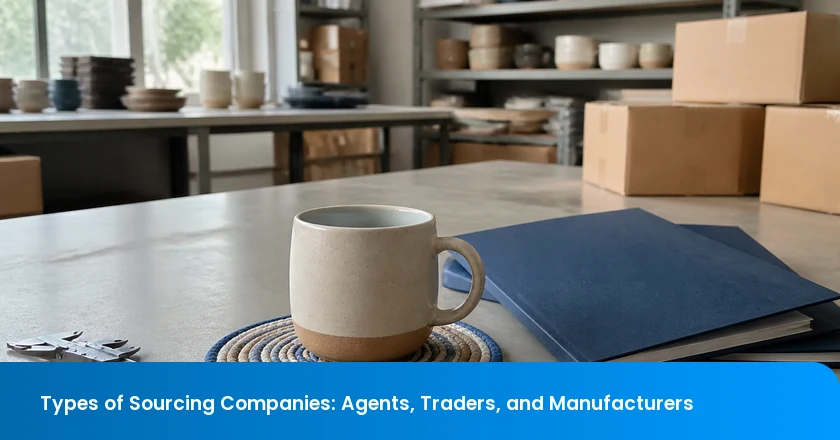
Sourcing agents help you buy from suppliers; trading companies sell goods to you; direct manufacturers produce the goods you order. Those are useful starting distinctions, not guarantees about price or control. Choose among these types of sourcing companies by checking the actual seller, the work included, and your access to production evidence. A familiar contact or a “factory direct” quotation does not answer those questions on its own.
Choose the Transaction Model Before Comparing Suppliers
Base the choice on your sales counterparty, payment arrangement, factory access, and agreed quality remedies.
- Use agent support when you want help coordinating suppliers while retaining a clearly defined purchasing relationship.
- Consider a trader when consolidation is valuable and the seller accepts the obligations you need.
- Choose direct manufacturing when technical access matters and your team can manage the remaining coordination.
- For every model, verify the production scope and keep supplier qualification separate from acceptance of the goods.
How Agents, Trading Companies, and Manufacturers Differ
A sourcing agent is an intermediary appointed to help with purchasing. A reseller buys goods and sells them to you in its own name. Manufacturing describes production activity, which is a different question from who signs the sale. A manufacturer can also resell products made elsewhere.
The U.S. Commercial Service describes some export intermediaries that receive commissions alongside others that buy and sell in their own name. Its export-intermediary guidance concerns exporters, but it illustrates why an intermediary label alone does not establish the commercial arrangement. For a buyer, the relevant question is whether the company is providing a service or selling the goods.
| Model to verify | What you buy | Potential fit | Main qualification question |
|---|---|---|---|
| Sourcing agent | Defined purchasing support | Supplier coordination with retained buyer control | Who appoints and pays the agent? |
| Trading company or distributor acting as reseller | Goods under a resale contract | Combined sourcing or stocked product ranges | What does the seller undertake if goods are wrong? |
| Direct manufacturer | Goods from the producing business | Detailed product and process development | Which work is actually done at this facility? |
These are comparison models, not an exhaustive legal classification. Keep the purchasing arrangement separate from the facility assessment: the factory audit standard resource shows the production and quality-system questions that a company label cannot resolve.
Sourcing Agents and Managed Procurement Teams
Before appointing an agent, you should establish whose interests it represents, what authority it has, and how it gets paid. Searching for suppliers, negotiating prices, approving samples, and placing orders are different tasks. Permission to request a quotation should not silently become permission to accept a material change or commit your money.
A managed procurement team may provide broader support than an individual agent, such as maintaining supplier records and coordinating several orders. That additional capacity is useful only if the assigned people can handle your product category and workload. Ask who substitutes for the main contact and which decisions return to your team.
Request disclosure of supplier commissions, rebates, referral payments, or ownership links that could influence recommendations. Such an arrangement is not automatically unacceptable, but you need to understand it before relying on a supposedly independent comparison. Also define what happens to supplier contacts and open orders when the appointment ends.
Trading Companies and Distributors
A reseller can consolidate purchases, but the buyer should settle factory disclosure and defect remedies with that seller. This model can suit a mixed product range when managing separate factory negotiations would absorb more time than your team can justify. A distributor may also offer available inventory; confirm actual stock rather than assuming it from the label.
The trade-off is that you may see a resale price rather than the underlying factory price. Decide whether you need open-book costing or simply a competitive, fully specified offer. Either approach can be evaluated honestly if its limits are clear.
Do not accept “we will ask the factory” as the entire response to nonconforming goods. Ask the reseller to describe the notice procedure, evidence required, proposed correction or replacement terms, and any exclusions. A written promise also needs practical assessment: the seller's ability to perform matters as much as the wording.
Direct Manufacturers and Hybrid Suppliers
Direct manufacturing access can make technical discussions easier, but you still need to identify outsourced processes and separately sourced items. A workshop making the main product may purchase its packaging, outsource a surface finish, or add another factory's accessory to complete your set.
Direct sourcing therefore fits best when the factory's actual process matches your requirements and someone on your side can manage specifications, changes, logistics, and follow-up. It is less convenient when a broad assortment requires you to coordinate unrelated production schedules yourself.
Ask for a process breakdown rather than a yes-or-no answer to “Are you a factory?” Identify the address for each critical activity and the person responsible for approving changes. If you use a separate assessor, check that provider's identity too. Provider background does not establish the capabilities of your proposed manufacturer. For background on the separate inspection and audit business, see the TradeAider company profile.
Check the Seller, Payee, and Contract Terms
Start with the seller named in the proposed sales contract. Then connect the payee receiving the money to that transaction and identify the factory producing the goods. These parties can legitimately differ, but each relationship needs an explanation you can verify. An invoice, bank account, and factory photograph are not interchangeable evidence. Reconcile them before payment rather than after a defect claim.
Request the contracting entity's full registered name and address, the signer's authority, and the proposed payment instructions. Where another entity collects funds, obtain the documented basis and confirm it through an established contact channel. Have your commercial or legal adviser assess unusual arrangements; an agent's reassuring email is not a substitute for that review.
Keep delivery terms distinct from ownership and payment. ICC explains that Incoterms rules allocate delivery obligations, risk, and costs, but do not determine ownership transfer or payment terms. The ICC explanation of commercial contracts is a useful boundary check. A delivery term on a quotation cannot fill the rest of your purchase agreement.

Classify the actual transaction before comparing provider labels or headline prices.
For the actual order, address the product revision, permitted substitutions, delivery commitments, inspection access, acceptance procedure, and remedies. Where tooling or designs matter, document their permitted use and return arrangements separately. Relevant law can affect whether a term works as intended, so obtain jurisdiction-specific advice for important commitments. The buying model helps you identify the questions; it does not supply a ready-made legal answer.
Compare Fees Against the Same Delivered Scope
A visible agent fee is not evidence that an agent costs more, just as a bundled trader price is not evidence that coordination is free. Compare the same product specification, quantity, packaging, delivery point, and follow-up obligations. Otherwise, the lower figure may simply exclude work that another offer includes.
For an agent quotation, ask whether the charge is fixed, time-based, or linked to order value. Clarify the calculation base, minimum charge, reimbursable expenses, and whether canceled or repeat orders incur fees. For a reseller, identify what the goods price includes and which events permit extra charges. For a direct factory, add the coordination and verification work your team must purchase or perform.
ASQ separates prevention and appraisal costs from internal and external failure costs. Its cost-of-quality explanation helps distinguish spending on planned checks from the cost of correcting a problem. It does not establish that any sourcing model has a particular defect rate or savings percentage.
Use a quotation worksheet with separate lines for goods, development, coordination, freight arrangements, checks, and agreed follow-up. Mark uncertain items as unresolved rather than entering zero. If a quote includes inspection, ask what is checked, who performs it, and what record you receive.
The practical inference is conditional: when the products and obligations are comparable, you can compare the total quoted commitments and your remaining workload. Until then, a price ranking is incomplete. Do not attach invented probabilities to defects just to produce a precise-looking “risk-adjusted” price.
Verify the Production Site Behind the Quotation
Ask for enough production visibility to evaluate the risks that matter for your order. That may include the main manufacturing address, outsourced processes, material controls, capacity assumptions, and permission for an agreed assessment. A trading company's office visit cannot answer questions about a separate production facility.
OECD responsible-business-conduct guidance calls for risk-based due diligence across operations, supply chains, and business relationships. The OECD due diligence guidance addresses adverse impacts on people and the environment, among other issues. It is broader than a product-quality visit and should not be presented as a universal legal requirement for every importer.
For production qualification specifically, TradeAider's factory audit service can be scoped to the disclosed facility. Identify the processes and capacity questions that need checking, rather than asking for a general stamp of approval. An audit report is evidence about the assessed scope, not a guarantee of future performance or a legal verification of every contract party.
A supplier may raise confidentiality concerns about disclosing its sources. Discuss limited access, confidentiality terms, or an agreed assessor receiving the necessary information. Those arrangements are useful only if the resulting report answers your actual qualification questions. If you cannot establish where a critical process occurs, record that as an unresolved risk when deciding whether to proceed.
Also agree how you will be notified of a site change. Evidence about one facility cannot automatically support production moved to another address, even when the commercial contact and product name remain unchanged.
Separate Factory Qualification From Product Acceptance
A qualified factory can still make an unacceptable order. A satisfactory product sample also cannot establish the condition of goods that have not yet been produced. Plan facility assessment, product testing, and inspection around the different questions they answer, whatever sourcing model you choose.
Acceptance sampling means checking selected units to support a decision about a defined lot. NIST describes acceptance sampling as supporting an accept-or-reject decision about the lot, rather than estimating the lot's quality. The NIST sampling explanation also makes clear why a sample result is not proof that every unit is defect-free. Select the inspection plan for the product and agreed risks, not because the intermediary says it uses a standard check.
Before the visit, identify the goods, specifications, reference samples, checks, limits, and report recipient. If the sourcing partner arranges inspection, establish whether it is the seller's own check or a separately commissioned assessment. Give the reviewer access to the findings and limitations, not just a forwarded pass message.
TradeAider's inspection standard resource can help you prepare those questions. If you choose pre-shipment inspection, the readiness condition is 100% of the order produced and at least 80% packed for export. Agree how nonconforming findings affect the order with the seller; the inspection report supplies evidence, while the contractual response remains a separate matter.
A Sourcing Comparison With Different Contracting Parties
Comparisons remain incomplete when quotations cover different seller identities and follow-up obligations. The issue can emerge even after samples look satisfactory. Check the proposed transaction while you can still choose the arrangement, not only when someone asks for the final balance.
Illustrative Example: One Contact, Two Production Sites
Consider a hypothetical homeware importer ordering 1200 retail sets, each containing a ceramic mug and a woven coaster. One sourcing contact coordinates the order across 2 production sites. The buyer has approved samples, but bulk production has not started and the deposit is unpaid. It expects direct factory purchases plus a coordination fee.
The contact describes itself as an agent, then submits a goods invoice and proposed resale contract in its own name. The mug factory is identified; the coaster factory is not. The documents also contain no agreed access for the buyer's assessor. Another quotation offers separate factory contracts, leaving consolidation and some follow-up work to the buyer. Comparing the headline prices would therefore compare different arrangements.
In this illustrative case, the buyer pauses the consolidated order because the reseller arrangement and factory access were not disclosed. The discrepancy does not prove defective products or dishonest conduct. It shows that the parties have not agreed the transaction the buyer thought it was approving. The pause applies to the commitment for all 1200 sets, not to a claimed defect in goods that do not yet exist.
To resolve it, the contact declares its reseller role, identifies both sites, and proposes access and defect-remedy terms. The buyer then verifies the parties, reviews those terms, and obtains the required site evidence before authorizing the deposit. A revised invoice alone would not complete that work. This example illustrates disclosure before commitment; it does not establish that resellers are inherently riskier or prescribe a product test or sample size.
Choose a Model You Can Verify Before Paying
Clarify the seller and production-site information first, then commission the specific factory or product checks that remain necessary. Keep commercial review and technical assessment assigned to the people qualified to perform them. Neither a sourcing contact nor a factory assessor should be assumed to resolve every part of the transaction.
For your shortlisted arrangement, retain the accepted quotation, declared parties, production locations, open questions, and the decision on who must resolve each question. A supplier response that changes the model should return to commercial review; an undisclosed process should return to qualification. That keeps the next step tied to the actual gap.
If the remaining gap concerns a proposed factory, send the product category, factory names and addresses, proposed production schedule, and questions requiring verification. TradeAider can agree the audit scope and arrange the assessment, with a report of the agreed checks and findings to support your supplier decision. Contact our team to scope the factory checks.
Frequently Asked Questions
Is a sourcing agent the same as a buying office?
Not necessarily: an agent is an appointed intermediary, while a buying office may be your own team or an external service operation. Ask which entity employs the staff and which agreement governs their work. An office location describes where people work; it does not tell you whether they can commit your company to a purchase.
Does a small order always need a trading company?
No; order size affects available offers, but the workable model also depends on product variety, customization, minimum quantities, and your coordination capacity. A factory may accept a small standard-product order while declining a similarly sized custom order. Ask for an offer against your actual requirements instead of ruling out a model solely because the order is small.
Can one supplier act as both an agent and a reseller?
Yes, but its role should be explicit for each order so you can distinguish a service appointment from a goods purchase. If the role changes on a repeat order, review the new documents rather than relying on the original appointment. Identify which fees, payment instructions, and remedy provisions belong to the changed arrangement before accepting it.
Who should own molds and product drawings?
Record the intended ownership and permitted use in the relevant agreements, because paying a development charge alone may leave important rights unresolved. Specify who holds the files or tooling, who may authorize changes, and what happens at termination. Have qualified counsel review the applicable rights and enforceability; physical possession, payment, and intellectual property ownership are different questions.

Похожие статьи

Развивайте свой бизнес с услугами TradeAider
Нажмите кнопку ниже, чтобы войти непосредственно в систему услуг TradeAider. Простые шаги от бронирования и оплаты до получения отчетов легко выполнить.

