- О нас

- Наши услуги
- Ваша отрасль
- Ресурсы
- Новости и блог
ISO 13485
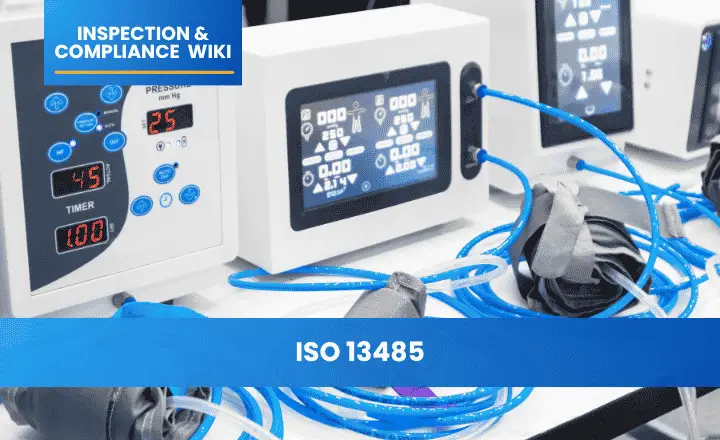
ISO 13485 is the internationally recognized standard for Quality Management Systems (QMS) in the medical device industry. Titled Medical devices — Quality management systems — Requirements for regulatory purposes, it specifies requirements for organizations involved in one or more stages of the medical device lifecycle, including design, manufacturing, packaging, labeling, storage, distribution, and servicing.
Harmonized with major regulatory frameworks—including the European MDR (EU 2017/745) and IVDR (EU 2017/746), US FDA Quality System Regulation (21 CFR Part 820 / QMSR), and MDSAP—compliance with ISO 13485 provides evidence of supplier capability and process control.
Core Structure and Key Regulatory Elements
While built upon the process-oriented framework of ISO 9001, ISO 13485 incorporates regulatory rigor tailored to medical safety:
- Documented Procedures & Medical Device File (Clause 4.2): Organizations must establish and maintain a Medical Device File (MDF) for each device family containing technical specifications, manufacturing instructions, and quality assurance procedures.
- Risk Management Integration (Clause 7.1): Mandates continuous application of risk management principles across all product realization processes per ISO 14971 guidelines.
- Contamination & Cleanroom Controls (Clause 6.4): Requires strict environmental controls, particulate monitoring, bioburden testing, and cleanroom maintenance (ISO 14644) for sterile medical devices.
- Full Process Traceability (Clause 7.5.9): Requires complete traceability of raw materials, production batches, operator logs, and inspection records down to individual serial or lot numbers.
ISO 13485 Clause Breakdown for Factory Audits
| ISO 13485 Clause | Quality System Area | Key On-Site Evaluation Focus |
|---|---|---|
| Clause 4.2.5 | Control of Records | Verify record retention periods match device lifetime requirements |
| Clause 7.4 | Purchasing Controls | Evaluate supplier qualification, raw material testing, and incoming inspection logs |
| Clause 7.5.2 | Validation of Processes | Audit special process validations (e.g., ethylene oxide sterilization, ultrasonic welding, blister sealing) |
| Clause 7.5.8 | Identification | Check physical labeling, status tags, and segregation of non-conforming items |
| Clause 8.2.2 | Complaint Handling | Review customer complaint files, root-cause analyses, and regulatory reporting logs |
| Clause 8.5.2 / 8.5.3 | CAPA System | Verify effectiveness of Corrective and Preventive Action (CAPA) implementations |
Regulatory Alignment: ISO 13485, FDA QMSR, and EU MDR
| Quality Parameter | ISO 13485 Standard | US FDA (21 CFR 820 / QMSR) | EU MDR (2017/745) |
|---|---|---|---|
| Primary Focus | International Voluntary QMS | US Federal Mandatory Law | EU Federal Mandatory Law |
| Risk Management | ISO 14971 Integration | Risk-based process control | Lifecycle risk management |
| Technical File | Medical Device File (MDF) | Device Master Record (DMR) | Technical Documentation |
| Post-Market Role | Feedback loops (Clause 8.2.1) | Medical Device Reporting (MDR) | Post-Market Surveillance (PMS) |
Practical Module: On-Site ISO 13485 Audit & QC Practice
Quality auditors evaluating medical device contract manufacturers must execute a rigorous on-site audit protocol:
Step 1: Cleanroom and Environmental Control Audit
- Inspect cleanroom operations (ISO Class 7/8) to verify differential pressure logs, temperature/humidity controls, and air filtration (HEPA) maintenance.
- Audit operator gowning procedures, handwashing stations, and sticky mat maintenance at cleanroom entry points.
Step 2: Equipment Calibration & Process Validation Check
- Review calibration status tags on test equipment, tensile testers, leak testers, and optical measurement devices.
- Verify Installation Qualification (IQ), Operational Qualification (OQ), and Performance Qualification (PQ) records for critical manufacturing and packaging processes.
Step 3: Material Traceability & Non-Conforming Material Audit
- Trace a randomly selected finished production lot back through incoming raw material inspection logs, resin batch numbers, and operator sign-offs.
- Inspect the factory quarantine hold area to ensure non-conforming materials are physically segregated behind locked enclosures with clear status tags.
Ensure Supplier Reliability: On-Site Factory & Process Audits.Don't rely solely on factory self-declarations or paper certificates. Verify production line controls, IPQC processes, and QMS traceability through our independent, on-site audit services. ➔ Get a Free Audit Plan
Frequently Asked Questions (FAQ)
Q1: What is the main difference between ISO 9001 and ISO 13485?
ISO 9001 focuses on general business quality and continuous improvement across any industry. ISO 13485 focuses specifically on medical device safety, regulatory compliance, risk management, process validation, and strict documentation, prioritizing product safety over continuous business growth metrics.
Q2: Does ISO 13485 certification automatically mean a medical device is approved for sale?
No. ISO 13485 certifies the manufacturer's Quality Management System (QMS). Product approval requires separate regulatory submissions, such as US FDA 510(k) clearance or EU CE marking under the Medical Device Regulation (EU 2017/745).
Q3: What is the relationship between ISO 13485 and ISO 14971?
ISO 13485 mandates that risk management be integrated throughout the quality system. ISO 14971 is the specific international standard that defines the framework for identifying hazards, estimating risks, evaluating risk controls, and monitoring risk effectiveness for medical devices.
Q4: How does ISO 13485 address outsourced manufacturing processes?
Under Clause 7.4, the certified organization retains full legal responsibility for product quality. Any outsourced process (such as contract sterilization or injection molding) must be audited, validated, controlled, and documented within the organization's QMS framework.
Q5: How long must records be retained under ISO 13485?
Records must be retained for at least the lifetime of the medical device as defined by the manufacturer, but not less than two years from the date of product release, or as specified by local regulatory requirements (e.g., FDA or EU MDR rules).
References
[1] International Organization for Standardization. ISO 13485:2016 Medical devices — Quality management systems — Requirements for regulatory purposes[S]. Geneva: ISO, 2016. https://www.iso.org/standard/59752.html
[2] European Parliament and Council. Regulation (EU) 2017/745 on Medical Devices (EU MDR)[S]. Brussels: Official Journal of the European Union, 2017. https://eur-lex.europa.eu/
[3] US Food and Drug Administration. Quality System Regulation (21 CFR Part 820) / Quality Management System Regulation (QMSR)[S]. Silver Spring: FDA, 2024. https://www.fda.gov/
Reference Notes
- ISO 13485:2016 defines international quality system standards required for medical device manufacturers and contract suppliers.
- EU MDR 2017/745 establishes European legal mandates requiring robust QMS implementation for CE-marked medical products.
- US FDA regulations harmonize federal quality system requirements with ISO 13485 principles under the QMSR framework.
Related Knowledge Base
TradeAider