
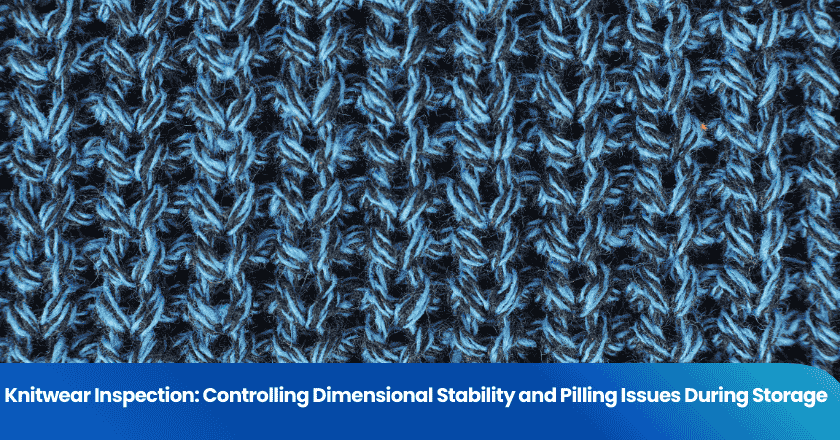
In the global apparel industry, knitwear represents a unique engineering challenge due to the looped structure of the fabric, which is inherently less stable than woven textiles. The structural integrity of a sweater, cardigan, or jersey garment is defined by its ability to resist dimensional distortion and surface degradation—specifically pilling—throughout its lifecycle. Professional Softline Quality Assurance (QA) protocols dictate that every production lot undergo rigorous metrological and physical testing. This ensures that garments maintain their designed silhouette and hand-feel after industrial washing and long-term warehouse storage. By integrating standardized inspection methods, brands can significantly reduce return rates and safeguard their market reputation.
Key Takeaways
- Dimensional stability in knits is governed by the equilibrium of the loop structure; ISO 6330 and ASTM D1218 are the primary testing benchmarks.
- Pilling is a technical cycle involving fiber migration, entanglement, and the formation of 'pills'—evaluated through Martindale or ICI pilling box tests.
- Relaxation shrinkage occurs when internal stresses from the knitting process are released during washing or steaming.
- Proper storage requires 'Hygroscopic Equilibrium'—maintaining 45% relative humidity and avoiding vertical hanging to prevent 'growth' (elongation).
- Professional apparel quality control must include spirality testing to prevent side-seam twisting.
- Material selection, such as long-staple fibers and high-twist yarns, serves as the first line of defense against surface abrasion.
The Mechanics of Dimensional Distortion in Knits
The primary technical issue in knitwear is 'Relaxation Shrinkage.' During the knitting and finishing processes, yarns are under constant tension. When the garment is subsequently laundered or exposed to high humidity, the fibers tend to return to their natural, low-energy state. This results in the shortening of the garment length and width. For high-end cashmere and wool, 'Felting Shrinkage' is an additional risk where the scales of the animal fibers interlock permanently under moisture and agitation.
Spirality and Skewing Analysis
Spirality occurs when the vertical rows of loops (wales) are not perpendicular to the horizontal rows (courses). This leads to the infamous 'twisting' of side seams after washing. During a thorough apparel inspection, technicians measure the angle of distortion. A spirality exceeding 5% is generally considered a major defect in the professional market, as it compromises the garment's fit and aesthetic flow.
| Standard Method | Technical Objective | Test Parameters |
|---|---|---|
| ISO 3759 | Preparation of Test Specimens | Standardizing marking points for measurement |
| ISO 6330 | Domestic Washing & Drying | Simulating real-world consumer laundry cycles |
| ASTM D3882 | Bow and Skewness | Measuring fabric distortion in circular knits |
| ISO 3005 | Steam Relaxation | Evaluating shape retention under high-temp steam |
Quantitative Analysis of Pilling Resistance
Pilling is not merely a cosmetic issue; it is a technical failure of the fiber matrix. The pilling cycle consists of three stages: fiber emergence (fuzzing), entanglement into a spherical pill, and pill attrition (falling off). If the rate of pill formation exceeds the rate of attrition, the garment's surface becomes visually and tactilely unacceptable. Softline products with high synthetic content (e.g., Polyester-Acrylic blends) are particularly prone to persistent pilling because the high tensile strength of the synthetic fibers prevents the pills from naturally wearing off.
Martindale vs. Pilling Box Testing
Manufacturers utilize different testers based on the fabric density and intended market. The Martindale tester (ISO 12945-2) uses a Lissajous motion to apply multi-directional abrasion, which is highly effective for tightly knitted jersey. For bulkier knits like aran-sweaters, the ICI Pilling Box (ISO 12945-1) is used, where fabric-covered tubes tumble inside a cork-lined box to simulate the random friction of daily wear.
| Pilling Grade | Visual Description | Technical Significance |
|---|---|---|
| 5 | No change | Superior quality; high-twist long-staple yarns |
| 4 | Slight surface fuzzing | Acceptable for premium retail standards |
| 3 | Moderate pilling | Minimum baseline for mass-market goods |
| 2 | Distinct pilling | Borderline rejection; indicates low-quality yarn |
| 1 | Dense pilling | Failed; high risk of customer returns |
Expert Insight: The application of 'Cellulase Enzyme' washes in the finishing stage is a common technical countermeasure. This process 'shaves' off the loose protruding fibers, effectively resettting the pilling clock for the consumer.
Operational Quality Control during Production
Quality is not inspected into a product; it is built into the knitting tension. During manufacturing quality inspections, inspectors must verify the 'Stitch Density' (Wales and Courses per Inch). If the density is too low (loose knit), the fabric will have poor recovery and a high pilling tendency. Conversely, if it is too tight, the hand-feel will be harsh and the garment may suffer from 'Needle Cutting'—microscopic holes caused by the needle piercing the yarn instead of sliding through the loop.
Common critical defects to monitor during in-process checks include:
- Birdseye: Small unintentional flecks caused by improper needle selection.
- Slubs: Thick spots in the yarn that act as friction points, triggering premature pilling.
- Stop Marks: Horizontal lines across the fabric caused by the knitting machine stopping and starting.
- Barre: Shaded bands caused by variations in yarn tension or dyeing batch inconsistency.
Optimized Storage Protocols for Fabric Integrity
The environment of the warehouse is a primary variable in 'Quality Fade.' Knitwear is highly hygroscopic, meaning it absorbs moisture from the air. High humidity can trigger relaxation shrinkage even without washing. Professional apparel quality management requires a climate-controlled environment to prevent these issues.
Hygroscopic Equilibrium and Packaging
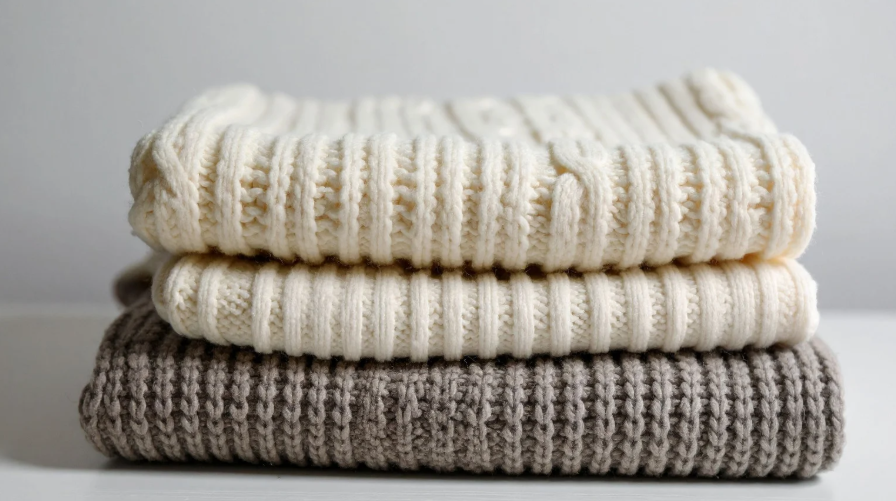
To maintain dimensional stability, garments should be stored at approximately 20'C (68'F) and 45-50% relative humidity. Furthermore, the physics of gravity dictates that knits should never be stored on hangers for extended periods. The weight of the garment pulls on the loops, leading to 'Growth'—where a size Medium becomes a Large over three months of hanging. Flat-folding with archival-quality acid-free tissue paper is the technical standard for professional storage.
| Environmental Factor | Impact on Knitwear | Recommended Control |
|---|---|---|
| Relative Humidity | Fabric swelling and mold growth | 45% +/- 5% |
| Temperature | Fiber oxidation and color fading | 20'C +/- 2'C |
| Stacking Pressure | Crushing of bulky yarns; pilling | Max 5-8 units per carton |
| Pest Management | Larval damage (Moths/Beetles) | Regular pheromone trap audits |
Conclusion: Integrated Lifecycle Verification
Knitwear quality is a function of yarn physics, knitting precision, and environmental discipline. By adhering to international testing standards and implementing rigorous quality control in the apparel industry, manufacturers can ensure that their products provide long-term durability. Identifying defects early in the production cycle—and maintaining strict storage protocols—prevents the 'hidden costs' of return logistics and lost consumer confidence.
Professional Tip: When sourcing knitwear, always request the 'Spectrogram' of the yarn and the 'After-Wash Spirality Report.' These two documents provide the most accurate technical forecast of how the garment will behave in the customer's hands.
Ready to secure your product quality before shipment?
As your third-party inspection, testing & certification partner in China, TradeAider supports brands and sourcing teams across the entire production process, helping you identify quality risks early, ensure compliance, and strengthen your team’s capabilities before shipment.
Book an Inspection or Testing Service with TradeAider today, or for tailored solutions and expert guidance, contact us at services@tradeaider.com or submit the request form on the right. →
Frequently Asked Questions (FAQ)
What is the difference between relaxation and felting shrinkage?
Relaxation shrinkage occurs when yarns lose the tension applied during knitting; it can happen to all knits. Felting shrinkage is exclusive to animal fibers (wool/cashmere) and is caused by the physical interlocking of fiber scales under heat and moisture.
Can pilling be completely eliminated?
Technically, no. All fabrics subject to friction will eventually fuzz. However, by using 'Singed' yarns (where surface fuzz is burnt off) and high-twist constructions, the onset of pilling can be delayed by 300% to 500%.
How often should I perform a factory audit for knitwear?
For high-risk softline products, a technical factory audit should be conducted at least annually. Additionally, 'In-Line' inspections should occur when 15-20% of the order is completed to catch tension and shade issues before the entire lot is knitted.
Why is my knitwear 'growing' in length?
This is a common issue with 'heavy' fibers like Viscose or loose-knit structures stored on hangers. The loops elongate under the garment's own weight. Professional storage always mandates 'Flat Folding' to negate the effects of gravity.
What is the purpose of the ICI Pilling Box test?
The ICI Pilling Box is designed to simulate the random tumbling and rubbing that occurs during actual wear. It is particularly useful for bulky, loose-gauge knits where the Martindale's direct rubbing might be too aggressive or unrepresentative of real-world use.
Related Articles
Grow your business with TradeAider Service
Click the button below to directly enter the TradeAider Service System. The simple steps from booking and payment to receiving reports are easy to operate.

