
- About Us

- Our Services
- Your Industry
- Resources
- News & Blog
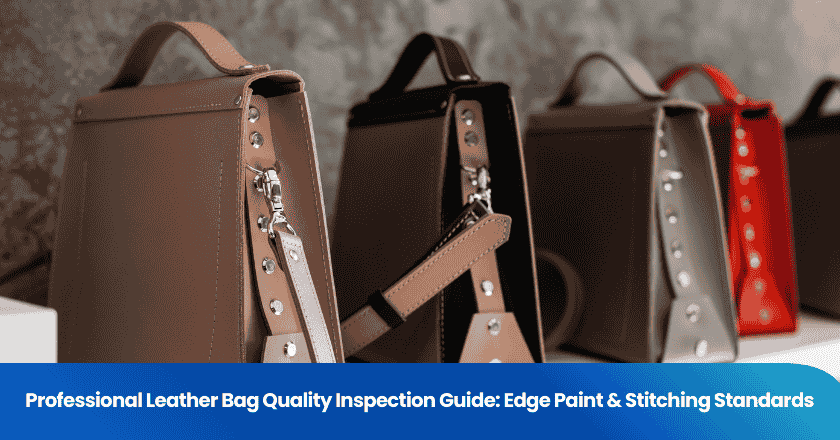
Quality assurance in the leather goods industry is a multi-layered process that bridges the gap between raw material integrity and consumer satisfaction. For manufacturers and premium brands, the visual inspection of leather bags serves as the first line of defense against product recalls and reputation damage. Technical teams must focus on the nuances of construction, specifically addressing common fail points such as edge paint adhesion and stitching alignment. Through systematic quality checks, brands can ensure that every unit reflects the craftsmanship promised to the end-user.
Key Takeaways
- Early Detection: Regular visual inspections identify defects before the final packaging phase, reducing rework costs.
- Durability Focus: Edge paint peeling and stitching failures are the leading causes of leather bag returns.
- AQL Standards: Utilizing Acceptable Quality Limits ensures a statistically sound method for batch approval.
- Digital Documentation: Real-time reporting enhances transparency between factories and brand stakeholders.
- Material Integrity: Verification of leather type (Full-grain vs. Genuine) is essential to validate product pricing and durability.
Leather Bags Quality Classification and Softline Standards
In the global supply chain, leather bags are classified under 'Softline Products.' This category includes items made from flexible materials that require specific tactile and stress-based testing. Unlike hard goods, leather fluctuates in behavior based on environmental factors like humidity and temperature. Inspectors must verify not only the aesthetic finish but also the functional longevity through a series of standardized tests.
| Core Test Category | Inspection Objective | Standard Requirement |
|---|---|---|
| Functionality Check | Ensure zippers, clasps, and magnets work smoothly. | Zero failure in 10 consecutive cycles. |
| GSM & Material Test | Verify weight and thickness of leather and lining. | Tolerance within +/- 5% of spec. |
| Smell & Chemical Test | Identify tanning odors or restricted substances (REACH). | No pungent chemical odors allowed. |
| Stitches Per Inch (SPI) | Verify construction density and seam strength. | Standardized at 7-12 SPI based on design. |
| Color Fastness (Rub Test) | Ensure dye does not transfer to clothing. | Dry and wet crocking test at Grade 4+. |
The Technicality of Edge Paint Inspection
Understanding Edge Paint Adhesion
Edge paint, often referred to as 'inking' or 'burnishing' in high-end production, is a protective polymer coating applied to raw leather edges. Its primary role is to seal the fibers, preventing moisture absorption and fraying. Peeling occurs when the bond between the leather and the paint fails. This failure often stems from improper sanding of the leather edge or the use of low-quality, brittle acrylics that cannot withstand the leather's natural flex.
Environmental factors during production, such as high humidity in Southeast Asian factories, can prevent edge paint from curing correctly, leading to a 'sticky' finish or premature flaking. Professional inspectors must differentiate between 'cracking' (caused by leather stretch) and 'peeling' (caused by poor adhesion).
Visual Indicators of Edge Paint Defects
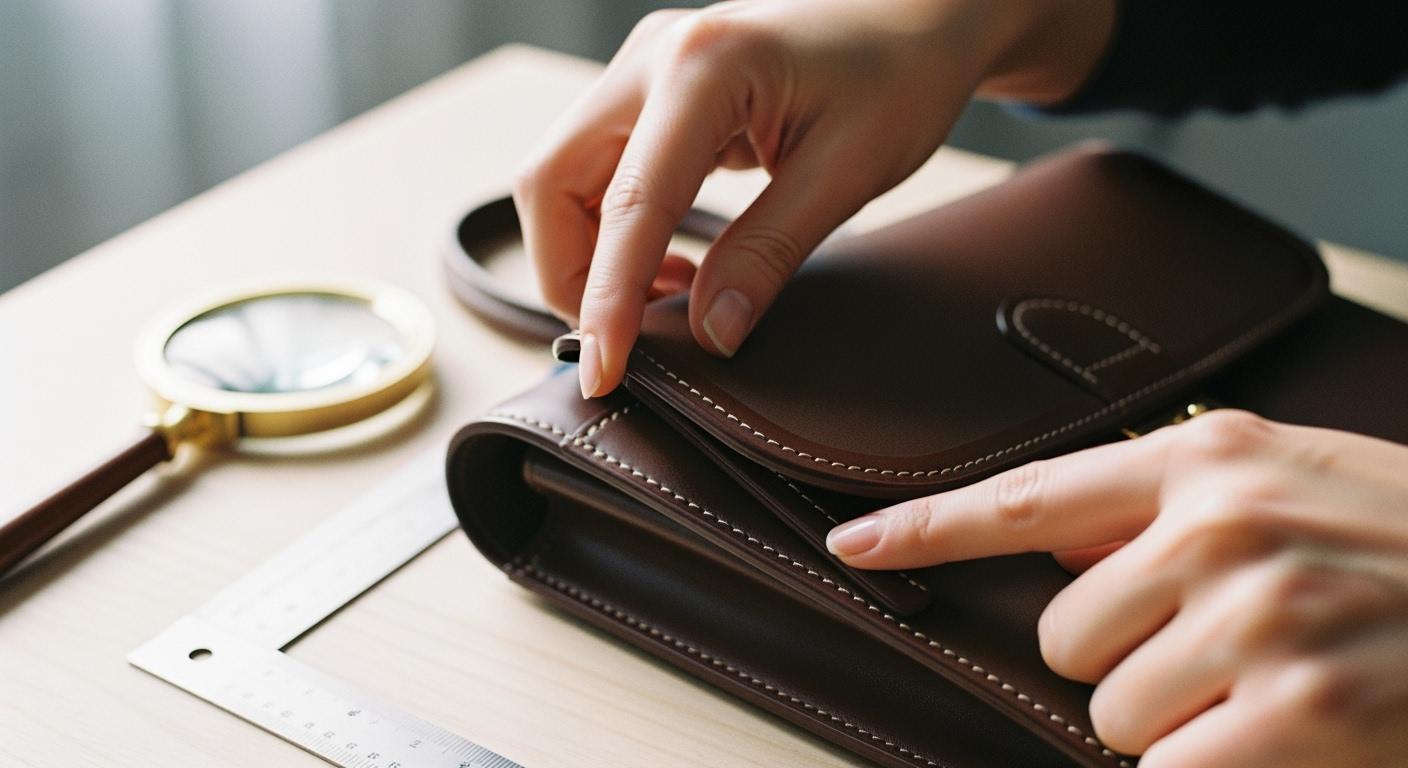
During the inspection process, technicians utilize 5x magnification and high-CRI lighting to identify the following issues:
- Micro-cracking: Fine lines appearing at stress points, such as where the strap meets the body.
- Delamination: The paint layer lifting entirely off the leather surface.
- Uneven Thickness: 'Bumpy' edges that suggest inconsistent application or lack of intermediate sanding.
- Bleeding: Paint migrating onto the leather grain or the lining material.
"A premium bag's edge should feel like a single, continuous piece of material. Any sensation of 'dryness' or 'sharpness' on the edge paint indicates a risk of future failure."
Stitching Symmetry and Structural Integrity
Stitching is the most visible indicator of a bag's quality. Symmetrical stitching is not merely an aesthetic choice; it ensures that the weight load is distributed evenly across the leather panels. Inaccurate alignment can cause the bag to 'torse' or twist over time, permanently deforming the silhouette.
Key Metrics for Stitching Audits
Inspectors focus on the 'Parallelism' of the stitch lines. On a high-quality leather tote, the distance between the edge and the stitch line (the 'margin') should be consistent to within 0.5mm. Any variation beyond this is classified as a workmanship defect under most luxury brand standards.
| Inspection Point | Common Defect | Impact on Quality |
|---|---|---|
| Corner Turns | Puckering or 'Bird-nesting' | Weakens the corner, leading to holes. |
| Thread Ending | Loose tails or visible knots | Aesthetic failure; risk of unravelling. |
| Stitch Path | Wavy or crooked lines | Indicates poor operator skill; devalues brand. |
| Thread Tension | Loops on the underside | Reduces seam strength significantly. |
Standardized Inspection Tests for Leather Goods
Seam Strength and Load Testing
Beyond visual symmetry, physical stress tests are mandatory. The 'Handle Jerk Test' involves loading the bag with a specific weight (usually 5kg to 15kg depending on size) and subjecting it to repeated mechanical oscillation. This simulates years of daily use. If the stitching at the D-ring or handle attachment shows any separation, the batch is rejected.
AQL (Acceptable Quality Limit) Classification
In a Pre-Shipment Inspection (PSI), defects are categorized into three levels:
- Critical Defects: Anything that could harm the user (e.g., a needle left in the lining) or violates legal regulations. Acceptance = 0.
- Major Defects: Issues that reduce the usability or marketability of the product, such as visible edge paint peeling or broken stitches.
- Minor Defects: Small aesthetic inconsistencies, such as a slightly different thread shade in a non-visible area.
The Role of Real-Time Reporting
Modern quality control has moved beyond paper checklists. Through TradeAider’s inspection services, clients not only receive an official inspection report within 24 hours, but can also view inspection progress and identified issues during the inspection via TradeAider’s online service system.
By reviewing the Online Real-time Report, brands can make timely decisions on how to handle defective products—whether to accept them commercially, require on-site rectification by suppliers with the support of TradeAider inspectors, or reject them before shipment. This approach helps ensure that only quality-approved products are packed, shipped, and paid for, reducing unnecessary losses and improving supply chain control.
Best Practices for Maintaining Leather Bag Quality
To prevent the issues discussed, manufacturers should implement the following best practices:
- Climate Control: Maintain a humidity-controlled environment for edge paint application and drying.
- Needle Replacement Schedule: Change sewing needles every 4 to 8 hours of continuous use to prevent leather tearing.
- Interlining Reinforcement: Use non-stretch tapes at high-stress seams to support the stitching.
- In-Line Audits: Perform In-Line Inspections at the 'Closing' stage before the bag is turned inside out.
Ready to secure your product quality before shipment?
As your third-party inspection, testing & certification partner in China, TradeAider supports brands and sourcing teams across the entire production process, helping you identify quality risks early, ensure compliance, and strengthen your team’s capabilities before shipment.
Book an Inspection or Testing Service with TradeAider today, or for tailored solutions and expert guidance, contact us at services@tradeaider.com.
FAQ
What causes edge paint to become sticky after shipping?
This is usually due to 'plasticizer migration.' If the edge paint is not fully cured or if the bag is packed in a low-quality polybag under high heat during sea freight, the chemicals react, resulting in a tacky surface.
Is hand-stitching always better than machine-stitching?
Hand-stitching (Saddle Stitch) is technically more durable because it uses two needles and a single thread path that doesn't unravel if one stitch breaks. However, modern lockstitch machines provide superior symmetry and consistency for mass production.
How many stitches per inch is standard for a luxury bag?
Most luxury leather goods utilize between 8 and 10 SPI. Smaller leather items like wallets may go up to 12 SPI for a more refined look, while heavy-duty duffels may drop to 7 SPI for added thread thickness and strength.
Can edge paint peeling be repaired at the factory?
Yes, but it requires the old paint to be completely sanded off. Applying a new layer over a peeling one will result in further delamination. It is always more cost-effective to ensure proper application the first time.

Related Articles

Grow your business with TradeAider Service
Click the button below to directly enter the TradeAider Service System. The simple steps from booking and payment to receiving reports are easy to operate.

