
- О нас

- Наши услуги
- Ваша отрасль
- Ресурсы
- Новости и блог
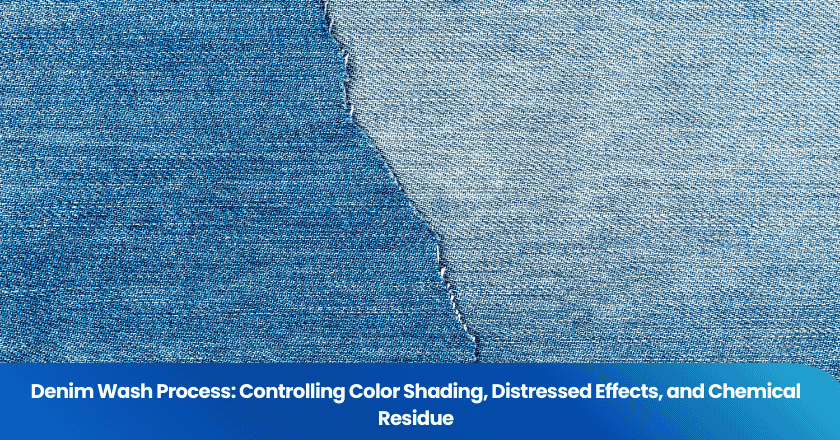
In the technical landscape of softline products, the denim wash process is one of the most chemically and mechanically complex stages of garment finishing. Beyond simple aesthetics, the laundry cycle dictates the garment's structural integrity, hand-feel, and biological safety. Modern denim production must navigate a narrow corridor between achieving high-contrast "vintage" looks and maintaining fabric strength while meeting global restricted substance lists (RSL). Both on-site quality inspections and sophisticated laboratory validations are required to mitigate common risks such as color shade variation, excessive pilling, and hazardous residue. By integrating advanced sustainable technologies like laser marking and ozone bleaching, manufacturers can now deliver consistent quality that aligns with international safety standards and environmental regulations.
Key Takeaways
- Color shading control requires both visual D65 lighting checks and spectrophotometric ΔE analysis.
- Distressed effects such as whiskers and honeycombs should be executed via laser technology to minimize fabric tensile loss.
- Chemical residue mitigation is essential for compliance with OEKO-TEX and ZDHC (Zero Discharge of Hazardous Chemicals) standards.
- Ozone washing significantly reduces water consumption while efficiently neutralizing residual indigo and bleaching agents.
- Comprehensive apparel quality control must include dynamic shrinkage tests after the final drying cycle.
- Sustainable wash recipes (e-flow and nano-bubbles) are becoming the technical baseline for high-end denim export.
Technical Dynamics of Color Shading Control
Color shading in denim is inherently volatile due to the nature of indigo dye, which sits on the surface of the yarn rather than penetrating the core. During the laundry cycle, variables such as water pH, temperature fluctuations, and mechanical load size can trigger significant shade shifts. Professional quality teams implement a "Shade Band" system, establishing a range of acceptable variation from the "Approved Sample."
Delta E (ΔE) and Colorimetric Analysis
While visual inspection is the initial filter, industrial validation relies on Delta E (ΔE) measurements using spectrophotometers. This technology quantifies color difference by analyzing lightness (L*), red-green (a*), and blue-yellow (b*) axes. For a production batch to be considered consistent, a ΔE value of less than 1.0 is typically required between the bulk and the master standard.
| Variable | Impact on Shading | Technical Mitigation |
|---|---|---|
| Liquor Ratio | Changes chemical concentration and dye redeposition | Standardized load weights and flow meters |
| Water Hardness | Alkalinity shifts can dull indigo brilliance | In-house water softening and filtration systems |
| Drying Temp | Over-drying causes "yellowing" or thermal shade shift | Moisture-sensing auto-stop dryers |
| Dye Migration | Induces "back-staining" on pocketing and labels | High-efficiency anti-backstaining agents (ABS) |
Executing Technical Distressed Effects
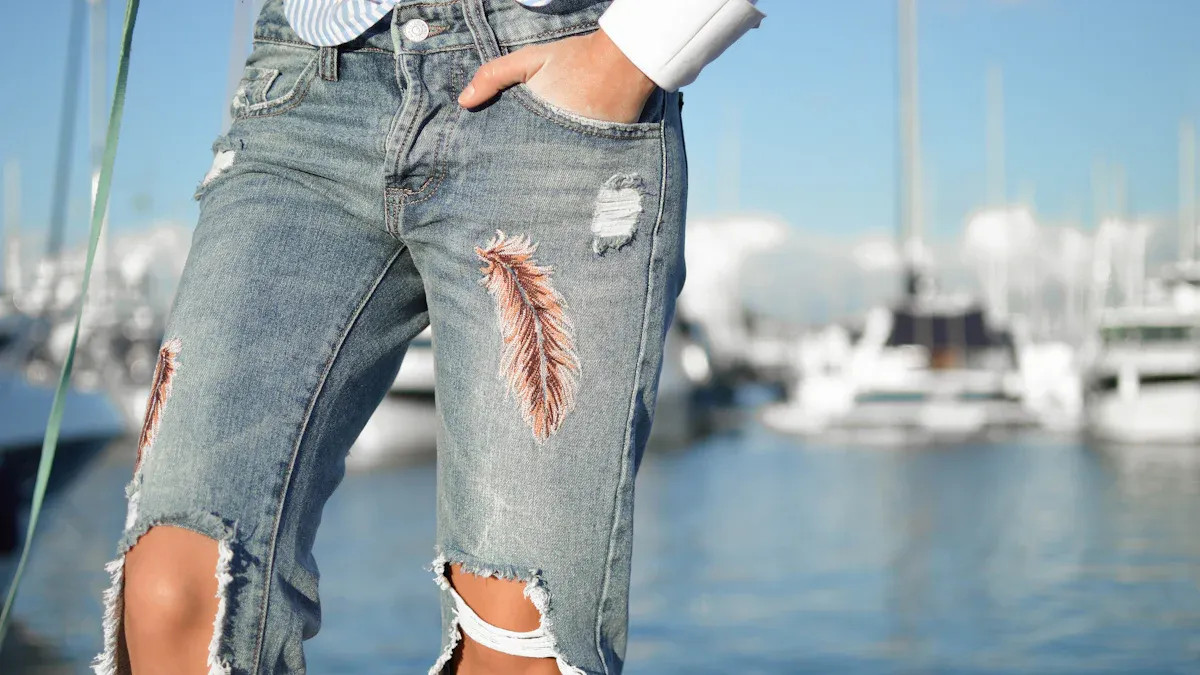
Distressing denim involves "Dry Processing" (manual or laser abrasion) and "Wet Processing" (chemical or mechanical fading). The engineering challenge is achieving a worn-in look without reducing the fabric's burst strength below the 20kg/cm2 threshold required for durable jeans.
Laser Finishing vs. Manual Sanding
Traditional manual sanding relies on worker skill and creates hazardous dust. In contrast, laser technology uses high-intensity beams to sublimate the indigo molecules on the fabric surface. This allows for microscopic precision in "whiskering" and "honeycomb" effects. By controlling the pixel intensity (grayscale), engineers can replicate vintage fades without damaging the cotton fibers, maintaining 95% of the original fabric strength compared to the 60-70% seen in heavy stone-washed garments.
| Technology | Indigo Modification Method | Fabric Degradation Risk | Sustainability Metric |
|---|---|---|---|
| Ozone (O3) | Breaks indigo double-bonds via oxidation | Low | 90% water saving |
| Enzyme Wash | Hydrolyzes cellulose fibers to release dye | Moderate | Biodegradable but water-intensive |
| Stone Wash | Mechanical abrasion via pumice stones | High | Generates sludge and debris |
| Laser Engraving | Thermal sublimation of surface indigo | Minimal | Zero water and chemical use |
Chemical Residue Mitigation and ZDHC Compliance
One of the most critical safety aspects of the denim wash process is the removal of residual chemicals. Substances like Potassium Permanganate (PP)—used for localized brightening—and Sodium Hypochlorite (bleach) are toxic and must be completely neutralized. If these chemicals remain in the fabric, they can cause skin irritation or respiratory issues for the end consumer.
Standardized Laboratory Protocols
Professional quality control methods involve pH testing (aiming for 5.5 to 7.0) and formaldehyde screening. Advanced manufacturers adhere to the ZDHC (Zero Discharge of Hazardous Chemicals) framework, which mandates the elimination of alkylphenol ethoxylates (APEOs) and phthalates from the supply chain. Testing for heavy metals and AZO dyes is performed using Gas Chromatography-Mass Spectrometry (GC-MS) to ensure parts-per-million (PPM) accuracy.
Expert Insight: The use of "Sodium Metabisulfite" as a neutralizing agent is a mandatory technical step after any oxidative process. Failure to properly neutralize can lead to "latent yellowing," where a garment appears perfect during inspection but develops yellow spots three months later in the retail store.
Integrated Quality Control and On-site Inspection Strategies
Quality is not inspected into a pair of jeans; it is managed throughout the laundry cycle. During apparel quality inspections, inspectors must verify the "Wash Standard Sample" against the bulk at multiple stages: after dry processing, after wet processing, and after final drying.
Effective process monitoring includes:
- Recipe Lockdown: Ensuring the computer-controlled washing machines do not deviate from the approved lab-dip recipe.
- Load Integrity: Monitoring the weight of each batch to ensure the liquor ratio remains constant.
- Seam Stability: Checking for "seam puckering" or "bursting" caused by excessive mechanical agitation during stone washing.
- Physical Testing: Conducting Elmendorf tear tests and Martindale abrasion tests to confirm the fabric's remaining lifecycle.

The Role of Factory Audits and Sustainable Innovation
For global brands, a factory audit is the only way to verify that a laundry facility actually possesses the technology it claims. "Greenwashing" is common; therefore, technical auditors must inspect the wastewater treatment plant (ETP) and verify the presence of ozone generators and laser machines. High-end apparel quality control standards now emphasize traceability of the stones, enzymes, and water used in production.
Innovative technologies like e-flow (using nanobubbles to deliver chemicals) and biopolishing (using specific enzymes to remove surface fuzz) have revolutionized the industry. These methods not only improve the garment's appearance and durability but also ensure that the final product is virtually free of the "chemical smell" associated with lower-quality denim.
Ready to secure your product quality before shipment?
As your third-party inspection, testing & certification partner in China, TradeAider supports brands and sourcing teams across the entire production process, helping you identify quality risks early, ensure compliance, and strengthen your team’s capabilities before shipment.
Book an Inspection or Testing Service with TradeAider today, or for tailored solutions and expert guidance, contact us at services@tradeaider.com or submit the request form on the right. →
Frequently Asked Questions
What is the primary cause of yellowing in light-washed denim?
Yellowing is typically caused by residual bleach or Potassium Permanganate (PP) that has not been correctly neutralized. Environmental factors like atmospheric ozone or nitrogen oxides (NOx) can also react with phenolic antioxidants in the packaging to create yellow stains during transit.
Why is ozone washing considered more sustainable?
Ozone (O3) acts as a powerful oxidant that destroys the double bonds in indigo molecules, effectively fading the fabric without the need for bleach. It can be performed in a closed-loop system using air rather than water, eliminating the need for extensive rinsing and chemical disposal.
How can I identify if a pair of jeans has been laser-finished?
Laser-finished denim usually has perfectly symmetrical whiskers and precise "pixel-like" detailing that manual sanding cannot achieve. Technically, you can also check the reverse side of the fabric; laser processing creates zero abrasion on the interior, whereas manual sanding often weakens the internal structure.
Does a "Stone Wash" affect the size of the jeans?
Yes. Mechanical stone washing often causes significant shrinkage, sometimes up to 5-8% in the warp direction. A technical product inspection plan must include pre-wash and post-wash dimensional checks to ensure the final fit matches the size chart.
What are the risks of using high-concentration enzymes?
While enzymes provide a soft hand-feel, excessive exposure (long cycles or high concentrations) can lead to "cellulose degradation," where the cotton fibers are literally eaten away. This results in poor pilling resistance and a significant drop in the fabric's weight (GSM).
Похожие статьи


Развивайте свой бизнес с услугами TradeAider
Нажмите кнопку ниже, чтобы войти непосредственно в систему услуг TradeAider. Простые шаги от бронирования и оплаты до получения отчетов легко выполнить.

