
- О нас

- Наши услуги
- Ваша отрасль
- Ресурсы
- Новости и блог
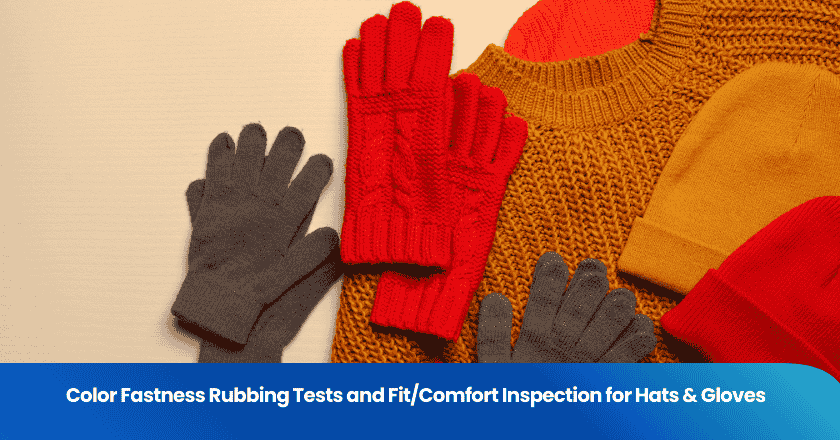
Accessories in the softline category, such as headwear and hand protection, maintain constant dermal contact, necessitating strict validation of chromatic adherence and physical ergonomics. In professional quality assurance, the two most critical parameters for hats and gloves are rubbing fastness (color transfer resistance) and dimensional fit fidelity. A failure in dye fixation can lead to unsightly staining on the wearer's skin or adjacent luxury garments, while poor structural design can severely impede manual dexterity or thermal efficiency. This guide details the industrial testing protocols—specifically focusing on ISO 105-X12 and AATCC 8 rubbing methods—and the comprehensive inspection processes required to ensure long-term performance and consumer safety.
Key Takeaways
- Color fastness to rubbing measures the quantitative transfer of pigment from textiles to a standardized white crocking cloth.
- Wet rubbing fastness typically yields lower scores (Grade 2-3) than dry rubbing, especially in deep-saturated shades like navy or burgundy.
- ISO 21420 is the definitive standard for glove dexterity, measuring finger sensitivity through standardized steel pin manipulation.
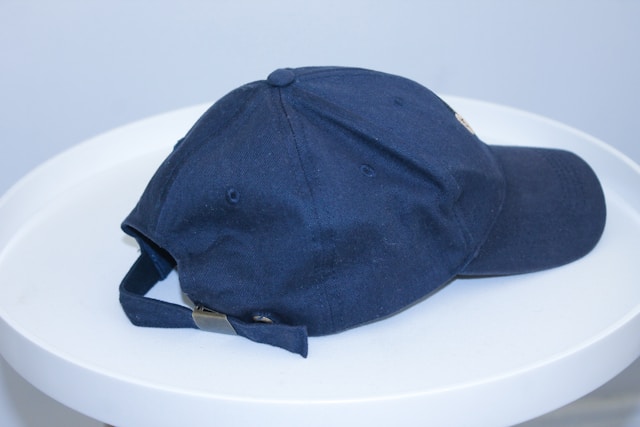
- Dimensional accuracy in headwear focuses on 'Circumferential Elasticity' to prevent pressure-induced discomfort.
- Standardized manufacturing quality inspections must account for shade variation across batch production lots.
- Compliance with REACH and Prop 65 is mandatory to ensure that dyes do not contain restricted aromatic amines or heavy metals.
The Mechanics of Color Fastness to Rubbing
Color fastness to rubbing—technically referred to as 'Crocking Resistance'—describes the ability of a material to retain its pigment when subjected to physical friction. Pigment migration occurs when the bond between the fiber and the dye molecule is insufficient to withstand interfacial shear stress. This is particularly prevalent in cellulose-based fibers (like cotton beanies) and protein fibers (like wool gloves), where the dye uptake is higher and surface saturation is frequent.
Industrial Crockmeter Methodology
Laboratories utilize a specialized instrument called a 'Crockmeter' to perform these tests. The device applies a constant downward force (typically 9 Newtons) through a cylindrical friction head covered with a standard white cotton cloth. The head moves in a reciprocating motion over the test specimen for a fixed number of cycles. Results are then evaluated using a 5-step Gray Scale, where Grade 5 indicates zero staining and Grade 1 represents severe color transfer.
| Test Standard | Friction Load | Reciprocation Path | Typical Application |
|---|---|---|---|
| ISO 105-X12 | 9 N +/- 0.2 N | 104 mm +/- 3 mm | International Standard for general textiles |
| AATCC 8 | 900 g (9 N) | 100 mm reciprocation | US Market Standard for fabrics/accessories |
| ISO 105-X16 | 9 N (Small Head) | Rotary Circular Motion | Printed fabrics and intricate trim zones |
| AATCC 116 | 11.1 N | Rotary Circular Motion | Heavy-duty winter gloves and technical headwear |
Technical Insight: Wet rubbing is significantly more aggressive because water acts as a solvent and lubricant. It lowers the surface tension of the dye molecules and allows them to migrate more easily from the fiber surface to the friction cloth. A minimum Grade 3 is typically required for commercial acceptance in dark colors.
Ergonomic Fit and Dexterity Inspection Protocols
For gloves, fit is not merely a matter of size; it is a critical functional requirement. A glove that is dimensionally correct but ergonomically flawed will cause hand fatigue and reduced grip strength. For hats, the primary technical challenge is 'Pressure Mapping'—ensuring that the band distributes tension evenly across the temporal and frontal lobes of the skull.
Glove Dexterity Testing: ISO 21420
The dexterity of a glove is quantified by the smallest diameter of a steel pin that can be picked up by an operator wearing the glove. This test validates the seam placement, material thickness, and fingertip sensitivity. During apparel quality control testing, gloves are graded from Level 1 to Level 5. High-performance winter gloves with thick insulation often struggle to reach Level 3, necessitating innovative articulation at the finger joints.
Headwear Dimensional Integrity
- Relaxed State Measurement: Measuring the internal circumference without applying tension.
- Extended State Measurement: Testing the maximum comfortable stretch before the material reaches its elastic limit.
- Crown Depth Check: Ensuring the vertical distance from the apex to the band provides sufficient coverage without obstructing vision.
| Inspection Element | Technical Objective | Testing Tool |
|---|---|---|
| Seam Strength | Prevent rupture under high-stretch donning | Tensile Tester (N) |
| Dexterity | Ensure manual tactile sensitivity | Steel Pin Series (5mm-11mm) |
| Shade Consistency | Match batch color to master sample | D65 Light Box / Spectrophotometer |
| Breathability | Evaluate moisture vapor transmission | Evaporative Resistance Tester |
The Importance of Chemical Compliance (REACH/Prop 65)
Dyes and finishes used in accessories are under constant scrutiny by global regulatory bodies. Prohibited aromatic amines, derived from azo dyes, are restricted because they are potential carcinogens. During quality assurance audits, manufacturers must provide Oeko-Tex or equivalent laboratory reports proving the absence of heavy metals like lead and cadmium in metallic trims (e.g., buckle hardware or rivets).
For gloves, pH values are strictly monitored. Since gloves are often worn for extended periods in humid (sweaty) conditions, a pH value outside the 4.0 to 7.5 range can cause severe chemical skin irritation. Standardized product inspection standards include pH extraction tests to safeguard the end-user.
Integrating QC into the Production Management Lifecycle
Consistency is achieved by building quality into the 'Pre-Production' and 'In-Line' phases rather than relying solely on a final audit. Effective quality assurance implementation for accessories should include:
- Fabric Batch Crocking: Testing the rubbing fastness of the raw fabric rolls *before* cutting to prevent large-scale batch rejection.
- Thread Tension Calibration: Ensuring that sewing machines are calibrated to prevent 'Needle Cutting' in fine-knit beanies.
- Symmetry Verification: Utilizing laser-cut templates to ensure that glove thumbs and hat crowns are perfectly centered.
Furthermore, consistency in apparel manufacturing is maintained through standardized defect classification (Major, Minor, Critical). For instance, a small oil spot on a glove finger is a Minor defect, but a failed seam in a high-tension zone of a hat band is a Critical safety failure.
Practical Maintenance for Longevity
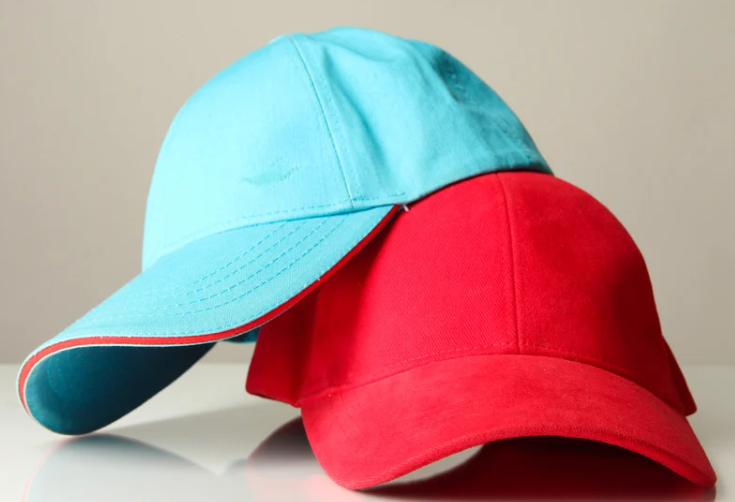
Technical buyers should inform customers that even the highest-grade accessories require proper maintenance to preserve their rubbing fastness. Excessive heat during laundering can break down dye fixing agents, while abrasive cleaners can strip the protective hydrophobic coatings from leather gloves.
- Avoid Solvent Interaction: Hand sanitizers with high alcohol content can dissolve surface dyes on leather gloves, leading to instant color transfer.
- UV Exposure Limits: Prolonged sunlight exposure can trigger photo-oxidation, leading to 'Color Fading' and reduced material tensile strength.
- Dry Storage: Moisture traps pigments; keeping hats and gloves in a dry environment prevents the growth of odor-causing bacteria and stabilizes the dye matrix.
Ready to secure your product quality before shipment?
As your third-party inspection, testing & certification partner in China, TradeAider supports brands and sourcing teams across the entire production process, helping you identify quality risks early, ensure compliance, and strengthen your team’s capabilities before shipment.
Book an Inspection or Testing Service with TradeAider today, or for tailored solutions and expert guidance, contact us at services@tradeaider.com or submit the request form on the right. →
Frequently Asked Questions (FAQ)
What is the difference between dry and wet crocking?
Dry crocking tests the transfer of pigment under normal conditions. Wet crocking uses a friction cloth with 65-100% moisture content. Wet crocking is much harder to pass because water breaks the molecular attraction between the dye and the fiber, allowing for easier pigment migration.
Why do my dark gloves stain my hands?
This is a sign of poor color fastness to rubbing. It occurs when the dye is not properly 'fixed' during the manufacturing process or when an excessive amount of 'loose' surface dye remains on the fabric. High-quality textile quality control uses a final scouring wash to remove these particles.
What is a 'Crocking Cloth' made of?
A standard crocking cloth is 100% combed cotton, desized and bleached, with a specific weight and thread count. This ensures that the results are repeatable and can be compared across different laboratories globally.
Can I test color fastness at home?
You can perform a 'Damp Rub Test.' Take a white cotton swab, moisten it with water, and rub it firmly on an inconspicuous area of the accessory for 10-15 seconds. If the swab shows significant color, the item will likely fail industrial color fastness standards.
Is dexterity testing necessary for winter gloves?
Yes. While winter gloves prioritize insulation, they must still allow the user to perform basic tasks like using keys or a mobile phone. Dexterity testing (ISO 21420) ensures that the insulation bulk does not render the glove functionally useless for common manual tasks.
Похожие статьи


Развивайте свой бизнес с услугами TradeAider
Нажмите кнопку ниже, чтобы войти непосредственно в систему услуг TradeAider. Простые шаги от бронирования и оплаты до получения отчетов легко выполнить.

