
- О нас

- Наши услуги
- Ваша отрасль
- Ресурсы
- Новости и блог
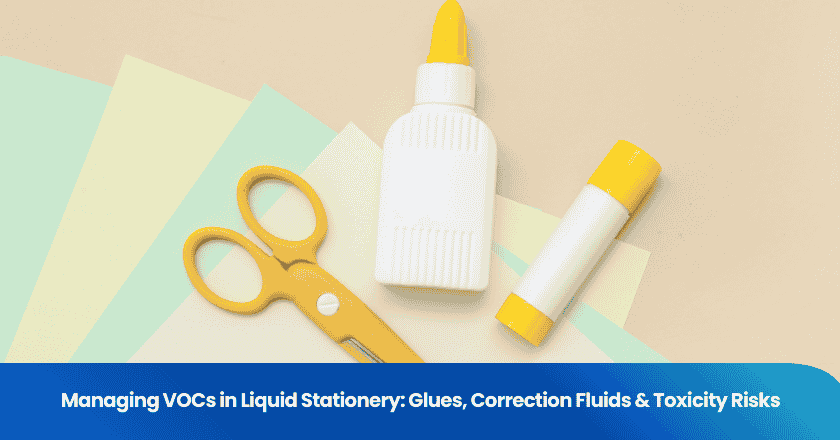
Controlling Volatile Organic Compounds (VOCs) in glues and correction fluids is essential for protecting health and safety in schools and offices. Users should always prioritize products that meet strict regulatory standards. Proper ventilation and careful handling significantly reduce exposure to harmful chemicals. Since children and frequent users face higher risks, understanding and managing these toxins is critical. Common health complaints associated with high-VOC products include:

- Irritation of the eyes, nose, or throat
- Allergic skin reactions
- Headache or dizziness
- Fatigue and nausea
- Respiratory issues
Effectively managing VOC levels lowers these risks and creates a safer workspace for everyone.
Key Takeaways
- Choose glues and correction fluids labeled as 'low VOC' or 'no VOC' to reduce health risks.
- Ensure proper ventilation when using these products to improve indoor air quality.
- Use protective equipment like gloves and goggles to minimize direct exposure.
- Store stationery in tightly sealed containers away from heat to prevent vapor leaks.
- Dispose of chemical products responsibly at hazardous waste facilities.
Understanding VOCs and Toxicity

What Are VOCs?
VOCs, or volatile organic compounds, are chemicals that evaporate into gases at room temperature. These compounds are prevalent in glues and correction fluids. When these items are used, vapors are released, rapidly degrading indoor air quality, particularly in poorly ventilated spaces.
Common household and office sources include:
- Glues and adhesives
- Correction fluids (white-out)
- Permanent markers
- Paints and varnishes
- Cleaning agents
While many products emit VOCs, liquid stationery is a primary concern in educational and office settings due to frequent use by children and staff.
Health Risks of VOCs
Exposure to VOCs from liquid stationery can lead to various health issues depending on the duration and intensity of exposure. Short-term effects often appear immediately, while long-term consequences may develop over time.
| Health Effects | Type |
|---|---|
| Eye, nose and throat irritation | Short-Term |
| Headaches and dizziness | Short-Term |
| Nausea/vomiting | Short-Term |
| Worsening of asthma symptoms | Short-Term |
| Increased risk of cancer | Long-Term |
| Liver and kidney damage | Long-Term |
| Central nervous system damage | Long-Term |
Note: Children are especially vulnerable to volatile organic compounds. Chronic exposure can potentially lead to severe developmental and nervous system disorders.
Toxicity in Liquid Stationery
Liquid stationery often contains volatile solvents that can be harmful if inhaled or touched. Common inhalant products include correction fluids and certain markers. Without following safety guidelines, the concentration of these chemicals can exceed safe indoor air quality standards.
Regulatory Compliance and Testing
Restricted Substance Testing
Mandatory chemical testing is vital for consumer safety. Inspectors screen for restricted substances, including heavy metals (lead, cadmium) and toxic chemicals like phthalates and AZO dyes. Manufacturers utilize advanced techniques such as EPA Method 24 and Gas Chromatography (GC-MS) to accurately detect and measure VOC levels, ensuring products meet strict safety limits.
Tip: Regular chemical testing ensures that stationery remains safe for daily use and supports compliance with international regulations.
Safety Standards (CPSIA, EN 71)
International standards dictate strict limits for chemical safety. In the US, the CPSIA regulates chemicals in children's products. In the EU, the EN 71 Toy Safety Directive covers chemical safety, requiring rigorous testing for VOCs and other hazardous substances.
| Safety Standard | Region | Focus Areas | Key Testing Requirements |
|---|---|---|---|
| CPSIA | United States | Children's products | Heavy metals, phthalates, VOCs |
| EN 71 | European Union | Toy & Stationery safety | VOC migration, toxic chemicals |
Managing VOCs Through Testing
Effective VOC management begins with testing. Manufacturers review lab results to identify high-risk components and often reformulate using low- or no-VOC alternatives. Documenting these tests is crucial for proving compliance and maintaining market access.
Identifying High-Risk Products
Types of High-VOC Glues and Correction Fluids
Solvent-based products typically emit higher levels of VOCs compared to water-based alternatives. Products with strong, chemical odors are often indicators of high volatility.
| Product Type | VOC Level | Common Hazards |
|---|---|---|
| Solvent-based glue | High | Respiratory irritation, dizziness |
| Water-based glue | Low | Minimal risk |
| Fast-drying correction fluid | High | Headaches, strong fumes |
| Low-VOC labeled glue | Low | Safe for general use |
Reading Labels for VOCs and Toxicity
Always check packaging for labels such as "Low VOC," "No VOC," or "Non-Toxic." Be wary of labels listing chemicals like toluene or xylene.
Tip: Checking the label is the simplest way to protect yourself. Prioritize water-based formulas whenever possible.
Recognizing Hazard Symbols
Hazard symbols are critical warnings. Familiarize yourself with these common icons:
- Flammable: Product can catch fire easily; likely contains volatile solvents.
- Caution: May cause irritation or dizziness.
- Toxic: Serious health risks upon exposure or ingestion.
Safe Usage and Indoor Air Quality
Ventilation and Air Quality
Proper ventilation is the most effective way to mitigate VOC risks. Using high-VOC products in enclosed spaces can spike indoor pollution levels two to five times higher than outdoors. Open windows, use exhaust fans, and consider air purifiers with activated carbon filters.
Protective Equipment
When using solvent-based products, protective equipment is recommended:
- Gloves: Nitrile or neoprene gloves prevent skin absorption.
- Goggles: Protect eyes from accidental splashes.
- Masks: Use appropriate respirators in poorly ventilated areas.
Handling Tips
Adopt safe handling practices: choose water-based glues, cap containers immediately after use, and wash hands thoroughly after handling stationery.
Storage and Disposal
Safe Storage Practices
- Seal containers tightly to prevent vapor leaks.
- Store in cool, well-ventilated areas away from direct sunlight.
- Keep away from heat sources to prevent ignition of flammable solvents.
Proper Disposal Methods
Never pour glues or correction fluids down the drain. Liquid adhesives are often considered hazardous waste.
- Take solvent-based adhesives to a hazardous waste facility.
- Allow small amounts of water-based glue to dry completely before disposing of in trash (check local rules).
Choosing Safer Alternatives
Low-VOC and Non-Toxic Options
Manufacturers are increasingly offering safer alternatives. Look for products specifically marketed as "School Glue," "Water-Based," or "Non-Toxic." These are formulated to minimize harmful emissions while maintaining performance.
DIY and Natural Alternatives
DIY adhesives using natural ingredients like flour, water, and starch are excellent, non-toxic alternatives for simple paper crafts and school projects.
Exposure Response
Immediate Actions
If you experience dizziness or irritation, move to fresh air immediately. If skin contact occurs, wash with soap and water. For eye contact, flush with water for 15 minutes. If symptoms persist, seek medical attention.
Managing VOCs in liquid stationery is simple with the right knowledge:
- Select products with safety certifications.
- Maintain good ventilation.
- Dispose of waste responsibly.
FAQ
What are VOCs in glues?
VOCs (Volatile Organic Compounds) are chemicals that evaporate at room temperature, potentially causing health issues and reducing indoor air quality.
How can I reduce VOC exposure?
Improve ventilation by opening windows, use low-VOC or water-based products, and keep containers sealed when not in use.
Are water-based glues safer?
Yes, water-based glues generally release significantly fewer harmful vapors compared to solvent-based alternatives.
What if glue gets on my skin?
Wash the area thoroughly with soap and warm water. Do not use solvents like paint thinner to remove glue from skin.
Похожие статьи


Развивайте свой бизнес с услугами TradeAider
Нажмите кнопку ниже, чтобы войти непосредственно в систему услуг TradeAider. Простые шаги от бронирования и оплаты до получения отчетов легко выполнить.

